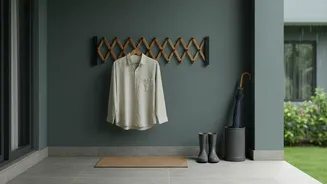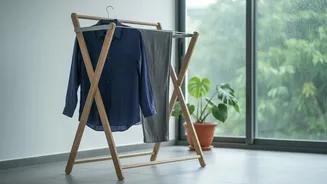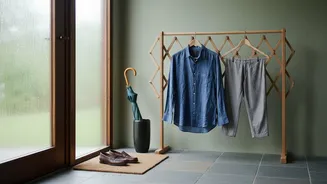





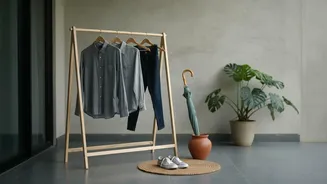
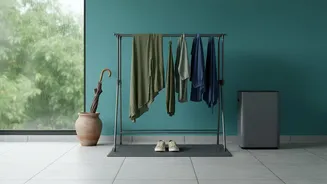
Step 1: Designate Your Drying Zone
The first rule of monsoon management is to contain the dampness. Instead of letting wet items invade every corner of your home, designate a single, specific area as your official drying zone. This could be a covered balcony, a utility area, a guest bathroom,
or even a well-ventilated corner of a larger room. The ideal spot has good air circulation and is away from high-traffic areas to avoid spreading moisture and dirt. Keeping all your wet gear in one place not only declutters your home but also makes the drying process more efficient and hygienic. Think of it as a command centre for tackling the rain; a spot where everything from raincoats to school shoes can dry without disrupting the rest of your home.
Step 2: Equip the Zone for Laundry
Once you have your zone, it's time to equip it. For laundry, vertical and foldable solutions are your best friends, especially in smaller homes. Invest in a good quality foldable cloth drying stand; multi-tiered models allow you to hang many items without them touching, which is crucial for airflow. Using hangers for shirts and kurtas on the rack helps them dry faster and with fewer wrinkles. If you have a washing machine, use an extra spin cycle to remove as much water as possible before hanging the clothes. This simple step can significantly cut down on indoor drying time and prevent the fabric from developing a musty odour.
Step 3: Manage Umbrellas and Footwear
Laundry is only half the battle. Dripping umbrellas and muddy shoes are major culprits of monsoon mess. Place a tall umbrella stand or a simple bucket near the entrance of your drying zone to catch water and prevent puddles. For footwear, an open shoe rack with a drip tray underneath is an excellent solution. To speed up the drying of soaked shoes, avoid direct heat from heaters or hair dryers, which can damage the material and glue. Instead, stuff them with crumpled newspaper, which is highly effective at absorbing moisture. You may need to replace the newspaper every few hours for very wet shoes, but it’s a safe and effective method.
Step 4: Accelerate Drying with Air Circulation
High humidity is the main reason clothes take so long to dry during the monsoon. The key to faster drying is not heat, but air movement. Position a pedestal or table fan to blow air directly across your drying rack. Even a ceiling fan can make a difference. If possible, keep a window slightly open to allow moist air to escape and fresh air to enter. For those in particularly humid climates or small apartments, a dehumidifier is a worthy investment. These appliances work by pulling excess moisture from the air, creating a less humid environment that allows clothes to dry significantly faster and prevents the growth of mould and mildew.
Step 5: Keep the Zone Fresh and Clean
A dedicated drying zone can accumulate moisture and start to smell if not maintained. To combat mustiness, ensure the area is regularly cleaned. You can also use natural moisture absorbers. Placing a bowl of unrefined salt or a few pieces of chalk in the corner of the room can help absorb excess humidity from the air. Moisture-absorbing silica gel packets, often found in new shoe boxes or bags, can be placed in wardrobes and near drying clothes to keep the surrounding area dry. For a pleasant fragrance, you can light some scented candles or use a diffuser with essential oils like lavender or tea tree, which also have antibacterial properties.