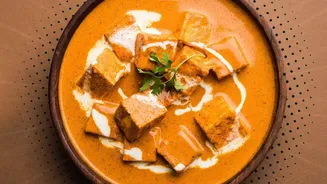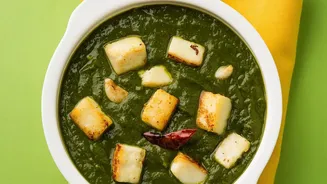







Ever wonder why your homemade paneer curry is thin and lacks that luscious, rich texture you love at restaurants? The secret isn't complicated techniques or exotic ingredients. It's about using everyday pantry staples the right way.
Master the Masala Base
The foundation of any
great curry is its masala base, typically made from onions and tomatoes. The key to a thick, flavourful gravy is cooking this base patiently. Sauté finely chopped or pureed onions in oil or ghee until they are deeply golden brown. This caramelisation builds a sweet, complex flavour. Don't rush this step; it can take 15-20 minutes. Once the onions are browned, add your ginger and garlic paste, followed by pureed ripe tomatoes. Cook this mixture until it thickens, darkens in colour, and you see oil separating from the sides of the pan. This process, known as 'bhunao', is crucial for developing deep, rich flavours.
The Creamy Magic of Nuts and Seeds
One of the biggest secrets to a restaurant-style velvety gravy is the use of nuts or seeds. Soaking a small handful of raw cashews or blanched almonds in hot water and then blending them into a fine paste is a classic technique. This nut paste, when added to your curry and simmered, works as a natural thickener, lending an incredible richness and creamy texture without being overpowering. For a different flavour profile, you can also use melon seeds (magaz), poppy seeds, or even a tablespoon or two of smooth peanut butter in certain curry styles. Add the nut paste after your tomato base has cooked down and let it simmer for a few minutes to cook out the raw taste.
Dairy for Decadence and Balance
Dairy is a cornerstone of many rich North Indian curries. A simple splash of heavy cream (malai) or full-fat milk towards the end of cooking can instantly elevate the gravy, making it silkier and balancing the acidity of the tomatoes. Beaten full-fat yoghurt (dahi) can also be used to add thickness and a pleasant tanginess, which is common in dhaba-style preparations. To prevent curdling, either whisk the yoghurt well and add it to the curry on low heat, or temper it by mixing a spoonful of the hot gravy into the yoghurt before stirring it all back into the pan. Even a tablespoon of milk powder can be dissolved in water and added for a quick creamy boost.
Smart Thickeners in Your Pantry
Beyond nuts and dairy, other pantry staples can help you achieve that perfect consistency. A common thickener is roasted gram flour (besan). Dry roast one or two tablespoons of besan in a separate pan until it's aromatic and slightly browned, then add it to your onion-tomato base. This not only thickens the gravy but also adds a nutty, earthy flavour. Tomato paste is another excellent ingredient for adding body and intense tomato flavour. For a last minute fix on a watery curry, a slurry made from a teaspoon of cornstarch mixed with cold water can be stirred in at the end, though this is less traditional.
Finishing Touches for Authentic Flavour
The final layers of flavour are just as important as the base. One ingredient that often separates homemade curry from restaurant versions is kasuri methi (dried fenugreek leaves). Crush the leaves between your palms to release their aroma before sprinkling them into the curry in the last few minutes of cooking. A final sprinkle of garam masala and a small pinch of sugar to balance the flavours will round out the dish perfectly. Finally, use soft, fresh paneer. To ensure it stays tender, you can soak the cubes in warm salted water for 15 minutes before adding them to the hot gravy right at the end.