






The Government’s Inflation Battle Plan
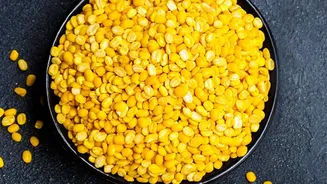
To combat rising food prices, the Indian government is reportedly considering a reduction in import duties on specific pulses. The main contenders for these tariff cuts are masoor (red lentils) and yellow peas. Currently, masoor carries a 10% import tax,
while yellow peas have a higher 30% duty. This move is a direct response to concerns about domestic production, which has been hampered by an uneven monsoon season this year. Key pulse-growing regions received significantly less rainfall, sparking fears of a weaker harvest and tighter domestic supply. This isn't a new strategy; the government has already made imports of tur (pigeon peas) and urad (black gram) duty-free until March 2027 to ensure a steady supply and keep prices in check. By making it cheaper to import more pulses, the government aims to increase the overall availability in the market, thereby cooling down prices before they climb further, especially with the festive season demand approaching.
What It Means for Your Wallet
For the average consumer, any talk of duty cuts raises one primary question: will dal get cheaper? In theory, yes. Lowering import duties reduces the landing cost of pulses from major suppliers like Canada, Australia, and Russia. This increased, cheaper supply should, in turn, put downward pressure on wholesale and then retail prices. However, the effect is rarely instantaneous. It takes time for the policy change to translate into increased shipments arriving at ports, moving through the supply chain to millers, and finally reaching your local kirana store. While the move is designed to provide relief, consumers might not see a significant price drop overnight. The government's objective is to prevent sharp price spikes and stabilise the market, offering a cap on how high prices might go rather than guaranteeing a major reduction. The policy acts as a crucial tool to manage food inflation, which stood at 5.95% in August, with pulse prices being a significant contributor.
A Balancing Act: The Farmer's Perspective
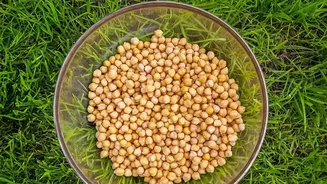
While lower prices are good news for consumers, the story is more complicated for India's farmers. Cheaper imports arriving just as domestic crops are ready for harvest can lead to a drop in the prices farmers receive for their produce, potentially below the Minimum Support Price (MSP). This is precisely why the government's approach is often selective. For instance, reports suggest that chana (chickpeas) may be excluded from the duty cuts. With the chana planting season beginning in October, maintaining the import duty encourages farmers to sow a larger area, boosting domestic production. It's a delicate policy balancing act: protecting urban consumers from inflation while ensuring that the nation's farmers, who are often dependent on rain-fed agriculture, receive remunerative prices for their labour and investment. Historically, import policies have been adjusted based on this very trade-off between consumer prices and farmer incomes.
The Bigger Picture: India's Pulse Deficit
These policy decisions highlight a fundamental challenge for India. The country is the world's largest producer, consumer, and importer of pulses. Despite efforts to boost domestic production and achieve self-reliance (Aatmanirbharta), a significant gap between demand and supply persists. In 2024-25, India produced around 25.7 million tonnes of pulses but had to import 7.3 million tonnes, meaning imports accounted for nearly a quarter of its consumption. This structural deficit makes India vulnerable to global price fluctuations and dependent on imports to ensure food security. While long-term initiatives focus on increasing domestic yields and providing better support to farmers, short-term measures like adjusting import duties remain a critical, albeit reactive, tool for managing the immediate needs of the economy and its vast population.