






Why This Rule Is Being Considered
The core problem is staggering. The Supreme Court has noted that a shocking number of vehicles on Indian roads—nearly 56%, or over 16.5 crore—are operating without valid insurance. This isn't just a technical violation of the Motor Vehicles Act, which
mandates third-party insurance; it has severe real-world consequences. When an uninsured vehicle is involved in an accident, victims and their families often face immense difficulty and prolonged legal battles to receive any compensation. The court's objective is twofold: ensure that victims are compensated promptly and reduce the litigation clogging the judicial system. The 'No Insurance, No Fuel' idea, proposed as a pilot project for IRDAI and the Ministry of Road Transport and Highways (MoRTH) to develop, is seen as a powerful enforcement tool to compel vehicle owners to get insured.
How Would 'No Insurance, No Fuel' Work in Theory?
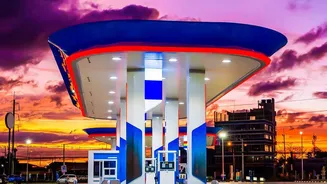
The proposed system aims for a seamless, tech-driven check. In theory, when a vehicle pulls into a petrol pump, a system would verify its insurance status before the attendant can dispense fuel. This would likely involve Automatic Number Plate Recognition (ANPR) cameras scanning the vehicle's number plate. The plate number would then be checked in real-time against centralised databases like the VAHAN portal, which holds vehicle registration details, and data from the Insurance Information Bureau. If the database shows no valid insurance linked to the registration number, the fuel dispenser would be locked for that vehicle. The idea is to create a moment of truth at a point of regular interaction for every vehicle owner, making it almost impossible to operate an uninsured vehicle.
The Crucial Difference: Third-Party vs. Comprehensive
To understand the core challenge, one must distinguish between two main types of motor insurance. Third-Party (TP) insurance is the mandatory minimum required by law. It covers liability for injury, death, or property damage to a third party (e.g., another driver, pedestrian, or vehicle). It does not cover any damage to your own vehicle. Comprehensive insurance, on the other hand, is an optional package that includes the mandatory third-party cover plus 'Own Damage' (OD) cover for your vehicle against accidents, theft, and other calamities. The government's VAHAN portal and related apps like mParivahan are designed to track the mandatory part—the third-party policy's validity. The 'No Fuel' rule is primarily concerned with ensuring this basic legal requirement is met.
The Real-World Verification Problem
Herein lies the multi-crore question. While checking data against a portal sounds simple, the reality is far more complex. The success of the entire scheme hinges on a single, unified, and instantly updated database that is 100% accurate. Currently, while portals like VAHAN and IIB exist, there can be lags in data updation. A person might renew their policy, but it may take hours or even a day for the central database to reflect this change. Imagine the chaos if thousands of vehicle owners with freshly renewed but not-yet-updated policies are denied fuel and forced to argue at packed petrol stations. Furthermore, the system must be robust enough to handle the massive volume of checks across lakhs of petrol pumps without crashing. Any glitch or delay could bring traffic to a standstill and cause significant public friction, a concern acknowledged in the proposal to conduct a pilot project first to assess feasibility without disrupting services.
What's at Stake for Owners and Pumps?
For vehicle owners, the proposal means compliance is no longer optional. While tools to check insurance status online already exist, this rule would enforce the check. For petrol pump operators, it introduces a new, non-core responsibility. They would be at the front line of enforcement, dealing with potentially frustrated customers whose insurance information isn't syncing correctly. The Ministry of Petroleum and Natural Gas has reportedly given its in-principle approval, but the logistical burden on fuel station staff would be immense. The success of this ambitious project depends entirely on creating a backend infrastructure that is not just reliable, but flawless. Without it, a well-intentioned public safety measure risks becoming a daily source of public inconvenience.