







A Policy Shift Ignites a New Industry
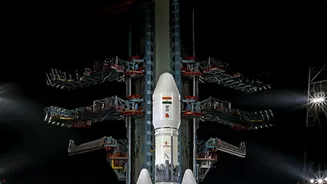
The catalyst for this cosmic boom was a series of government reforms initiated around 2020. Recognizing the immense potential of the global space economy, India established the Indian National Space Promotion and Authorisation Centre (IN-SPACe). This
single-window agency was designed to empower private companies, giving them access to ISRO’s world-class facilities, technologies, and expertise. The move signaled a fundamental shift: the space sector was officially open for business. The impact was immediate, with the number of space startups rocketing from just a handful to over 450 in a few short years. India's space economy, valued at around $8.4 billion, is now projected to soar to over $40 billion by the next decade, with the country aiming to capture a larger share of the global market.
The Rocket Builders: Skyroot and Agnikul
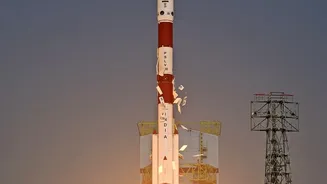
Leading the charge are companies building launch vehicles, the rockets that carry satellites into orbit. Hyderabad-based Skyroot Aerospace made history in July 2026 by successfully launching Vikram-1, India's first privately developed orbital rocket. This achievement made India only the third country, after the US and China, with a private company capable of orbital launches. Not far behind is Chennai's Agnikul Cosmos, which has pioneered the use of 3D-printed rocket engines. Their Agnibaan rocket, powered by a single-piece, semi-cryogenic engine, drastically reduces manufacturing time and cost. The company has successfully tested clusters of these innovative engines, proving their technology is scalable for orbital missions and is even planning for reusable rocket technology.
Beyond the Launch: A Diverse Ecosystem
The innovation isn't limited to just rockets. A whole ecosystem of companies is emerging to address different parts of the space value chain. Pixxel, for instance, is deploying a constellation of some of the world's most advanced hyperspectral imaging satellites. These satellites act as a 'health monitor' for the planet, providing detailed data for agriculture, environmental monitoring, and urban planning. In a landmark public-private partnership, a consortium led by Pixxel was chosen to build India's national Earth Observation constellation. Other startups like Dhruva Space are focusing on satellite platforms and deployment, while many others are working on critical components, ground station services, and data analytics, creating a deep and resilient domestic supply chain.
ISRO's New Role: From Player to Coach
The rise of private players hasn't made ISRO redundant. Instead, its role is evolving from being the sole operator to a mentor and enabler. By transferring mature technologies and opening its testing facilities, ISRO is nurturing this new generation of space entrepreneurs, many of whom are former ISRO scientists themselves. This symbiotic relationship allows ISRO to focus on more ambitious, deep-space research and development missions like Gaganyaan (human spaceflight) and lunar exploration, while private firms handle the growing commercial demand for satellite launches and services. IN-SPACe has already facilitated over 100 technology transfers, accelerating the pace of innovation across the private sector.
Challenges on the Final Frontier
Despite the incredible momentum, the path is not without its challenges. Access to consistent, large-scale funding remains a significant hurdle for these capital-intensive businesses. While venture capital is flowing in, with nearly $390 million invested over the last three years, it pales in comparison to the multi-billion-dollar government contracts that fueled the private space boom in the US. Furthermore, the lack of a comprehensive space law creates regulatory ambiguity, and Indian startups face stiff competition from established global players. Building a robust domestic supply chain for all high-tech components is another critical area of focus to reduce dependence on imports and ensure long-term, self-reliant growth.