



A Cosmic Collision Course
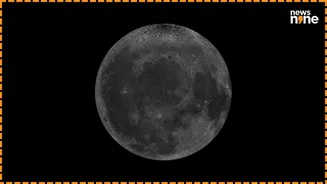
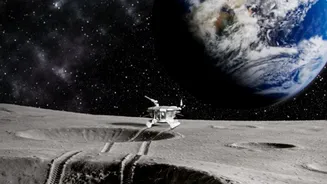
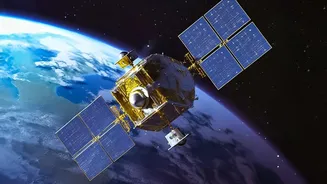
On August 5, 2026, a spent upper stage of a SpaceX Falcon 9 rocket is predicted to slam into the Moon at over 8,000 km/h. The school-bus-sized object is leftover from a January 2025 mission that successfully deployed a commercial lunar lander. Having
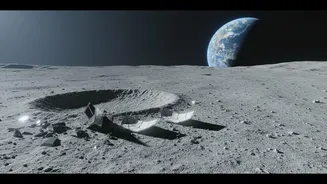
completed its task, the rocket stage lacked enough fuel to return to Earth or escape the Earth-Moon system's gravity, leaving it in a chaotic orbit until this inevitable crash. Independent astronomers, like Bill Gray of Project Pluto, first identified the trajectory, a prediction later confirmed by NASA. The impact is expected to carve out a new crater about 18 metres wide near the Moon's Einstein Crater.
The Detective Work of Space Tracking
Identifying and tracking a tumbling, unpowered rocket stage across hundreds of thousands of kilometres is a monumental challenge. Unlike active satellites, this debris is 'dark,' with no transponder to announce its location. Astronomers must rely on fleeting glimpses from powerful telescopes, piecing together an orbital path affected by the gravitational pulls of the Earth, Moon, and Sun, and even the gentle push of solar radiation. The initial confusion over a 2022 lunar impact—first attributed to SpaceX, then correctly to a Chinese rocket booster—underscores the difficulty and the lack of a comprehensive, official catalogue for deep-space junk. This detective work often falls to independent researchers and academics who voluntarily keep watch.
More Than Just a Lunar Bruise
While this specific impact poses no threat to Earth, it is far from harmless. For scientists, it's a rare, albeit accidental, opportunity to study crater formation and analyse the material kicked up from beneath the lunar surface, which could reveal details about its composition. NASA's Lunar Reconnaissance Orbiter will attempt to image the crater afterward. However, such impacts also represent a form of contamination. As more missions head to the Moon, uncontrolled crashes risk damaging sensitive scientific experiments, heritage sites like the Apollo landing spots, or future human habitats. A cloud of high-speed lunar dust, or regolith, kicked up by an impact could act like shrapnel, endangering nearby assets.
The Growing Problem of Space Junk
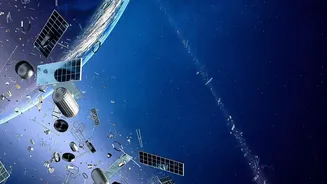
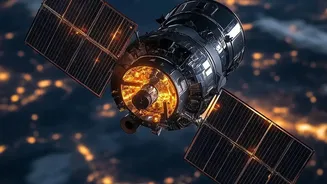
This Falcon 9 stage is just one piece of a much larger problem. Decades of space exploration have left orbits cluttered with defunct satellites, spent rocket bodies, and millions of smaller fragments. While much of the focus has been on low Earth orbit, where thousands of active satellites for communication and navigation reside, the issue is expanding into cislunar space—the area between Earth and the Moon. With a new space race involving commercial companies and multiple nations aiming for the Moon, traffic is increasing dramatically. Without a plan, the risk of a cascade of collisions, known as the Kessler Effect, could one day render certain orbits unusable.
The Case for Space Traffic Management
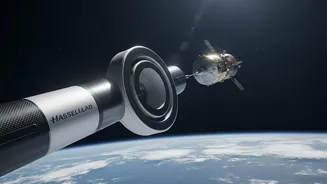
This impact highlights a significant regulatory gap. There is currently no international authority responsible for managing traffic or debris in deep space. Companies and agencies are largely self-policing. Modern rockets from some providers, like ESA's Ariane 6, are designed to ensure their upper stages safely de-orbit and burn up in Earth's atmosphere. However, these practices are not universal. Experts argue for the urgent development of a comprehensive Space Traffic Management (STM) system. This would involve international collaboration on data sharing, establishing clear rules for the disposal of space hardware, and developing technologies to actively remove the most dangerous pieces of debris before they cause a catastrophe.