



An Evolution in Celebration
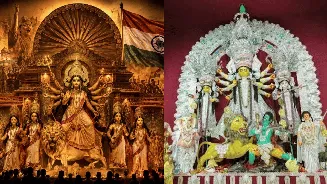
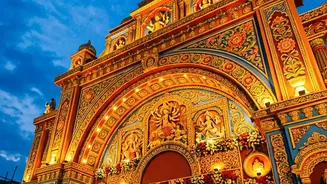
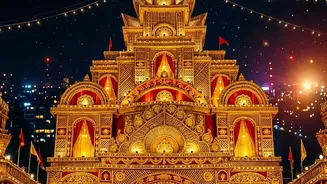
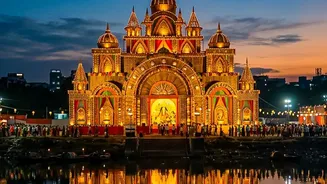
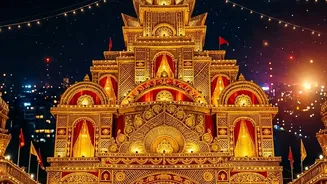
For decades, Durga Puja in Kolkata has been synonymous with visual grandeur—magnificent pandals and breathtaking idols. But this year, a palpable shift is underway across the city's vast, open-air art gallery. Organisers and artists are moving beyond
static beauty, engineering multi-sensory environments that engage visitors on a deeper, more narrative level. It is no longer enough for a pandal to be seen; it must be felt and heard. This evolution marks a significant turn in the festival's creative direction, blending traditional craftsmanship with modern technology to tell stories that resonate with a new generation of pandal-hoppers. The result is a festival that feels both comfortingly familiar and thrillingly innovative, where faith, culture, and public art intersect in extraordinary new ways.
The Architecture of Sound
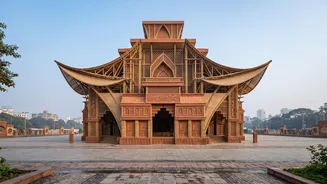
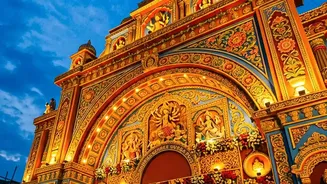
This year, sound is as much a building material as bamboo or cloth. At Santosh Mitra Square, a powerful light-and-sound show accompanies their 'Vande Mataram' theme, depicting India's journey to independence. Similarly, Kumartuli Park's theme, 'O Ganga Tumi Boichho Keno' (Oh Ganga, Why Do You Flow?), uses carefully designed sound effects to recreate the auditory experience of the river's journey from mountain to sea. Perhaps most emblematic of this trend is North Kolkata's Chorbagan Sarbojanin, which has adopted the theme 'Beyond Sound'. Their dome-shaped pandal is designed to explore a divine world beyond noise, using silence and ambient sound as a medium for a meditative experience, proving that what you hear—or don't hear—can be as powerful as what you see.
Sculpture as Narrative
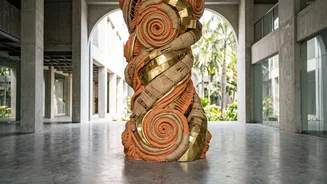
The idols and installations have also taken on a more profound narrative role. At Dum Dum Park Tarun Sangha, the entire pandal is a massive sculpture of an ancient merchant ship, telling the forgotten tales of Bengal's maritime trade through intricate terracotta motifs. Tridhara Sammilani is featuring mythological battles through a series of sculptural installations, but its main attraction is a separate 5.5-foot sculpture of Maa Durga made from 13,000 recycled plastic pens by artist Chandra Nath Saha. This piece connects the sacred tradition with a modern message of sustainability. In another part of the city, one pandal even features an interactive, sensor-driven brass sculpture of a serpent, blending mythology with technology to represent cosmic energy. These are not just statues; they are characters in a larger story.
The Minds Behind the Magic
This creative leap is being driven by a generation of artists who see pandals as experiential canvases. They are exploring complex themes, from history and social issues to deeply spiritual concepts. While some pandals recreate architectural marvels like Jaipur's Hawa Mahal at Sreebhumi Sporting Club or a South Indian temple at Mohammad Ali Park, others are diving into abstract ideas. The theme 'Shodhan' (Purification) at Rajdanga Naba Uday Sangha, for instance, uses devotional music and performance within an immersive setting to create a spiritual atmosphere. These artists are pushing the boundaries of what a temporary structure can achieve, turning pandals into spaces for reflection, storytelling, and shared experience. This focus on artistic innovation is helping to solidify Durga Puja's status as a globally recognised cultural event, celebrated as a UNESCO Intangible Cultural Heritage.