

In the vast darkness of space, finding a new planet is a triumph. But what happens when one of those distant worlds simply disappears? Astronomers have now cracked the case of a famous 'missing' exoplanet, and the answer is not what anyone expected.
The Case of the Ghost Planet
The
story begins in 2008 with a landmark announcement: astronomers had directly imaged an exoplanet orbiting the bright star Fomalhaut, just 25 light-years away. It was a huge deal. Most exoplanets are detected indirectly, by watching for the slight dimming of a star as a planet passes in front of it. Seeing one as a distinct point of light, named Fomalhaut b, was a rare achievement. But from the start, this world was strange. It was incredibly bright in visible light, yet it gave off no detectable heat in the infrared spectrum—highly unusual for a young, massive planet. Its orbit was also peculiar, appearing to be on a path that would eventually fling it out of the star system entirely. Then, the ultimate mystery unfolded: when astronomers looked again with the Hubble Space Telescope in 2014, the planet was gone. It had vanished without a trace.
A Cosmic Crime Scene Investigation
A planet three times the mass of Jupiter doesn't just disappear. Scientists were baffled. The clues didn't add up. 'Clearly, Fomalhaut b was doing things a bona fide planet should not be doing', said András Gáspár, an astronomer at the University of Arizona who led the investigation. If it were a massive planet, it should have been warm enough to glow in infrared light. It wasn't. If it were a planet, its gravity should have affected the massive dust ring encircling the Fomalhaut star, but the ring remained undisturbed. The evidence pointed to a radical new theory: what if it was never a planet at all?
The Stunning Revelation
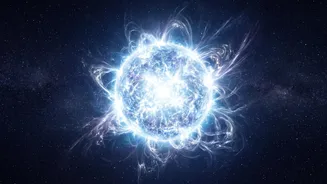
After meticulously analysing all available Hubble data, Gáspár and his colleague George Rieke reached a startling conclusion. The 'planet' they had been tracking was something far more ephemeral and violent: a massive, expanding cloud of dust. They believe that shortly before the first observation in 2004, two large bodies, each about 200 kilometres wide and made of ice and dust, smashed into each other in a catastrophic collision. What Hubble saw wasn't a solid planet, but the immediate, brightly-lit aftermath of this cosmic crash. The object appeared to fade over time because the fine dust cloud was rapidly expanding and dispersing into space. By 2014, the cloud had grown so large and diffuse—likely wider than Earth's orbit around the sun—that it fell below Hubble's detection limit, seeming to vanish.
Why This Phantom Planet Matters
Solving the mystery of Fomalhaut b is more than just a clever piece of detective work. It provides a rare, direct look at how planetary systems evolve. 'These collisions are exceedingly rare, and so this is a big deal that we actually get to see evidence of one', explained Gáspár. Such impacts are a fundamental part of planet formation. They can build larger worlds or, as in this case, completely destroy smaller ones. The Fomalhaut system acts as a 'test lab' for ideas about how planets form and interact. The discovery of this disappearing dust cloud serves as a blueprint for how planets can destroy each other, scattering debris that may one day form new, smaller bodies. More recent observations with the James Webb Space Telescope have revealed even more complexity in Fomalhaut's dusty rings, suggesting unseen planets are still shaping the system, carving gaps in the debris just as planets do in our own solar system.