



The Initial Disaster
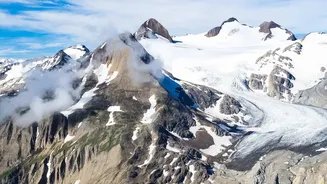
Recent events in Nepal highlight a terrifying reality of its geography. On August 26, 2026, a massive flash flood, reportedly triggered by a glacier collapse and subsequent landslide, tore through the Bhote Koshi river valley near the Tibet border. This
initial surge of water, mud, and debris caused catastrophic damage, wiping out villages, destroying hydropower projects, and leaving hundreds dead or missing. Such events are tragically common in Nepal, where steep terrain, fragile geology, and intense monsoons create a perfect storm for natural disasters. The sheer velocity of these floods leaves communities with almost no time to evacuate.
How a 'Second Wall' Forms
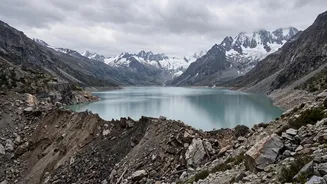
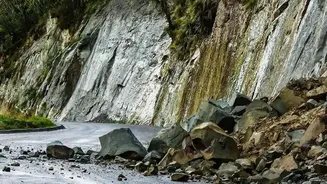
The danger of a second wall of water arises from a cascading hazard. The same landslide that contributes to the initial flood—or a new one triggered by the water's force—can completely block a narrow river valley. This mass of rock, soil, and debris forms what is known as a landslide dam. Upstream, the river's flow is halted, and water begins to accumulate rapidly behind this unstable, natural barrier. A massive and potentially vast lake can form in a matter of hours or days, submerging upstream areas. This temporary lake is, in effect, a ticking time bomb, holding back an immense volume of water with a dam made of nothing but loose rubble.
The Ticking Time Bomb of a Landslide Dam
Unlike an engineered concrete dam, a landslide dam is inherently unstable. It has no controlled spillway to safely release pressure. The danger mounts as the new lake fills. The dam can fail in several ways. Water might seep through the loose material, weakening it from within—a process called 'piping'. Most commonly, the rising water will simply overtop the dam. As water spills over the crest, it rapidly erodes the soft material, carving a breach that can widen catastrophically in minutes. This sudden, total failure of the dam unleashes the entire volume of the impounded lake in a single, colossal wave.
The Catastrophic Outburst Flood
This is the 'second wall of water'. It is a far greater and more destructive event than the first flood. A landslide dam breach releases a torrent with immense energy, carrying not just water but a thick slurry of mud, boulders, and debris from the dam itself. The resulting outburst flood moves at incredible speeds down the valley, with a force that can obliterate everything in its path—infrastructure, bridges, and entire towns that may have even survived the initial disaster. For communities living downstream, who may believe the worst is over, this second wave is an unpredictable and often unsurvivable threat. Authorities often issue urgent warnings for residents along river banks to move to higher ground, knowing this secondary risk is high.
Why Nepal Is So Vulnerable
Nepal's unique geography makes it exceptionally prone to this double disaster. The Himalayas are young, seismically active mountains with some of the world's steepest slopes and deepest gorges. This topography is ripe for landslides. Furthermore, climate change is accelerating the melting of glaciers, creating more glacial lakes. These lakes, often dammed by unstable moraines (glacial debris), can burst in what's known as a Glacial Lake Outburst Flood (GLOF), another source of a sudden wall of water. The combination of heavy monsoon rains, seismic activity, steep terrain, and expanding glacial lakes creates a constant and growing hazard that threatens not only Nepal but downstream regions in India as well.