


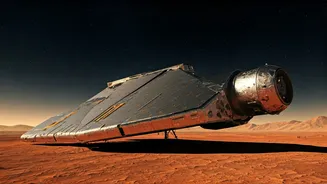


A Global Push Toward the Moon and Mars
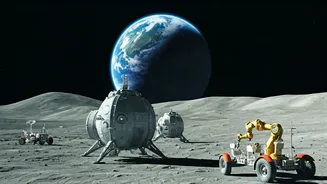
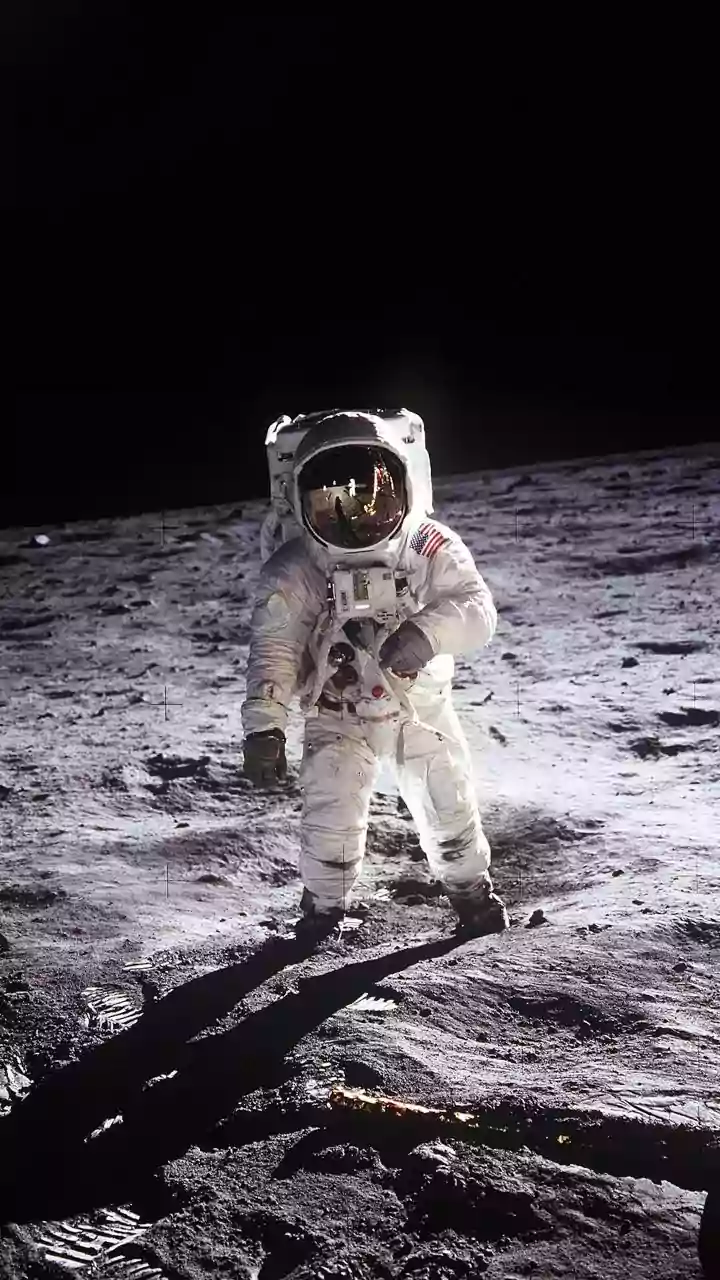
Humanity's return to deep space is a major theme this year. In a historic flight, NASA's Artemis II mission successfully sent four astronauts on a ten-day journey around the Moon in April 2026, marking the first time humans have traveled beyond low Earth
orbit since 1972. While the next mission, Artemis III, has a revised profile and is now planned for 2027, the success of Artemis II has energized the entire industry. International partners are also making significant moves. China's Chang'e 7 mission is expected to launch for the lunar south pole in late 2026 to search for water ice. Meanwhile, Japan's Martian Moons eXploration (MMX) mission is slated for a late 2026 launch to study Mars's moon Phobos and return a sample to Earth. These government-led missions are creating foundational opportunities for private contractors and driving technological development across the board.
The Heavy-Lift Rocket Race Heats Up
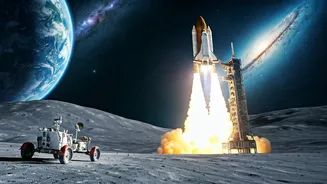
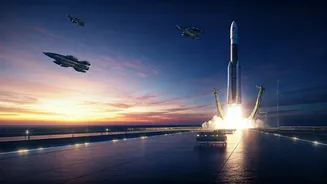
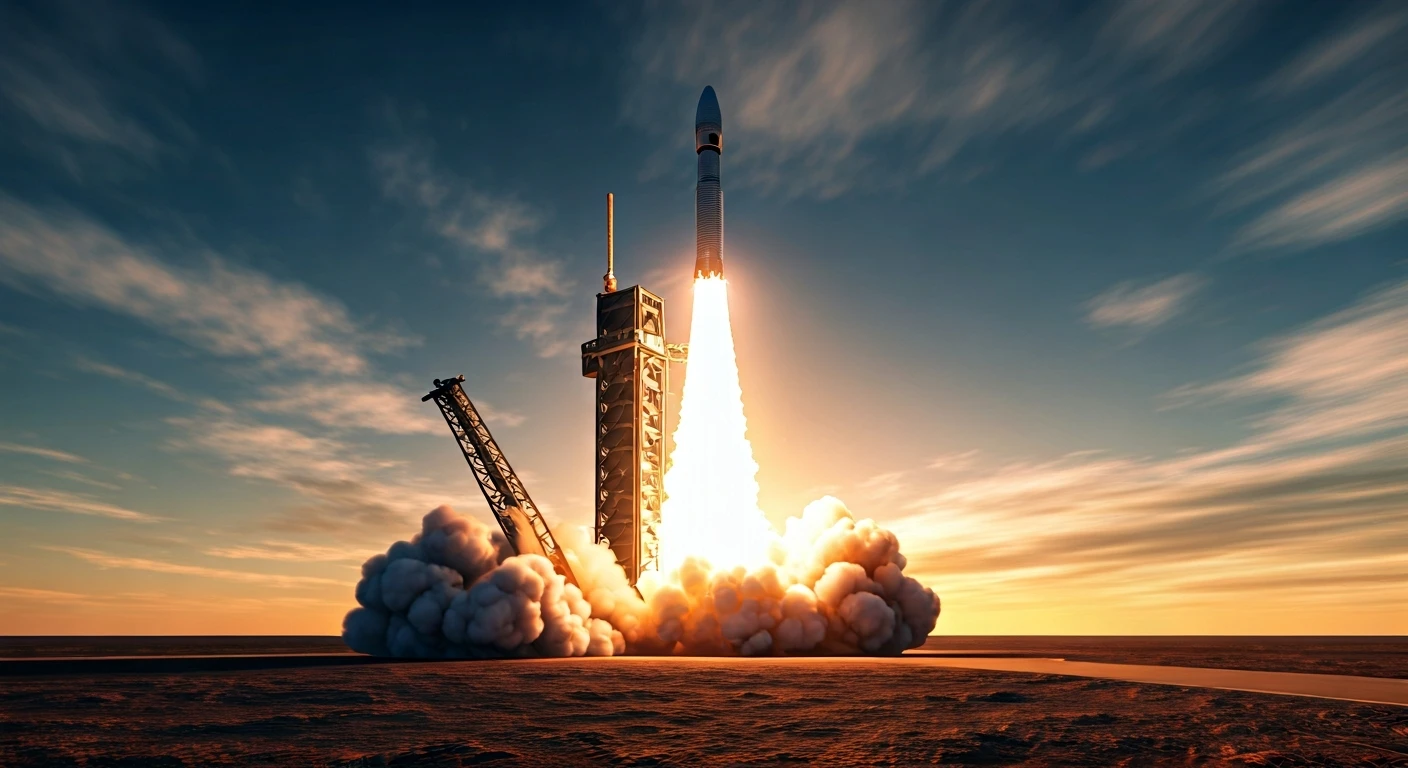
The vehicles that power space exploration are undergoing a radical transformation, led by private industry. SpaceX's massive Starship rocket is at the center of this revolution. The company has been conducting an aggressive test campaign, with Flight 12 in May 2026 marking the first flight of the upgraded Starship V3. Despite a mishap with the booster, the upper stage achieved key objectives, demonstrating progress toward a fully reusable system capable of deploying next-generation satellites and, eventually, landing on the Moon for NASA. Not to be outdone, Jeff Bezos's Blue Origin is pushing forward with its own heavy-lift rocket, New Glenn. Despite a dramatic launch pad explosion during a ground test in May 2026, the company is rebuilding and targeting a return to flight before the end of the year. These powerful, reusable rockets are designed to drastically lower the cost of accessing space, unlocking new business models.
Low Earth Orbit Becomes a Commercial Hub
The region of space closest to home, low Earth orbit (LEO), is becoming increasingly commercialized. The development of private space stations is a critical part of this trend, as NASA plans to retire the International Space Station (ISS) around 2030. Companies are racing to be the first to offer a commercial alternative. Vast's Haven-1, a standalone commercial module, was initially targeting a 2026 launch, but that has since been updated to no earlier than 2027. Other players like Axiom Space and a joint venture between Voyager Space and Airbus are also developing their own orbital outposts. This transition from a single government-run station to a marketplace of private destinations is intended to create a robust economy in LEO for research, manufacturing, and tourism.
The Satellite Constellation Boom
The business of space is also being fueled by the massive expansion of satellite networks. SpaceX continues to launch batches of its Starlink satellites, with recent launches in June 2026 bolstering its global internet service. Competitors are also active; Arianespace launched 36 satellites for Amazon's rival internet constellation in June 2026. Beyond internet, these constellations serve a growing range of purposes. In June, SpaceX launched intelligence-gathering satellites for the U.S. National Reconnaissance Office. Other companies like AST SpaceMobile are launching satellites to provide direct-to-device connectivity. SpaceX has even filed plans for an ambitious orbital AI data center called Starmind, which could involve up to a million satellites in the future. This proliferation is creating a constant demand for launch services and driving innovation in satellite technology.