






Finding Your Foundational Seat
The secret to comfortable sitting isn't about maintaining a single, rigid pose, but about creating a supportive base. Start by sitting all the way back in your chair so your pelvis is stable and your weight is evenly distributed on your 'sit bones'. Your
feet should be flat on the floor, with your knees bent at a roughly 90-degree angle. If your feet don't reach the floor, use a footrest or a stack of sturdy books. The aim is to create a relaxed, stable foundation from which the rest of your body can find alignment without strain.
Aligning Your Back, Shoulders, and Head
Once your base is set, allow your spine to maintain its natural, gentle inward curve in the lower back. A supportive chair will help with this, but a small cushion can also do the trick. Let your shoulders relax, rather than pulling them back rigidly or letting them round forward. Your elbows should hang comfortably by your sides, bent at about 90 to 120 degrees. Finally, think of your head floating upward, with your chin gently tucked so your ears are aligned over your shoulders. This prevents the 'forward head' posture that contributes to neck strain.
The Best Posture Is Your Next Posture
Even a perfect posture becomes uncomfortable if held for too long. Experts agree that the most crucial habit for comfortable sitting is to change positions frequently. Regular movement prevents muscle fatigue and stiffness. Aim to get up, stretch, or simply walk around for a minute or two every 30 to 45 minutes. When you are seated, make small adjustments: shift your weight, uncross and re-cross your legs, or gently stretch your neck and shoulders. This dynamic approach is more sustainable and healthier than trying to stay perfectly still.
An Introduction to Breath Awareness
Just as your posture affects your comfort, the way you breathe impacts your mental state. Breath awareness is the simple practice of paying attention to the sensation of your breath without trying to change it. This practice can help activate the body's relaxation response, which can lower heart rate, reduce blood pressure, and ease feelings of stress and anxiety. It's a powerful and accessible tool for calming an overactive nervous system, and it begins with simply noticing your inhale and exhale.
Practice: Diaphragmatic (Belly) Breathing
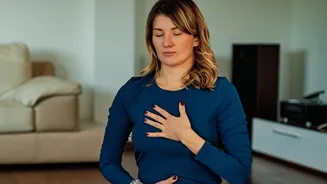
One of the most fundamental techniques is diaphragmatic breathing, which engages the primary muscle of respiration. You can do this sitting comfortably in your chair. Place one hand on your upper chest and the other just below your rib cage. Breathe in slowly through your nose, intending for the breath to travel down into your belly, causing the hand on your stomach to rise. The hand on your chest should remain relatively still. Then, exhale slowly through your mouth or nose, allowing your stomach to fall naturally. This technique might feel tiring at first, but with practice, it becomes easier and more automatic.
Integrating Breath Into Your Day
You don't need to set aside long periods to benefit from breath awareness. The key is to integrate short, mindful moments throughout your day. Try taking three to five intentional belly breaths before you start a meeting, while waiting for a file to load, or during a commercial break. Another simple technique is 'box breathing': inhale for a count of four, hold for four, exhale for four, and hold for four. These micro-practices help interrupt the cycle of stress, regulate your nervous system, and bring a sense of calm and focus back to your present moment.