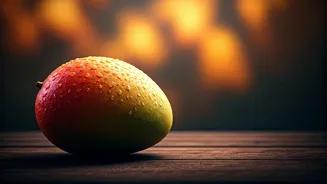









More Than Just a Fruit
In the United States, a mango is often a singular experience—a sweet, tropical taste of summer available year-round in most supermarkets. In India, it’s an entire universe. The mango, or 'aam,' is not merely a fruit; it is a cultural cornerstone, an obsession,
and a marker of time. The season, which runs roughly from March through July, is a period of national delight that borders on mania. When Americans think of apples in the fall, they get a small taste of the devotion Indians reserve for the mango in the summer. It’s a symbol of prosperity, a gift of choice for visiting relatives, and the subject of heated, friendly debates over which regional variety reigns supreme.
A Symphony of Varieties
To understand the season is to understand its cast of characters. There isn't one 'Indian mango.' There are hundreds, each with its own flavor profile, texture, and devoted following. The season opens with the arrival of the prized Alphonso from the western coast, a creamy, fiberless, saffron-hued marvel often called the 'king of mangoes.' It's so coveted that the first boxes command astronomical prices.
But the Alphonso is just the opening act. As the weeks progress, other stars take the stage. The sweet, fragrant Kesar from Gujarat, perfect for making 'aamras' (a thick mango pulp). The uniquely flavored Langra from Uttar Pradesh, with its slight tang and greenish skin even when ripe. The Dasheri, a sweet and fibrous variety from the north, and the enormous, pulpy Chaunsa, which often marks the grand finale of the season. Each variety’s arrival is tracked with the fervor sports fans reserve for their favorite teams.
The Race Against the Rains
The end of the season is not a gentle fade-out but a dramatic climax dictated by nature. The arrival of the monsoon rains, typically in June and July, signals the end of prime mango growing. The increased humidity and water can dilute the flavor of the fruit and cause it to spoil more quickly. This knowledge creates a sense of urgency across the country. Markets teem with vendors making their last sales. Families rush to buy final boxes, knowing these will be the last truly great-tasting mangoes they'll have for nearly a year.
This final act is a sensory overload—the fragrant perfume of ripe mangoes filling the air, the bright yellows, oranges, and greens piled high on carts, and the cacophony of bargaining. It’s a nationwide scramble to soak up the last drops of summer’s sweetest offering before the skies open up and wash it all away.
Preserving the Sweetness
The 'sweet ending' of the headline is literal. While the fresh fruit disappears, its essence is captured and preserved to last through the monsoon and winter months. Indian kitchens become workshops for preservation. The end of the season is peak pickling time. Raw, tart mangoes are chopped and mixed with oil and a complex blend of spices to create 'achar,' a fiery, pungent pickle that will accompany meals for the rest of the year. Sweet mangoes are turned into 'murabba,' a sweet preserve, or cooked down and dried into sheets of 'aam papad,' a fruit leather that is a favorite treat for children and adults alike.
These preserved forms are more than just a way to avoid waste. They are edible memories, allowing the flavor and feeling of summer to be uncorked on a cold winter day, a tangy reminder of the sun-drenched season that was.