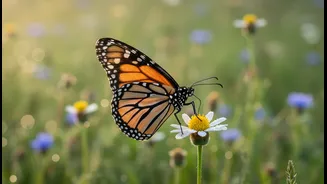









Essential, Unseen Pollinators
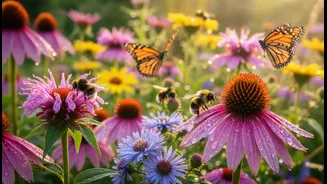
While bees get much of the credit, butterflies are crucial pollinators. As they travel from flower to flower to feed on nectar, they inadvertently transfer pollen. This process is essential for the reproduction of thousands of plant species, including
many fruits and vegetables that we rely on. Unlike bees, butterflies can travel longer distances, which helps promote genetic diversity in plant populations across a wider area. About a third of the food people consume depends on the work of pollinators, and butterflies are a key part of this essential service.
Canaries in the Coal Mine
Butterflies are highly sensitive to changes in their environment, making them excellent bio-indicators of ecosystem health. Their short life cycles and specific needs for certain host plants mean that even subtle shifts in climate, habitat loss, or pollution can have a dramatic impact on their populations. When butterfly numbers decline or species disappear from an area, it serves as an early warning that the entire ecosystem is under stress. Scientists closely monitor butterfly populations to gauge the effects of climate change and habitat fragmentation, using them as a living measure of our planet's well-being.
A Vital Link in the Food Web
Butterflies and their caterpillars are a fundamental part of the food chain. In their larval stage, caterpillars are a primary food source for many birds, providing the high-protein meals needed to raise their young. Adult butterflies are preyed upon by birds, bats, spiders, and other insects. Their presence supports a wide array of other species, and a healthy butterfly population indicates a thriving environment for other wildlife as well. If butterfly populations were to diminish significantly, the impact would ripple up through the ecosystem, affecting many other animals.
Sources of Scientific and Economic Value
For centuries, butterflies have been important 'model organisms' for scientific research. Their study has yielded insights into genetics, evolution, population dynamics, and climate change. The intricate, iridescent structure of their wings has even inspired technological innovations. Furthermore, butterflies hold tangible economic value. Ecotourism centered around butterfly parks and sanctuaries provides income for local communities. In some regions, sustainable butterfly farming for export to exhibits in other countries has created livelihoods while also promoting forest conservation.