




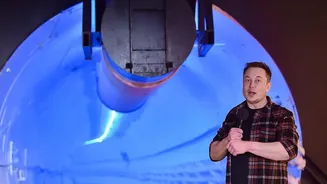

Elon Musk has a bold new vision for the future of artificial intelligence: move it off the planet. The idea of processing AI data in space is gaining traction, and SpaceX may be the only company with the tools to make it happen.
What is Off-Planet AI Processing?
At its core, off-planet
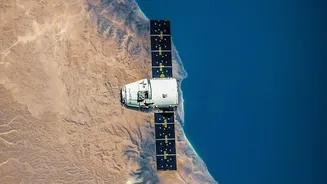
AI processing means building data centers in orbit. Instead of vast, power-hungry server farms on the ground, the idea is to place satellites equipped with specialized AI chips into space to perform the intensive calculations needed for artificial intelligence. This concept, often called orbital computing, would move the 'brains' of AI from terrestrial facilities into a network of interconnected satellites. This is a significant leap from what satellites do today, which is primarily collecting and relaying data back to Earth for processing. With orbital data centers, the analysis would happen at the source, in space itself.
The Terrestrial Problem Driving the Space Solution
The push for orbital data centers is driven by a growing crisis on Earth. The voracious energy and water demands of terrestrial AI data centers are straining power grids and meeting increased regulatory and community opposition. In the U.S. alone, securing a grid connection for a new data center can take years, and the supply chains for essential equipment are stretched thin. Musk and others argue that as AI models become exponentially more powerful, Earth's physical constraints on power, land, and water will become the primary bottleneck for AI's growth. Space, Musk argues, offers a solution with 'vast power and space'. In certain orbits, solar panels can generate power almost continuously, unhindered by weather or the day-night cycle.
How SpaceX and Starlink Fit In
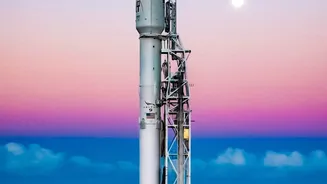
SpaceX is uniquely positioned to pursue this ambition through its vertical integration. The company has two key components: the Starship rocket and the Starlink satellite network. Starship's anticipated heavy-lift capacity is crucial for launching the massive number of large, heavy AI satellites required to build a gigawatt-scale orbital compute network. Meanwhile, Starlink's existing network of high-speed laser links that allow satellites to communicate with each other provides a blueprint for the connectivity needed to link thousands of processing nodes in orbit. SpaceX has already filed with the US Federal Communications Commission (FCC) for a constellation of up to one million satellites for an orbital data center system, which it has internally named 'Starmind'. To support this, the company is building a 'Gigasat Factory' in Texas to mass-produce these AI satellites.
The Immense Hurdles and Hazy Timeline
Despite the grand vision, the headline's caution is warranted: there is no confirmed deployment timeline, and the challenges are immense. A key problem is heat. In the vacuum of space, there is no air to help with cooling, so data centers must radiate all their heat away, a much less efficient process. Musk has argued that aluminum radiators can effectively dissipate the heat, but this remains a major engineering challenge to solve at scale. Another significant hurdle is radiation, which can corrupt data and damage commercial electronics that aren't 'hardened' for space. Finally, the cost is astronomical. One analysis suggests an orbital data center could cost at least three times more than a terrestrial one, a gap that can only close with dramatic reductions in launch costs. While SpaceX has floated initial test flights in 2027 and potential deployment as early as 2028, its own official filings acknowledge the plans involve unproven technology that may not become commercially viable.