



What is a Planetary Alignment?
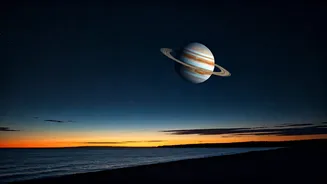
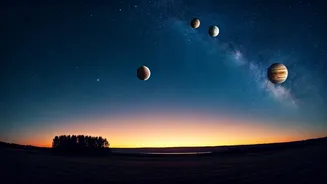
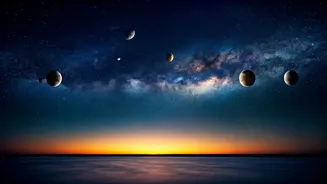
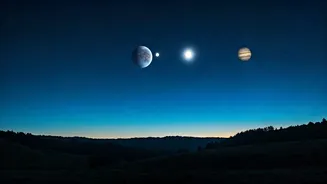
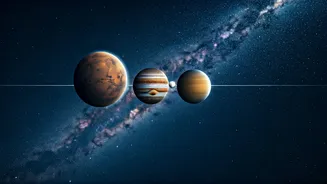
A planetary alignment, sometimes called a conjunction or a celestial parade, occurs when several planets appear close together in a small section of the sky, as viewed from Earth. It’s important to remember that they aren't actually close to each other
in space—in reality, they remain hundreds of millions of kilometres apart. This event is a beautiful trick of perspective. As the planets orbit the Sun at different speeds and on different paths, our line of sight from Earth occasionally catches them in a seemingly neat row. This current alignment brings together three bright and distinct worlds: Mars, Jupiter, and Saturn. For a brief period, they will form a striking trio, a cosmic meeting visible to the naked eye.
When and Where to See the Trio
This celestial show is best viewed in the pre-dawn hours, roughly 45 to 60 minutes before sunrise. The planets will be visible across India, so whether you’re in a bustling metro or a quiet town, you have a front-row seat. You'll need to look towards the eastern horizon. The key is to find a viewing spot with a clear, unobstructed view of the east, away from tall buildings or trees. The alignment will be visible for several days, but it will be at its most compact and impressive during its peak window. Waking up early might be a challenge, but the serene and stunning sight of three planets hanging in the twilight sky is a reward unlike any other.
Your Guide to Spotting the Planets
The best part about this event is its accessibility. You don’t need a fancy telescope or expensive binoculars. All three planets—Jupiter, Saturn, and Mars—are bright enough to be seen with the naked eye. Here’s how to tell them apart: Jupiter will be the brightest of the three, shining with a brilliant, steady white light. It will be impossible to miss. Saturn, appearing slightly dimmer and with a yellowish-white tint, will be nearby. Mars is easily identifiable by its distinct reddish-orange glow, earning it the name 'the Red Planet'. For the best experience, give your eyes about 15-20 minutes to adjust to the darkness. Avoid looking at your phone, as the bright screen can ruin your night vision. If you’re new to stargazing, a simple smartphone app like Stellarium or SkyView can help you pinpoint each planet instantly by just holding your phone up to the sky.
Why This Alignment Feels 'Epic'
While alignments aren't astronomically impossible, a gathering of three bright planets is a relatively uncommon and always captivating event. The term 'epic' captures the human sense of wonder when we witness the grand, silent mechanics of our solar system at play. It’s a powerful reminder of the vastness of space and our small but special place within it. For centuries, such events have inspired awe, poetry, and scientific curiosity. They were seen as omens or divine messages in ancient cultures. Today, we understand the orbital mechanics behind them, but that scientific knowledge doesn't diminish the magic; it enhances it. Knowing that you are seeing worlds millions of kilometres away, all aligned by the simple elegance of gravity and perspective, makes the experience even more profound.
Join the Community of Sky-Watchers
You won't be the only one looking up. Astronomy enthusiasts across India, from amateur clubs in Mumbai and Delhi to solo stargazers in the hills of Himachal, will be tracking this alignment. Events like this create a shared sense of community. People share their photos on social media, discuss their observations in online forums, and gather in local groups to watch together. It’s a wonderful opportunity to connect with others who share a curiosity for the cosmos. Tracking the movement of the planets night after night can become a rewarding hobby, a moment of peace and perspective in our busy lives. This alignment isn't just an event to be seen; it's an invitation to start looking up more often.