





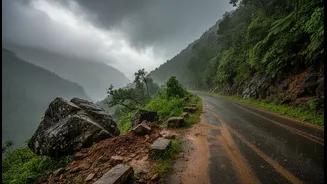



Monsoon's Fury Grips Western India
The 2026 southwest monsoon has intensified across western and southern India, with the India Meteorological Department (IMD) issuing alerts for heavy to extremely heavy rainfall in Gujarat, Karnataka, and Maharashtra. This sustained downpour has led to widespread
waterlogging, localised flooding, and increased risk of landslides, severely impacting all modes of transport connecting the two states. Authorities have urged the public to stay alert and avoid unnecessary travel as the active weather system continues to affect large parts of the country.
Road Travel: Navigating Potholes and Closures
For those travelling by road, the journey is fraught with challenges. National Highway 48 (NH-48), a critical artery connecting the regions, has seen disruptions due to potholes, cave-ins, and waterlogging in several sections, particularly in south Gujarat and parts of Maharashtra. In early July, heavy rains caused damage to highways near Valsad and a bridge approach near Navsari, leading to temporary closures and slower traffic. In Karnataka, ghat sections in the Western Ghats are particularly vulnerable, with authorities issuing warnings for landslides and restricting heavy vehicle movement on routes like the Agumbe Ghat to prevent accidents. Drivers are advised to expect significant delays and check real-time traffic conditions before starting their journey.
Railways Under Strain
The railway network, the backbone of long-distance travel in India, has not been spared. Heavy rain and waterlogging on tracks, especially in the low-lying sections between Surat in Gujarat and Mumbai in Maharashtra, have crippled services on the busy Ahmedabad-Mumbai corridor. In early July 2026, Western Railway was forced to cancel, divert, or short-terminate dozens of trains as tracks became submerged. Services on the Mumbai-Pune route, another key link, have also faced disruptions due to landslides. Passengers have experienced long delays, with some trains being halted for hours at various stations. As of July 8, numerous train services, including a train from Surat to Mangaluru Junction, have been cancelled due to the adverse conditions.
Air Travel: Delays in the Skies
While often seen as a reliable alternative, air travel has also been affected. Heavy rain, strong winds, and low visibility can lead to flight delays and, in some cases, diversions or cancellations at major airports like Bengaluru, Ahmedabad, and Surat. The IMD has warned of gusty winds reaching 50 to 70 kmph in coastal Karnataka and Gujarat. While a direct flight is the fastest theoretical way to travel, the journey to and from airports can be hampered by waterlogged city roads. Travellers are advised to check their flight status frequently with airlines before heading to the airport and to allow extra time for their commute.
Your Monsoon Travel Checklist
Given the unpredictable conditions, meticulous planning is crucial. First, build buffer days into your itinerary. A journey that usually takes a day might now take two. Second, opt for flexible bookings for travel and accommodation where possible. Third, pack a monsoon emergency kit: a power bank, torch, first-aid supplies, dry snacks, and extra water. Fourth, stay informed. Constantly monitor updates from the IMD, National Highway authorities, and Indian Railways. Use reliable traffic apps to check road conditions. Finally, always prioritise safety. If authorities advise against travel or if conditions appear too dangerous, it is better to delay your trip than to risk getting stranded.