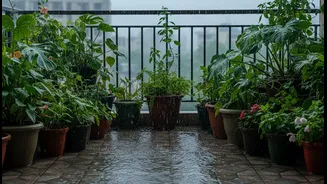



Why Monsoon Drainage is Critical
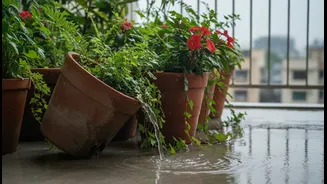
When pots can't drain effectively during relentless rain, the soil becomes waterlogged. This suffocates plant roots, preventing them from absorbing oxygen and nutrients. The result is root rot, a condition that is difficult to reverse and often fatal
for plants. Telltale signs include yellowing or drooping leaves, a musty smell from the soil, and mushy stems. Heavy rains can also wash away essential soil nutrients and create a breeding ground for fungal diseases and pests. Proper drainage isn't just about plant survival; it's about helping them thrive through the wettest months.
Choose the Right Pots and Planters
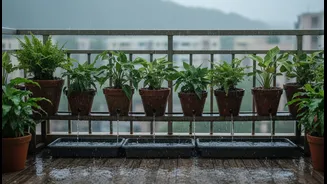
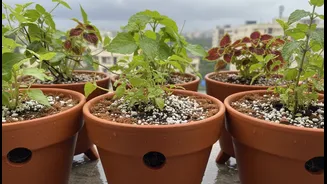
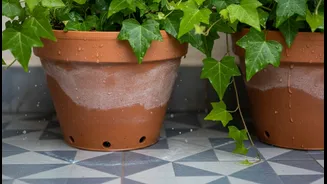
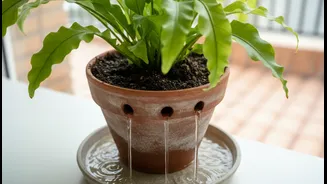
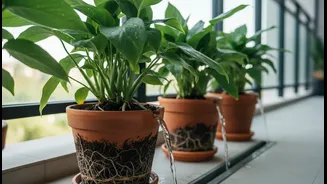
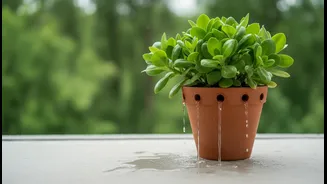
Your first line of defence starts with the container itself. Ensure every pot has at least one, and preferably multiple, drainage holes at the bottom. Terracotta or clay pots are an excellent choice as their porous nature allows soil to breathe and dry out more evenly. While plastic pots are lightweight and popular, they retain moisture, making adequate drainage holes absolutely essential. Regardless of the material, elevate your pots. Placing them on pot feet, bricks, or raised stands allows water to escape freely and prevents the base from sitting in a puddle, which is a common cause of root rot.
Create a Monsoon-Ready Potting Mix
Standard garden soil is too heavy for containers and compacts easily when wet, leading to poor drainage. A lightweight, well-aerating potting mix is crucial for balcony gardens, especially during the monsoon. Create your own by combining equal parts of soil, an organic material like compost or coco peat, and a drainage-improving element like perlite or coarse sand. Coco peat helps retain moisture without becoming waterlogged, while perlite creates air pockets that allow excess water to flow through and oxygen to reach the roots. This 'spongy' structure is the key to preventing a soggy mess.
Layering for Improved Flow
While the practice is debated, many gardeners find that adding a drainage layer to the bottom of a pot can help prevent soil from clogging the exit holes. Before adding your soil mix, consider placing a layer of materials like broken terracotta pot shards, small stones, or gravel at the bottom. This creates a reservoir where excess water can collect away from the plant's roots before it drains out. This technique is particularly useful for larger pots where the volume of soil can become heavily compacted over time. Ensure this layer doesn't take up too much space, as the roots still need ample room to grow.
Smart Monsoon Management
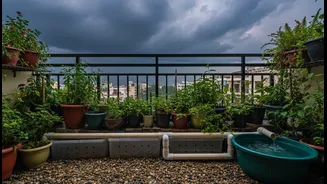
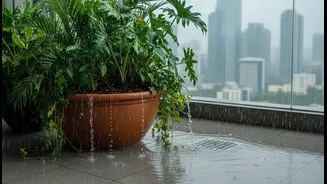
During the rainy season, you must adjust your care routine. Stop watering on a fixed schedule; instead, check the soil moisture before adding any more water. If the soil is already damp from rainfall, leave it alone. Group plants according to their water needs and move more sensitive species, like succulents, to a sheltered spot away from direct downpours. Pruning your plants before the monsoon encourages new growth and improves air circulation around the leaves, which helps prevent fungal infections that thrive in high humidity. Also, be sure to keep your balcony's main drain outlets clear of leaves and debris to prevent overall water stagnation on the floor.