







The Monsoon's Great Wash
Throughout the monsoon, rain acts as a natural air purifier. Heavy downpours physically wash away larger dust particles (PM10) and other pollutants from the atmosphere, scrubbing the air clean and providing the clear, blue skies we enjoy after a good
shower. This constant cleansing keeps the accumulation of pollutants in check. Recent data shows that even with this effect, pollution can quickly rebound during dry spells, but the overall impact of the rainy season is a period of significantly better air quality. However, once the rains stop for good, this natural cleaning service is suspended, and the stage is set for pollution to build up.
A Shift in the Air
The end of the monsoon also brings a crucial change in weather patterns. The strong, moisture-laden winds of the monsoon season, which help disperse pollutants, are replaced by slower, drier north-westerly winds. These new wind patterns are less effective at clearing away locally generated pollution from sources like traffic and industry. Compounding the problem, these winds travel over the agricultural belts of Punjab and Haryana, picking up smoke and particulate matter and transporting it directly towards the Indo-Gangetic plains and cities like Delhi.
The Scourge of Stubble Burning
October marks the harvest of the paddy crop, leaving farmers in states like Punjab and Haryana with a narrow window to clear their fields for the next sowing season. Burning the leftover crop stubble is often the quickest and cheapest method. This practice releases enormous plumes of smoke containing fine particulate matter (PM2.5), carbon monoxide, and other toxic gases into the atmosphere. Satellite data regularly shows a surge in farm fires during this period, which directly coincides with the sharp deterioration of air quality across North India. While efforts are made to curb this practice, it remains a significant annual contributor to the region's pollution crisis.
The Cold Trap: Temperature Inversion
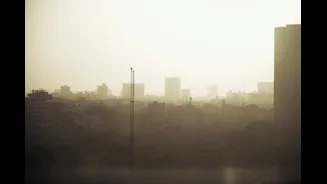
As temperatures begin to drop in October, another meteorological phenomenon comes into play: temperature inversion. Normally, air closer to the ground is warmer and rises, dispersing pollutants. In autumn and winter, however, the ground cools faster at night, creating a layer of cool, dense air at the surface with a warmer layer above it. This warm air acts like a lid, trapping the cooler air and all the pollutants within it close to the ground. This prevents pollutants from vehicles, industry, and stubble burning from dispersing, leading to the thick, toxic smog that characterises the season.
A Perfect Storm of Pollutants
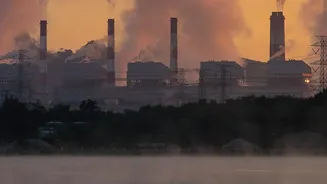
The end of the rains doesn't cause the pollution on its own; rather, it triggers a chain reaction. With the natural atmospheric cleansing gone, the air becomes vulnerable. Weaker, shifting winds begin to transport smoke from early-season stubble fires. Cooler temperatures create an inversion layer that traps this smoke, along with the ever-present emissions from city traffic, construction dust, and industrial activity. By early October 2026, Delhi has already recorded its worst air quality of the season, with PM10 being a dominant pollutant, signaling that the annual pollution cycle has begun.