


The Key to Flexibility: Consistency Over Intensity
Before we dive into the poses, it's important to understand that 'fast' results in flexibility come from consistency, not intensity. A short, daily practice is far more effective than one long, strenuous session per week. Yoga improves flexibility by
gently stretching and lengthening muscles over time. This increased range of motion can lead to better posture, a lower risk of injury, and less daily pain or tension. The goal is to create a sustainable habit that feels good for your body, encouraging you to return to the mat each day.
1. Cat-Cow Stretch (Marjaryasana-Bitilasana)
This gentle, flowing movement is one of the best ways to warm up the spine and improve its flexibility. It’s perfect for beginners as it connects breath to movement and eases stiffness in the back, neck, and shoulders. How to do it: Start on your hands and knees, with your wrists directly under your shoulders and knees under your hips. Inhale as you drop your belly toward the mat, lifting your chest and looking up (Cow Pose). Exhale as you round your spine toward the ceiling, tucking your chin to your chest (Cat Pose). Continue flowing between these two poses for 5-10 breaths.
2. Downward-Facing Dog (Adho Mukha Svanasana)
Perhaps the most iconic yoga pose, Downward-Facing Dog is a full-body stretch that targets the hamstrings, calves, and shoulders while building upper body strength. For beginners, it's crucial to focus on a long spine rather than forcing your heels to the floor. How to do it: From your hands and knees, tuck your toes and lift your hips up and back, forming an inverted 'V' shape with your body. Keep your head between your upper arms. Spread your fingers wide and press firmly into your hands. Bend your knees generously to help lengthen your spine. You can 'pedal' your feet by bending one knee and then the other to gently stretch each calf.
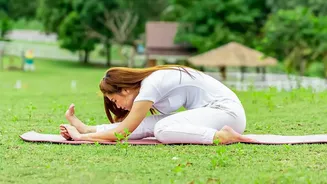
3. Seated Forward Bend (Paschimottanasana)
This pose provides a deep stretch for the entire back of the body, especially the hamstrings and lower back. It’s a calming pose that helps release tension built up from sitting. How to do it: Sit on the floor with your legs extended straight in front of you. You can sit on the edge of a folded blanket to help tilt your pelvis forward. Inhale and lengthen your spine. As you exhale, hinge at your hips and begin to walk your hands forward. It’s okay if you can’t touch your toes; just go as far as you can without rounding your upper back too much. If your hamstrings are very tight, keep a slight bend in your knees.
4. Child's Pose (Balasana)
Child's Pose is a restorative posture that gently stretches the hips, thighs, and lower back. It's a wonderful 'reset' pose you can return to at any time during your practice to rest and breathe. How to do it: Kneel on the floor, touch your big toes together, and sit back on your heels. Separate your knees about as wide as your hips. Exhale and lay your torso down between your thighs. Rest your forehead on the mat and let your arms rest alongside your body with palms facing up, or extend them forward. Breathe deeply into your back, feeling it expand with each inhale.
5. Butterfly Pose (Baddha Konasana)
This seated pose is excellent for opening up the hips and stretching the inner thighs and groin area, which are common spots of tightness. How to do it: Sit on the floor and bring the soles of your feet together, letting your knees fall out to the sides. Hold onto your feet or ankles. Sit up tall to lengthen your spine. If your knees are high off the ground, you can place blocks or cushions under them for support. For a deeper stretch, you can gently hinge forward from your hips, keeping your spine straight. Hold for 30 seconds to a minute, breathing steadily.