


Taming the Data Deluge
Modern space exploration is a firehose of information. Telescopes, satellites, and probes generate petabytes of data, far too much for human eyes to sift through efficiently. This is where AI excels. For instance, NASA, in partnership with IBM, developed
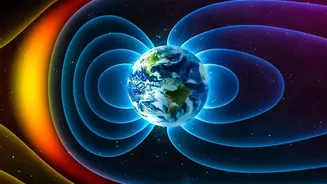
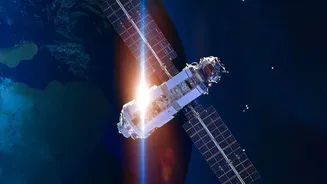
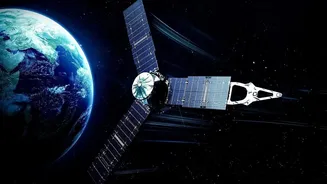
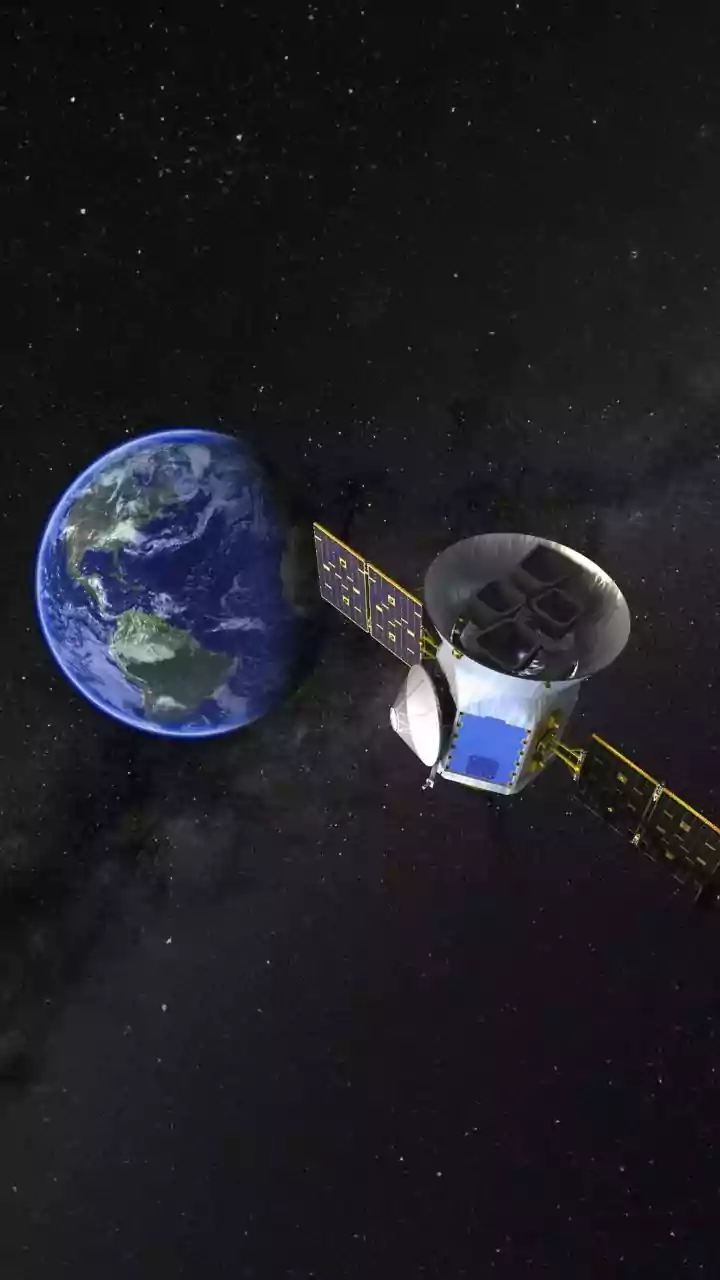
an open-source AI foundation model called Prithvi. This model can be trained to quickly analyze satellite imagery for specific events like floods or wildfires, tasks that would otherwise take researchers immense amounts of time. Another deep learning system, ExoMiner, pores over data from telescopes like Kepler, identifying patterns that suggest the presence of distant planets. This AI has already helped confirm over 300 new exoplanets, spotting faint signals that might have been missed by human analysts. Similarly, AI models are being trained on solar observation data to forecast space weather, which can impact satellites and even power grids on Earth. By automating the initial, time-consuming stages of data analysis, AI allows scientists to focus on interpretation and discovery.
A Smarter Way to Design Spacecraft
AI is not just analyzing data from space; it's helping to build the machines that go there. Using a process called generative design, NASA engineers are creating lighter, stronger, and more efficient hardware components. Engineers input the requirements for a part—its connection points, the loads it must bear, and any areas that need to be kept clear for sensors or tools. The AI then generates and iterates through thousands of potential designs in a matter of hours, a process that would typically take weeks for a human team. The resulting components, dubbed "evolved structures," often look organic or even alien, with intricate, bone-like lattices. These AI-generated parts can reduce a component's weight by up to two-thirds while maintaining or even increasing its strength. In space exploration, where every gram of mass adds significant launch cost, these savings are transformative. This technology is already being planned for use in missions like the Mars Sample Return.
An AI Copilot for Astronauts and Rovers
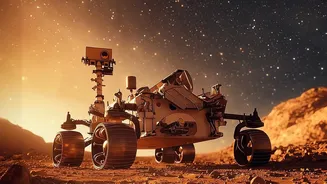
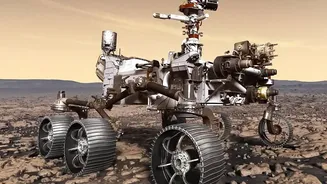
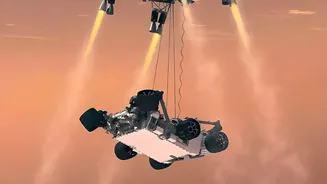
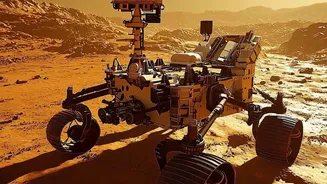
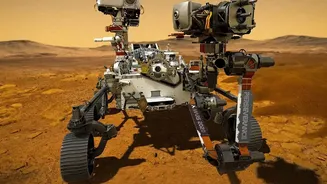
The transformation extends to mission operations, both for robotic explorers and their human counterparts. On Mars, rovers like Perseverance use AI to navigate the terrain autonomously. The rover analyzes images of the landscape to identify hazards and plot a safe course, enabling it to cover ground far more quickly than if it had to wait for commands from Earth. The Curiosity rover also uses AI to autonomously select rock targets for its chemical-analysis laser. Looking ahead, NASA is developing conversational AI assistants to support astronauts on long-duration missions, such as those planned for the Artemis program. The goal is to create an interface that allows astronauts to 'talk' to their spacecraft, getting real-time information and assistance without having to consult dense technical manuals. This could streamline everything from conducting experiments to diagnosing system alerts, making crews more efficient and self-reliant millions of miles from home.
The Future is a Human-AI Partnership
NASA's strategy is not about replacing human scientists and engineers but augmenting their capabilities. The agency emphasizes a "human-in-the-loop" approach, where AI handles the heavy lifting of data processing and initial design, while human experts provide oversight, validate the results, and drive the ultimate scientific questions. Projects like the Science Discovery Engine (SDE) are designed to facilitate this collaboration, using machine learning to help researchers find relevant data and research across NASA's vast archives. To accelerate this integration, NASA is making many of its AI tools and models open source, allowing the broader scientific community to build upon its work. By sharing models like Prithvi (for geospatial data) and Surya (for heliophysics), the agency aims to foster innovation and accelerate discovery for everyone.