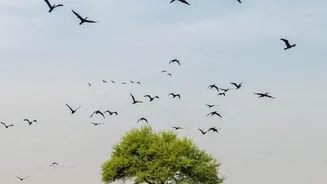







As winter descends on the northern hemisphere, a spectacular transformation takes place on India's east coast. The vast, shimmering expanse of Chilika Lake in Odisha comes alive with the calls and colours of over a million winged visitors.
A Winter Paradise for Feathered Guests
Each year, typically
from October through March, Chilika becomes one of the most significant wintering grounds for migratory birds on the Indian subcontinent. This incredible spectacle sees flocks arriving from as far as the Caspian Sea, Lake Baikal, Siberia, and other remote parts of Central Asia and Russia. They journey thousands of kilometres to escape the harsh northern winter, finding a haven in the lagoon's shallow, nutrient-rich waters. The peak season, from December to January, is a paradise for birdwatchers, with the lake hosting immense congregations of flamingos, pelicans, pintails, gadwalls, bar-headed geese, and a multitude of other waders and waterfowl. At the heart of this avian spectacle is the Nalabana Bird Sanctuary, a 15.53 sq km island in the lagoon's core that was declared a sanctuary in 1973. Though the island itself is submerged during the monsoon, it emerges as winter approaches, offering extensive mudflats that are perfect feeding grounds for the birds.
The Unique Brackish Ecosystem
What makes Chilika so hospitable is its unique character as a brackish water lagoon, the largest in Asia. The term 'brackish' refers to water that is a mix of fresh and saltwater, creating a dynamic and highly productive ecosystem. The lagoon is fed by 52 rivers and rivulets, which bring in freshwater, while a narrow outer channel connects it to the Bay of Bengal, allowing saltwater to enter with the tides. This constant mixing results in a salinity gradient that supports an extraordinary diversity of life. In recognition of its rich biodiversity and ecological importance, Chilika was designated as India's first wetland of international importance under the Ramsar Convention in 1981.
The Lake's Other Famous Residents
While the migratory birds are the main winter attraction, Chilika is also celebrated for its population of Irrawaddy dolphins. These shy and endangered marine mammals, with their distinctive rounded heads, are found in the channels of the lake, particularly near Satapada. Chilika is home to the largest single lagoonal population of these dolphins in the world, making it a critical habitat for their conservation. Beyond the charismatic dolphins, the lagoon's ecosystem supports over 300 fish species and provides a livelihood for more than 200,000 fisherfolk who live in the surrounding villages. For generations, these communities have coexisted with the lake's wildlife, with some fishermen even reporting a collaborative relationship with the dolphins, who help herd fish towards their nets.
A Fragile Treasure Under Care
For years, Chilika faced significant ecological threats, including siltation from rivers, a choking of the sea mouth that reduced salinity, and the spread of invasive species. This led to its placement on the Montreux Record, a list of threatened Ramsar sites, in 1993. However, a concerted effort led by the Chilika Development Authority (CDA), established in 1992, turned its fate around. A new sea mouth was opened in 2000, which restored the lake's natural salinity and tidal flow, leading to a dramatic ecological recovery. These successful interventions helped revive fish stocks, increase the area of seagrass beds, and improve the habitat for both birds and dolphins. In 2002, Chilika was removed from the Montreux Record and received the Ramsar Wetland Conservation Award in recognition of its remarkable restoration.