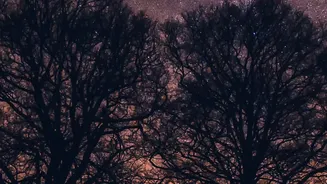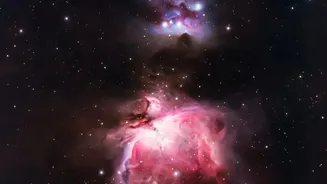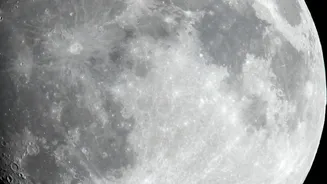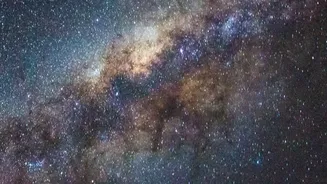


The Challenge of Darkness
For decades, photography in the dark was a simple equation: you needed a big camera with a big sensor and a big lens to let in as much faint light as possible. Smartphone cameras, with their tiny sensors and compact lenses, were at a fundamental disadvantage.
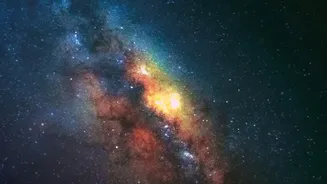
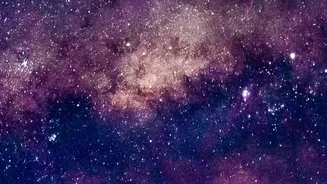
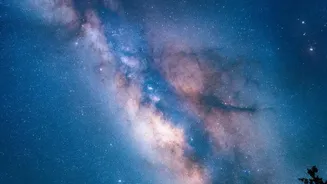
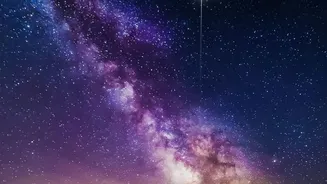
In low light, their photos were often a grainy, noisy mess. Capturing the faint light of distant stars and galaxies seemed impossible. For a long time, the only way to get a good astro-photo was with thousands of dollars of specialized equipment, putting it out of reach for most people.
Enter Computational Photography
Since hardware couldn't solve the problem, engineers turned to software. This is the essence of computational photography: using digital processing and clever algorithms to overcome the physical limitations of a camera. Instead of trying to capture one perfect, long-exposure image, phones now take many images and combine them using software. This approach completely changes the game, allowing a phone's processor to do the heavy lifting that a large lens used to do. It’s a field that combines image processing, computer vision, and even artificial intelligence to create a final image that is far greater than the sum of its parts.
The Magic of Stacking
The core technique behind modern smartphone astrophotography is called image stacking. When you select a phone's 'Night' or 'Astro' mode and hold it steady on a tripod, the camera isn't taking just one picture. Instead, it captures a rapid series of shorter exposures over several seconds or even minutes. The phone’s software then intelligently aligns these individual frames, correcting for the Earth's rotation, and stacks them on top of each other. The magic happens when the software averages out the data from all the frames. Random noise, which appears differently in each shot, gets cancelled out, while the constant light from the stars and nebulae is reinforced, becoming clearer and more detailed with every frame added to the stack.
The AI Co-Pilot
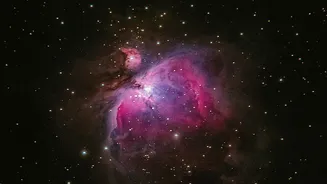
Stacking is only part of the story. Modern smartphone manufacturers like Google, Apple, and Samsung now employ sophisticated artificial intelligence to perfect the final image. This AI has been trained on thousands of professionally taken astrophotographs, learning what a galaxy or a nebula is supposed to look like. After the images are stacked, the AI gets to work. It reduces any remaining noise, sharpens details, corrects colors, and can even identify and enhance specific celestial objects in the frame. Some phones even use AI to recognize that you're pointing the camera at the moon and apply specific enhancements to bring out surface details.
Hardware Still Plays a Role
While software does the heavy lifting, hardware advancements are still crucial. Many modern phone cameras use a technique called pixel binning. This is where the camera sensor combines groups of tiny pixels—say, a 2x2 square—to act as one giant, more light-sensitive 'super pixel'. This reduces the final resolution of the image but dramatically improves its brightness and cleanliness in low-light situations. This, combined with larger sensors, wider aperture lenses (like f/1.7 or lower), and Optical Image Stabilization (OIS), provides the software with the best possible raw data to work with, creating a powerful synergy between hardware and software.