




A Crowded Highway in the Heavens
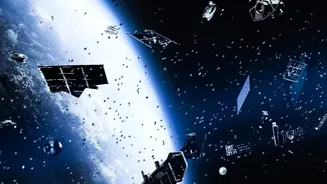
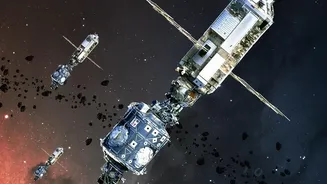
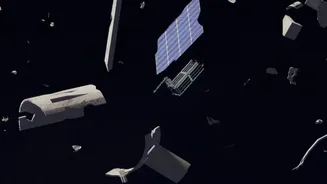
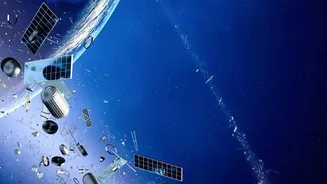
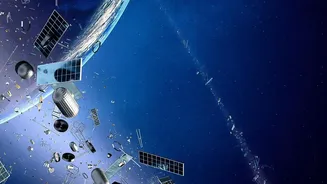
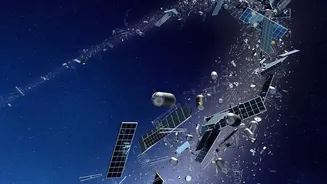
Space is not as empty as it looks. Decades of launches have left a treacherous legacy: defunct satellites, spent rocket stages, and millions of tiny fragments orbiting Earth at incredible speeds. Even a fleck of paint can disable a satellite upon impact.
This growing cloud of space junk poses a direct threat to the critical infrastructure we rely on for everything from navigation and weather forecasting to banking and communication. The Indian Space Research Organisation (ISRO) is acutely aware of this danger. As of early 2026, most of its active operational satellites are in Low Earth Orbit (LEO), the most congested region. The risk is no longer theoretical; ISRO performed 20 collision avoidance manoeuvres in 2025 and another nine in the first half of 2026 alone, physically moving its multi-crore satellites to dodge incoming threats.
From Manual Steering to AI Piloting
Traditionally, avoiding a collision in space has been a tense, manual process. Ground-based stations track potential threats, specialists calculate the risk, and then send commands to the satellite to fire its thrusters and change course. This process is slow, resource-intensive, and reactive. With the explosion of satellite mega-constellations, the number of potential collision alerts has skyrocketed, making the manual method increasingly unsustainable. This is where autonomous AI thrusters come in. Instead of waiting for instructions from Earth, these smart systems use onboard intelligence to make life-or-death decisions in real-time. They represent a fundamental shift from human-in-the-loop control to fully automated, instantaneous protection.
How AI Predicts and Protects
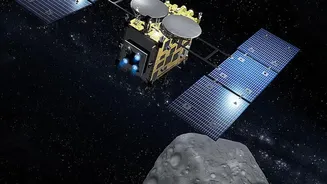
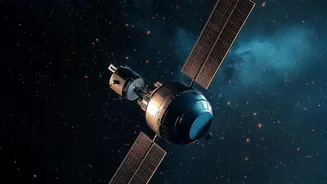
The new generation of satellite collision avoidance systems, being developed by Indian space-tech startups like Digantara and Manastu Space, integrate advanced AI and machine learning. These systems work by constantly processing data from various sensors to maintain a comprehensive map of the space environment around the satellite. The AI algorithms analyze the trajectories of nearby objects, predict the probability of a future collision, and, if the risk is high enough, calculate the optimal avoidance manoeuvre. The system can then autonomously command the satellite's thrusters—like those developed by Bellatrix Aerospace—to execute a precise, gentle push to alter its orbit and steer clear of danger, all without human intervention. This capability is crucial, as it reduces the response time from hours or minutes to mere seconds.
Securing India's Orbital Future
For India, this technology is not just an upgrade; it's a strategic necessity. The nation has significant investments in space, with satellites forming the backbone of its defence, communication, and economic systems. Protecting these assets is paramount. Furthermore, as India's private space sector flourishes, with companies planning their own satellite constellations, the need for reliable, scalable, and autonomous safety systems becomes even more critical. By developing and deploying AI-driven avoidance technology, India is not only safeguarding its own assets but also positioning itself as a leader in responsible space operations. This aligns with ISRO's 'Debris Free Space Mission' initiative, which aims for zero debris creation from all Indian space activities in the near future.