





The Great Monsoon Myth: No Sun, No Damage?
It’s easy to associate sunscreen with bright, sunny days. But the protection in that bottle isn’t for the light you see or the heat you feel—it’s for the ultraviolet (UV) radiation you can’t. Dermatologists consistently warn that up to 80% of the sun's
UV rays can penetrate through thick cloud cover. While clouds block a good amount of visible light, they are far less effective at filtering out damaging UVA and UVB rays. In fact, under certain broken-cloud conditions, UV levels can even increase as the rays scatter and reflect. This means your skin is still vulnerable to damage that leads to tanning, pigmentation, and premature ageing, even during a downpour.
Meet the Invisible Threats: UVA vs. UVB
To understand why cloudy days are still a risk, it's important to know the difference between the two main types of UV rays that reach us. UVB rays are the primary cause of sunburn and are partially blocked by clouds. UVA rays, however, have a longer wavelength that allows them to penetrate clouds, haze, and even glass windows with ease. These are the rays responsible for deep skin damage, breaking down collagen, accelerating wrinkles, and triggering hyperpigmentation. Since UVA rays are present all day, every day of the year, they are the main culprit behind the cumulative, long-term damage that you might not see until years later.
Choosing Your Monsoon Armour
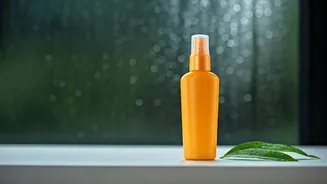
The sticky, humid climate of the Indian monsoon calls for a different kind of sunscreen. Heavy, creamy formulas can feel suffocating, clog pores, and melt away with sweat. For monsoon, dermatologists recommend lightweight, non-greasy formulas. Gel-based, aqua-gel, or fluid sunscreens are ideal because they absorb quickly without leaving a sticky residue. Look for a 'non-comedogenic' label, which means the product is formulated to not clog pores—a crucial feature when high humidity can lead to breakouts. A broad-spectrum sunscreen with an SPF of 30 to 50 is essential to ensure you are protected from both UVA and UVB rays.
Does It Wash Off in the Rain?
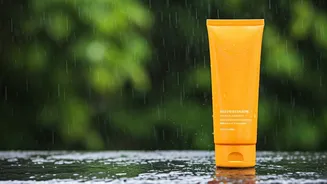
This is a valid concern. If you get caught in the rain or are simply sweating more in the humidity, your sunscreen's effectiveness can decrease. This is where 'water-resistant' sunscreens become your best friend. However, it's crucial to understand that no sunscreen is truly 'waterproof'. Regulations now require labels to state how long the SPF protection remains effective while swimming or sweating, typically either 40 or 80 minutes. If you’ve been in a heavy downpour or have been sweating, it is always safest to pat your skin dry and reapply. As a general rule, you should reapply sunscreen every two hours when outdoors to maintain protection.