




The Setback: A Lost Super Heavy Booster
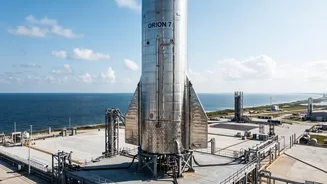
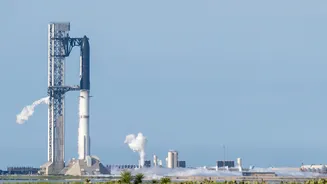
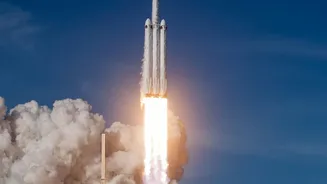
The mission, which began on Friday, November 13, aimed for a 'double catch'—recovering both the Super Heavy first-stage booster and the Starship upper stage. However, this goal was quickly thwarted. Shortly after a successful liftoff from Starbase, Texas,
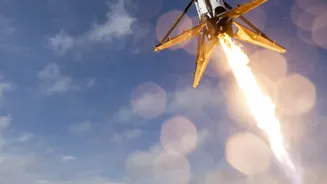
and stage separation, the Super Heavy booster experienced an anomaly. According to reports, an automatic abort was triggered, possibly due to the vehicle being low on fuel. Instead of returning to the launch tower to be caught by the giant mechanical arms, the booster was diverted offshore and made a splashdown in the Gulf of Mexico, where it exploded. While SpaceX has successfully caught Super Heavy boosters on three previous flights, this failure highlights the immense challenge of perfecting a fully reusable launch system.
The Triumph: An Unprecedented Starship Catch
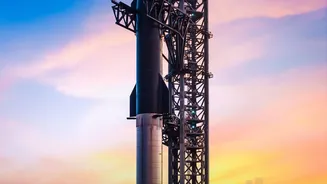
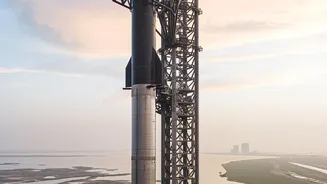
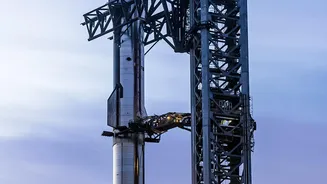
Despite the booster's failure, the mission's primary success came roughly 22 hours later. After completing 14 orbits of Earth and deploying 26 Starlink satellites, the Starship upper stage, known as Ship 42, began its fiery descent back to Texas. In a maneuver described as the 'holy grail of spaceflight', the spacecraft slowed from orbital velocity, re-entered the atmosphere, and navigated itself precisely back to the launch site. On November 14, the launch tower, nicknamed 'Mechazilla', used its 'chopstick' arms to successfully catch the hovering spacecraft in mid-air. This marked the first time in history an orbital-class upper stage has been recovered this way, a feat never before attempted, let alone achieved.
Why the Catch Is a Game-Changer
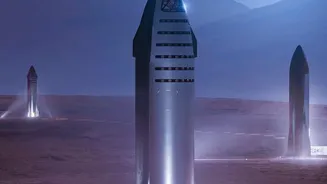
Catching the upper stage is significantly more difficult than catching the booster. The booster separates at a lower altitude and speed, while the Starship upper stage must endure the extreme heat and stress of re-entering the atmosphere from orbital speeds of around 28,000 kilometres per hour. Successfully recovering the ship proves that the hardest part of SpaceX's reusability puzzle is solvable. The entire architecture of Starship is built on the idea of rapid reuse, much like an airplane. By catching the vehicle instead of letting it splash down in the ocean, SpaceX can theoretically inspect, refuel, and relaunch it in a much shorter time frame, dramatically lowering the cost of access to space. This capability is essential for the company's ambitious goals, including launching mega-constellations of satellites and, eventually, building a city on Mars.
Mission Accomplished, But With Caveats
In addition to the landmark catch, the flight successfully achieved its secondary objective: deploying 26 advanced Starlink V3 satellites into orbit. This was only the second time a Starship vehicle had reached orbit, making it a critical success for both the launch program and the expansion of SpaceX's global internet service. However, the mixed results serve as a reminder that the path to a fully and rapidly reusable rocket is iterative. The loss of the booster means the 'double catch' remains an elusive goal. The success of Flight 15 was a monumental engineering achievement, but the company must now prove it can be done consistently and with both stages of the massive rocket.
What Comes Next for Starship?
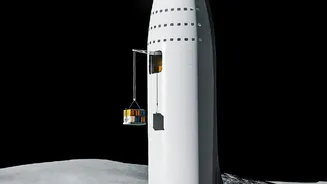
With one half of the recovery system proven, SpaceX will undoubtedly focus its efforts on replicating the successful Starship catch while solving the issues that led to the booster's loss on the next flight. The company is still investigating the root cause of the booster anomaly. This successful catch is also a crucial milestone for NASA, which has contracted SpaceX to develop a version of Starship to land astronauts on the Moon for the Artemis program, with a target date of 2028 for the first landing. The ability to safely return the vehicle from orbit is a foundational requirement for crewed missions. As SpaceX pushes toward a higher flight cadence, the space industry will be watching closely to see how quickly it can master the full recovery and re-flight of the most powerful rocket ever built.