



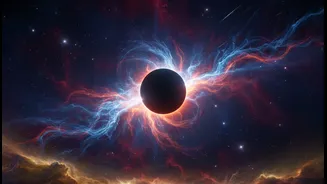


A Major Global Eclipse
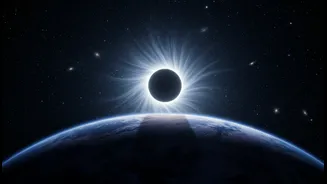
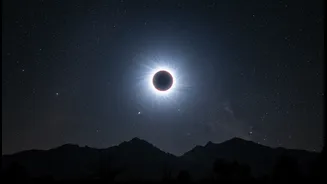
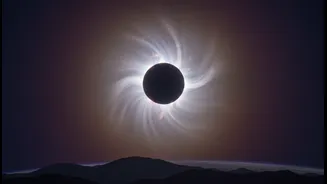
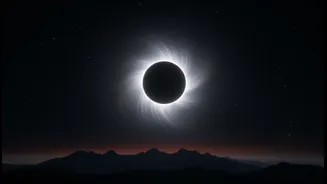
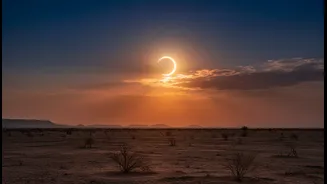
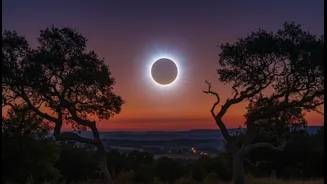
A total solar eclipse occurs when the Moon passes directly between the Earth and the Sun, completely obscuring the Sun's bright face. On August 12, 2026, this breathtaking phenomenon will trace a path from the Arctic across Greenland, Iceland, the Atlantic
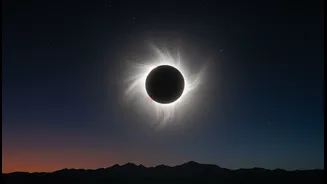
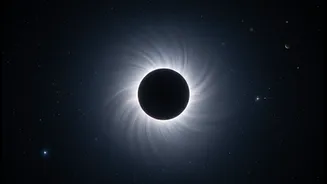
Ocean, and northern Spain. For mainland Europe, this will be the first total solar eclipse in 27 years, making it a highly anticipated event for millions. The path of totality, a narrow band where the full eclipse is visible, will offer a dramatic spectacle, turning day into twilight and revealing the Sun's ethereal outer atmosphere, the corona. Most of Europe, northwest Africa, and parts of North America will witness a partial eclipse.
Visibility and Timings for India
Unfortunately, the total solar eclipse will not be visible from India. The event occurs during the night for the Indian subcontinent, with the eclipse window falling roughly between 9:45 PM IST on August 12 and 2:15 AM IST on August 13. Since the Sun will be far below the horizon, direct observation is impossible. Some specialised calculations suggest a tiny, almost imperceptible partial eclipse might theoretically be visible at sunset from the absolute northernmost tips of Ladakh, but for all practical purposes, the event is not observable from the country. This means there are no religious observances like Sutak Kaal applicable for this eclipse in India.
Why You Should Still Watch (Online)
The reason this eclipse is a must-watch, even from India, lies in its rare combination of features. First, it's a 'sunset eclipse' for viewers in Spain, where the totally eclipsed Sun will hang low on the horizon, promising incredibly dramatic and photogenic views. Second, and most excitingly, the eclipse coincides with the peak of the annual Perseid meteor shower. A solar eclipse can only happen during a new moon, which means the night of August 12-13 will be moonless and exceptionally dark. This creates perfect conditions to view the Perseids, which are expected to be one of the best displays in years, with a potential for up to 100 meteors per hour under ideal conditions. So, while the eclipse itself requires a livestream, the meteor shower is a naked-eye spectacle available to all.
How to Join the Experience
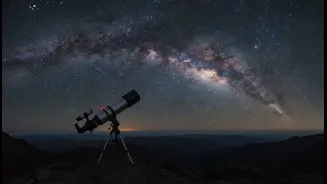
For Indian students and enthusiasts, the best way to witness the solar eclipse is through live webcasts from scientific organisations like NASA and astronomical observatories located within the path of totality. These streams provide expert commentary and high-quality telescopic views you couldn't get otherwise. After watching the eclipse online, you can step outside for the second part of this celestial double-feature. Find a location away from city lights, let your eyes adjust to the darkness for about 30 minutes, and look towards the northeast. The best time to watch for the Perseids will be from after midnight until dawn on the mornings of August 12 and 13.
A Note on Safe Viewing
While this eclipse is not directly visible from India, it is a crucial moment to remember the rules of safe solar viewing for any future events. Never look directly at the Sun without special-purpose solar filters, such as certified 'eclipse glasses' that meet the ISO 12312-2 international standard. Regular sunglasses, no matter how dark, are not safe. An excellent indirect method is pinhole projection. You can project an image of the Sun through a small hole in a piece of card onto another surface, allowing you to watch the eclipse's progress without any risk to your eyes.