


Beyond Another Earth
The search for extraterrestrial life has long been guided by the principle of finding a world similar to our own: a rocky planet orbiting a Sun-like star at just the right distance for liquid water to exist. This 'habitable zone' has been our primary
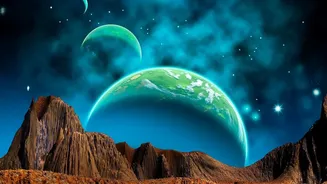
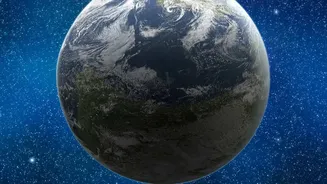
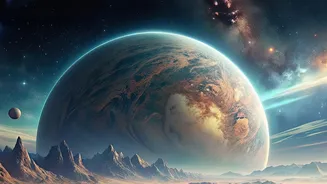
map for scouting the cosmos. However, a compelling and provocative idea is gaining traction in the scientific community: the concept of a 'superhabitable' world. First proposed in a 2014 paper by astronomers René Heller and John Armstrong, this theory challenges our geocentric view. They argued that Earth might be good for life, but not necessarily the best possible environment. By focusing only on Earth analogs, we might be overlooking planets that offer conditions far more conducive to the flourishing of a rich and diverse biosphere. The idea is to move from an Earth-centric search to a 'biocentric' one, prioritizing the conditions that would best support complex life in general, not just life as we know it.
The Superhabitability Checklist
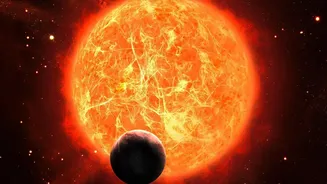
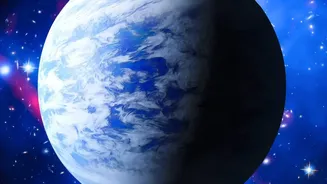
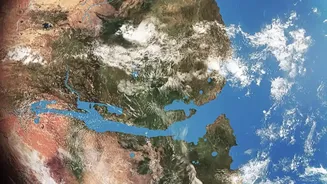
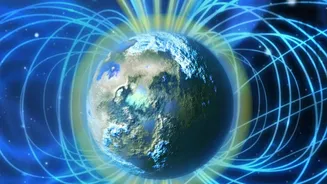
So, what makes a planet better than Earth? Scientists, led by geobiologist Dirk Schulze-Makuch, have identified several key criteria. Ideally, a superhabitable planet would orbit a K-dwarf star. These stars are cooler, less massive, and much longer-lived than our G-type Sun. Our Sun has a lifespan of about 10 billion years, and it took nearly 4 billion for complex life to emerge on Earth. K-dwarf stars can burn for 20 to 70 billion years, offering a much longer, more stable window for life to arise and evolve. The planet itself would likely be slightly older, larger, and warmer than Earth. An age between 5 and 8 billion years (Earth is 4.5 billion years old) would provide more time for evolution. A planet up to 1.5 times more massive and about 10-30% larger could hold onto its atmosphere better due to stronger gravity and may have more vigorous plate tectonics, which is crucial for recycling nutrients. A slightly warmer average surface temperature of around 25°C, coupled with higher humidity, could lead to richer and more widespread biodiversity than seen on Earth.
Hunting for Better Worlds
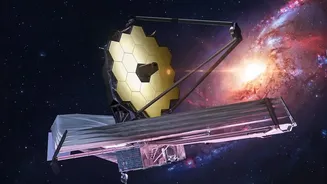
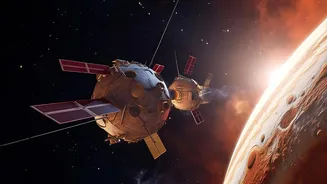
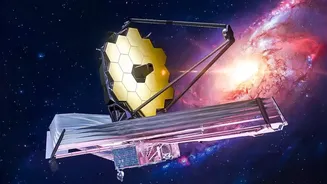
Identifying these potential paradises requires incredibly powerful tools. This is where advanced space telescopes come into play. While we can't travel to these distant worlds, we can study them from afar. The James Webb Space Telescope (JWST) is at the forefront of this effort. By using a technique called transit spectroscopy, JWST can analyze the light from a star as an exoplanet passes in front of it. As starlight filters through the planet's atmosphere, certain wavelengths are absorbed by different molecules. This leaves a chemical fingerprint that allows scientists to determine the composition of the atmosphere, searching for gases like oxygen, methane, and water vapor — potential biosignatures. Looking further ahead, NASA is planning the Habitable Worlds Observatory (HWO), a next-generation telescope slated for the 2040s. HWO will be specifically designed with the goal of directly imaging dozens of Earth-like planets and analyzing their atmospheres for signs of life.
Candidates and Cautions
Based on these criteria, researchers have already sifted through the catalog of over 4,000 known exoplanets and identified a couple of dozen potential candidates for superhabitability. One of the most-cited contenders is KOI-5715.01, a planet orbiting a K-dwarf star that ticks many of the boxes, though it remains unconfirmed. However, it's crucial to maintain perspective. All of these candidates are more than 100 light-years away, making them incredibly difficult to study in detail. The data we have is limited, and a planet that looks promising based on its size and orbit might have a hostile atmosphere or no atmosphere at all. The term 'superhabitable' refers to the potential conditions for life, not a confirmation that life exists there. These studies are not about finding a new home for humanity, but about focusing our search for life where it has the best statistical chance of thriving. The road to confirming a truly superhabitable world is long, but these initial steps are fundamentally changing how we view our place in the universe.