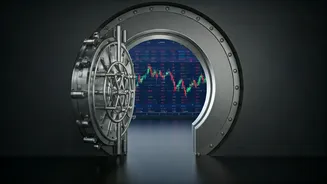









Defining Your 'Cash Support Streams'
Let's demystify the headline. 'Cash support streams' aren't some complex financial instrument. They are simply the stable, reliable pools of money that protect you from life's uncertainties and keep your essential needs met. Think of it as your financial fortress.
This is the money that pays your rent, covers your bills, and handles an unexpected medical expense without forcing you to sell your investments at a loss. It's the bedrock upon which all other financial activities, especially risky ones like speculation, should be built. Without this fortress, a single bad trade or market downturn could jeopardise your entire financial well-being.
The Three-Bucket System for Financial Clarity
A simple way to organise your finances is the three-bucket system. This method mentally (and physically) separates your money based on its purpose, preventing you from accidentally spending your emergency savings on a speculative stock tip. 1. **The Survival Bucket:** This is your emergency fund. It’s non-negotiable and sacrosanct. 2. **The Goals Bucket:** This holds savings for specific, medium-term objectives like a down payment, a car, or a wedding. 3. **The Speculation Bucket:** This is the 'play' money. It's allocated to high-risk, high-reward ventures, and it’s money you must be fully prepared to lose.
Building Your Survival Bucket: The Foundation
Your first priority is to fill your Survival Bucket. Financial planners universally recommend having three to six months' worth of essential living expenses saved. Essential expenses include rent/EMI, utilities, groceries, transportation, and insurance premiums. This money should not be in stocks or any volatile asset. It needs to be liquid and safe. Consider high-yield savings accounts, fixed deposits (FDs), or ultra-short-term liquid funds. The goal here is not to earn high returns, but to ensure immediate access to cash in an emergency without incurring a penalty or loss.
Filling the Goals Bucket: Building for the Future
Once your emergency fund is healthy, you can start directing funds to your Goals Bucket. This is for planned life events happening in the next one to five years. Since the time horizon is a bit longer than for your emergency fund, you can afford slightly less liquidity. Depending on the timeline, you could use a mix of FDs, recurring deposits (RDs), or conservative debt mutual funds. The key is to match the investment vehicle to the goal's timeline. You don't want to put money needed for a down payment next year into the equity market, where it could be down 20% just when you need it.
The Rules of the Speculation Bucket
Only after your Survival and Goals buckets are adequately funded should you even consider a Speculation Bucket. This is the most crucial rule. The money in this bucket is explicitly for taking risks—investing in small-cap stocks, cryptocurrencies, derivatives, or any asset with high potential upside and an equally high risk of going to zero. A common rule of thumb is to allocate no more than 5-10% of your total investable capital to this bucket. Most importantly, you must adopt the mindset that this money is already gone. This emotional detachment prevents you from making panicked decisions and protects the rest of your financial life from the inevitable volatility of speculation.