



Einstein's Cosmic Canvas
Imagine the universe as a giant, flat sheet of rubber. This is the 'fabric' of spacetime, a four-dimensional concept that combines the three dimensions of space with the one dimension of time. In 1915, Albert Einstein's theory of general relativity proposed
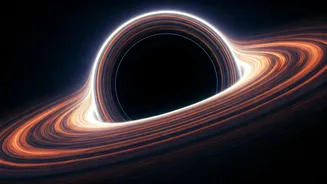
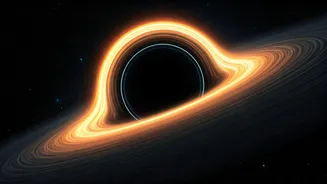
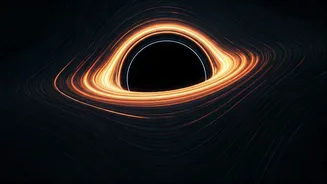
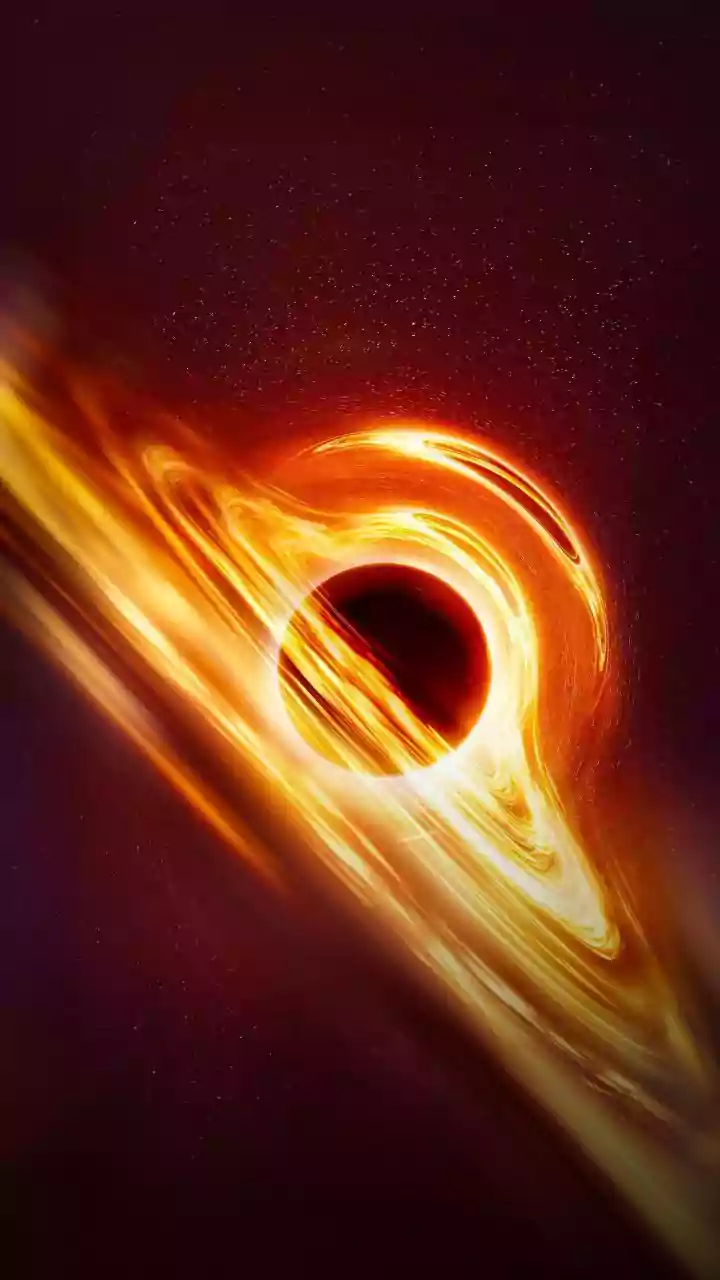
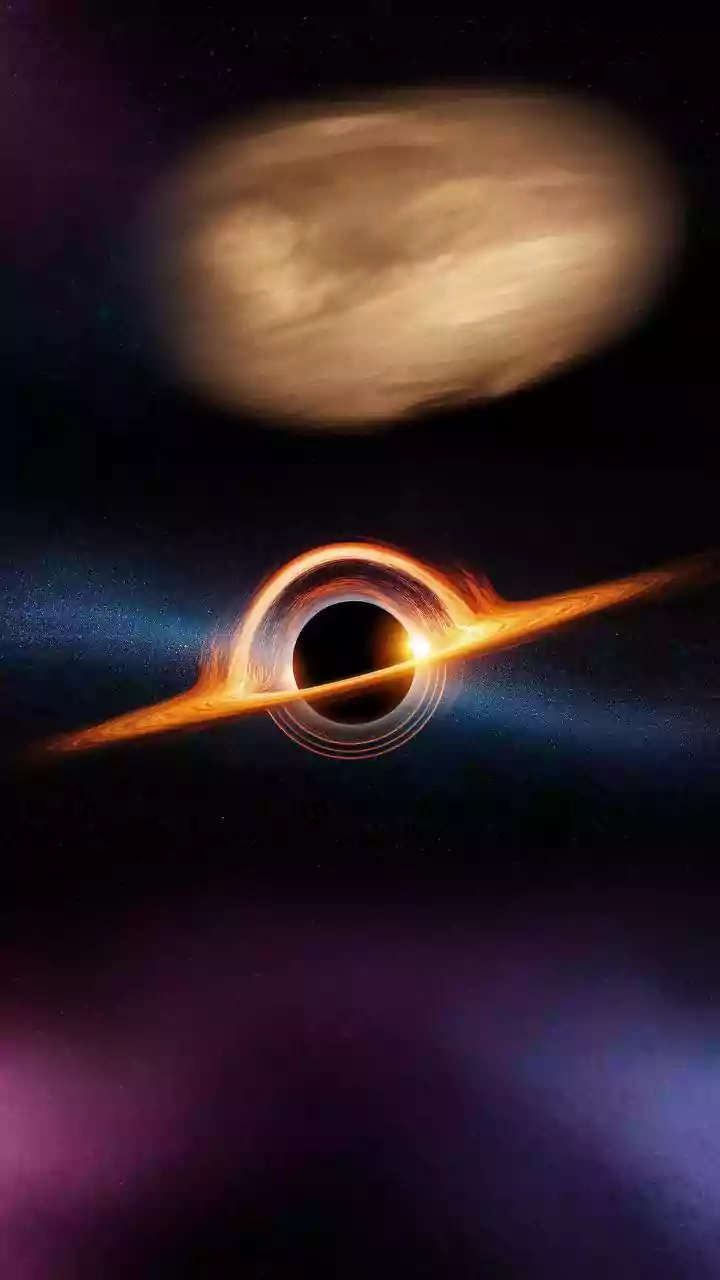
that gravity is not a force pulling objects together, but rather the effect of mass curving this spacetime fabric. A massive object, like a star, creates a dip in the sheet. A planet rolling nearby follows this curve, which we perceive as an orbit. A black hole, being unimaginably dense, creates a deep, steep well in the fabric — a point of such intense gravity that nothing, not even light, can escape. One of the wildest predictions of this theory is that not only space but also time itself should be distorted near such a massive object. Time should literally slow down in a strong gravitational field. For decades, this remained a mind-bending but difficult-to-prove idea.
A Star's Dance with Death
The “space phenomenon” that provided the proof is a dramatic celestial dance taking place 26,000 light-years away, at the heart of our own Milky Way galaxy. Here lies Sagittarius A*, a supermassive black hole with the mass of four million suns. A cluster of stars, known as S-stars, orbit this behemoth at incredible speeds. One star in particular, named S2, has been the focus of intense observation for over 26 years. It follows a long, 16-year elliptical orbit that brings it perilously close to the black hole. At its closest approach, S2 is whipped around at speeds exceeding 25 million kilometres per hour — almost 3% of the speed of light. This extreme environment makes S2 the perfect natural laboratory to test the limits of Einstein's theory.
The Tell-Tale Redshift
Using powerful instruments like the GRAVITY interferometer at the European Southern Observatory's Very Large Telescope, astronomers tracked S2’s every move. They were looking for a specific effect predicted by general relativity: gravitational redshift. As S2 plunged into the black hole’s immense gravitational well, the light it emitted had to fight its way out. This cosmic struggle costs the light energy, causing its wavelength to stretch. When light's wavelength is stretched, it shifts towards the redder end of the spectrum — hence, 'redshift'. The measurements were incredibly precise. As S2 swung by the black hole in 2018, the observed redshift in its light was not consistent with simpler Newtonian physics. Instead, it matched Einstein’s predictions perfectly, confirming that the black hole’s gravity was indeed warping spacetime and slowing time for the star.
A Rosette in the Sky
The proof didn't stop there. Further observations of S2's orbit revealed another fascinating confirmation of general relativity. According to Newtonian gravity, a planet or star should trace the same simple elliptical path over and over. But Einstein's theory predicts that in a very strong gravitational field, the orbit itself should rotate, or precess, over time. Instead of a closed ellipse, the star's path should look more like a rosette, or a spirograph drawing. This effect, called Schwarzschild precession, had first been seen in Mercury's orbit around the Sun, but observing it around a supermassive black hole is a far more profound test. After decades of tracking, astronomers confirmed that S2's orbit was indeed precessing exactly as predicted. This provided even stronger evidence that Sagittarius A* is a supermassive black hole and that general relativity holds true even in one of the most extreme environments in the universe.