







India's Never-Ending Battle with Potholes
Potholes are more than just a daily nuisance; they are a critical issue affecting road safety and the economy. In 2022 alone, potholes on national highways were linked to over 4,400 accidents and more than 1,850 fatalities in India. The constant cycle
of damage and repair costs the government crores annually, disrupts traffic, increases vehicle wear and tear, and slows down logistics. Traditionally, road maintenance is a reactive process—engineers patch up damage after it occurs. But what if roads could be built to be proactive, mending their own wounds before they become major problems? This is the promise of self-healing asphalt, a technology that is moving from the lab towards real-world application.
How Can a Road Heal Itself?
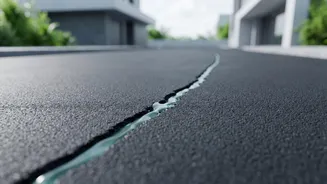
The concept of self-healing asphalt mimics the natural repair processes found in biological systems. Instead of just being a passive mixture of stones and a binder, this new asphalt is an active material. The technology works by embedding special agents within the asphalt mixture. When a micro-crack forms due to traffic load or weather stress, these agents are activated to repair the damage. There are several methods being tested. One involves inserting tiny capsules filled with a rejuvenating oil. When a crack ruptures a capsule, the oil is released, softening the surrounding bitumen (the binder) and allowing it to flow and seal the gap. This prevents small cracks from growing into dangerous potholes. Another method uses special conductive fibres, like steel wool, mixed into the asphalt. When an electric current is passed over the road using an induction machine, the fibres heat up, melting the bitumen just enough to make it flow and reseal fissures.
Making Rain the Solution, Not the Problem
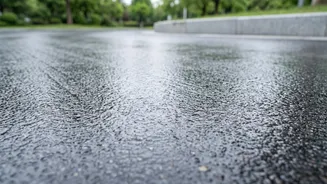
The most intriguing development, especially for a monsoon-reliant country like India, is the use of binders that are activated by water. In some experimental projects, researchers are using fibres with a special hydrophilic (water-attracting) nano-coating. When it rains, these fibres absorb water, which then triggers a chemical reaction that helps heal cracks in the concrete or asphalt. This turns the road’s biggest enemy into its ally. The headline's 'eco-binders' refer to a parallel innovation focused on sustainability. Traditional bitumen is a petroleum product with a significant carbon footprint. Bio-binders, derived from renewable sources like plant oils, algae, agricultural waste, or forestry by-products like lignin, offer a greener alternative. Researchers are working to combine these eco-friendly materials with self-healing properties, creating roads that are both durable and sustainable.
The Potential for Indian Roads
The benefits of this technology for India are immense. Self-healing asphalt could significantly extend the lifespan of roads, potentially doubling it in some cases, which would lead to massive long-term savings in maintenance costs. Fewer repairs mean less traffic disruption and a lower carbon footprint from construction activities. The National Highways Authority of India (NHAI) is actively exploring these innovative methods to improve road durability. Research institutions like IIT Madras are also experimenting with polymer-modified and bio-bitumen variants specifically designed for India's tropical climate and heavy traffic loads. One successful pilot project near Bengaluru used a self-healing mix that reduced the road's thickness and replaced 60% of the cement with fly ash, demonstrating both cost and environmental benefits.
The Hurdles on the Road Ahead
Despite the excitement, a future of self-healing highways is not just around the corner. The biggest obstacle is the high upfront cost. The specialised capsules, fibres, and bio-materials make this asphalt more expensive to produce than conventional mixes. For large-scale public projects with tight budgets, this is a major deterrent. There are also technical challenges to overcome. The materials must be robust enough to survive the high temperatures of the asphalt mixing process yet sensitive enough to activate when needed. Ensuring compatibility with existing road layers and adapting the technology to India's diverse and extreme weather conditions—from scorching heat to torrential rains—requires extensive testing. Before widespread adoption, authorities like the NHAI plan to conduct thorough cost-benefit analyses to ensure the long-term savings justify the initial investment.