


The Soul of Kutch on a Wall
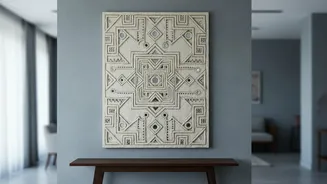
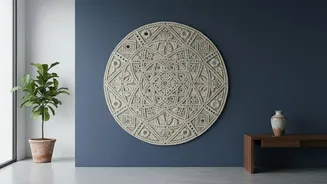
Lippan Kam, also known as mud and mirror work, is a traditional mural craft from the Kutch region of Gujarat. For generations, women from communities like the Rabari and Mutwa have decorated the inner and outer walls of their circular mud huts, or bhungas,
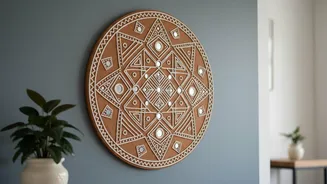
with this art. Traditionally, it involves creating intricate relief patterns by hand using a mixture of local clay and animal dung, then embedding small mirrors called 'aabhla' into the wet surface. These mirrors do more than just decorate; they reflect precious light, illuminating the interiors of homes and creating a dynamic, shimmering effect that changes throughout the day. The motifs are often drawn from nature and daily life—peacocks, camels, trees, and geometric patterns—turning a simple wall into a canvas of cultural storytelling.
A Tradition's Modern Challenge
The very thing that makes traditional Lippan art so authentic—its materials—also makes it incredibly impractical for the modern market. A wall panel made of pure mud and dung is heavy, extremely fragile, and susceptible to cracking and pests, especially in the humid, air-conditioned environments of city apartments. It simply cannot be lifted off a wall in Kutch, packed into a box, and shipped to Delhi or Bengaluru. For the art form to survive and provide a livelihood for its creators, it had to evolve. Artisans faced a critical dilemma: how to make their work portable, durable, and lightweight without losing the essence of the craft.
Reinventing the Canvas
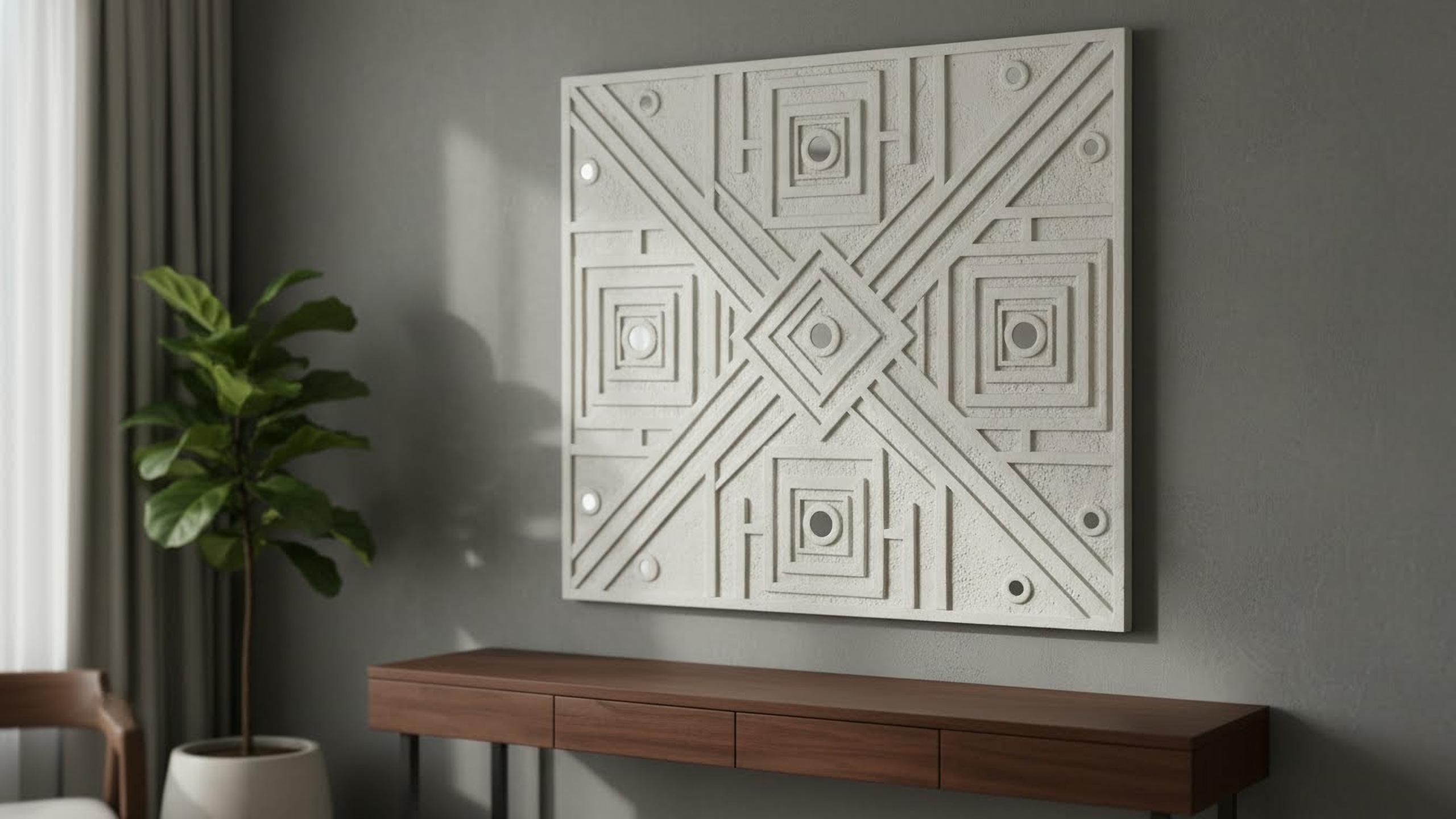
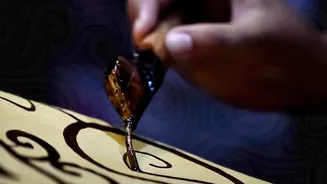
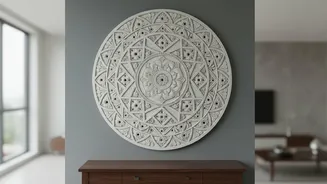
The solution came through brilliant material innovation. Artisans began replacing the traditional mud wall with a sturdy, lightweight, and perfectly smooth base: the Medium-Density Fibreboard (MDF). This immediately solved the problem of portability. The traditional clay and dung mixture was also re-engineered. While some still use clay, many now work with modern alternatives like chalk powder, air-drying clay, or even plaster of Paris mixed with adhesives for better bonding and durability. This new mixture is lighter, less prone to cracking, and free of the odours associated with dung, making it far more appealing to urban buyers. While the materials are modern, the techniques—hand-rolling the clay coils and painstakingly setting each mirror—remain the same, preserving the handmade soul of the art.
A Masterclass in Protective Packaging
Getting a finished panel from a rural workshop to a high-rise apartment is the final, crucial step. Kutch artisans have become logistics experts, developing a multi-layer packaging system to ensure their creations arrive intact. The process often begins by wrapping the panel in acid-free glassine paper to protect the delicate clay and mirror surface. This is followed by a generous layer of bubble wrap. Cardboard or foam corner protectors are then added, as corners are most vulnerable to damage during transit. The entire piece is then sandwiched between two rigid sheets, often foam board or thick cardboard, to prevent bending. Finally, this secure package is placed inside a sturdy, well-taped corrugated cardboard box, often with additional padding to fill any gaps. Fragile stickers and clear handling instructions complete the process, transforming a delicate artwork into a shippable product.
Artistry Meets Entrepreneurship
This evolution is about more than just materials and packaging; it's about cultural preservation through economic empowerment. By adapting Lippan Kam for a contemporary audience, artisans have opened up a national and even global market, often facilitated by online platforms and social media. An art form that was once purely for personal decoration has become a viable source of income, allowing artisans to sustain their families and their traditions. These modern Lippan panels blend seamlessly into bohemian, minimalist, and ethnic interior design schemes, proving that with a little innovation, an ancient craft can find a vibrant new life and continue telling its story in homes far from the deserts of Kutch.