







The End of the Endless Queue
For decades, the arrival process at an international airport has been a study in patience. Weary travelers snake through long lines, clutching passports and landing cards, waiting for a border agent to manually check their documents and stamp their entry.
This analogue process, prone to bottlenecks and human error, has long been a pain point for passengers and a challenge for airport authorities managing ever-increasing traveler volumes. But a wave of new technology is dismantling this old system. Airports and governments worldwide are investing in digital entry systems that promise a faster, more secure, and largely paperless arrival experience. These systems leverage biometric data, such as your face or fingerprints, to verify your identity in seconds, turning a process that could take an hour or more into one that lasts just a few minutes.
Meet the New Gatekeepers
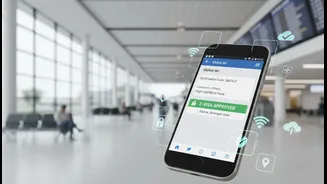
The digital overhaul of border control relies on a few key technologies working in concert. Automated e-Gates are becoming a common sight in airports from the UK to Singapore. These gates use facial recognition to match a live image of the traveler to the biometric data stored in their electronic passport, opening automatically upon successful verification. For entry into the United States, travelers can use the free Mobile Passport Control (MPC) app. This allows eligible passengers, including U.S. and Canadian citizens, to submit their passport information and customs declaration digitally upon arrival, then use a dedicated, faster-moving lane. While paid programs like Global Entry offer an even more expedited process after a background check, the free MPC app provides a significant speed advantage over traditional queues.
India's Digi Yatra Goes Global
India is aggressively pursuing its own vision of seamless travel with the Digi Yatra initiative. Already used for domestic flights, the system uses facial recognition to allow passengers to move through check-in, security, and boarding with just their face as their ID. Travelers register on the Digi Yatra app by linking their Aadhaar and taking a selfie. In a significant expansion, as of June 2026, the service has become mandatory for international transit passengers at major hubs like Delhi, Mumbai, Bengaluru, and Hyderabad, aiming to eliminate paper checks and reduce clearance times to mere seconds. The government plans to expand Digi Yatra to dozens more airports and is working on cross-border digital corridors, which would allow a digital ID created in India to be recognized by systems in other countries, paving the way for a truly global, paperless journey.
The Global Race for Speed and Security
The move toward digital entry is a worldwide phenomenon. Singapore's Changi Airport, a global benchmark, is aiming to automate 95% of its immigration processing, with clearance times as low as 10 seconds. The European Union is rolling out its automated Entry/Exit System (EES), which replaces passport stamping with a digital register that captures travelers' biometric data. These systems are not just about convenience; they are also about efficiency and security. As global air travel is projected to double by 2050, airports cannot simply double in size. Automation allows them to process more people without massive infrastructure expansion, while biometric verification helps authorities identify risks more effectively.
The Trade-Off: Convenience vs. Privacy
The promise of a frictionless journey comes with important questions about data privacy and security. The increasing use of facial recognition by government agencies is raising concerns about mass surveillance. In India, for example, there are proposals to link airport facial recognition systems to a central database to flag persons of interest. While authorities assert that data is handled securely—Digi Yatra, for instance, says personal data is encrypted and deleted within 24 hours of a flight—travelers are essentially trading their biometric information for a faster trip. As these systems become more widespread, the debate over how this sensitive data is collected, stored, and used will only intensify, forcing a global conversation about where to draw the line between seamless security and personal privacy.