






A Promising Start, A Sudden Stop
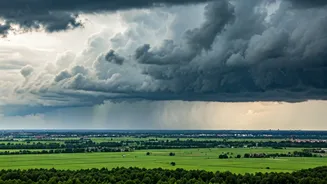
Just weeks ago, the narrative was one of relief. The Southwest Monsoon made a swift and powerful entry, arriving in Kerala two days early and rapidly covering large swathes of southern and northeastern India ahead of schedule. The initial pace sparked
hopes for a robust season, crucial for filling reservoirs and ensuring a successful Kharif sowing season. But now, an unnerving silence has fallen. The northern limit of the monsoon—the imaginary line marking its leading edge—has barely moved for over a week. It remains stubbornly stuck, cutting across key agricultural belts in Maharashtra, Chhattisgarh, Odisha, and parts of Gujarat, leaving the rest of Central and North India waiting under a scorching sun.
The Science Behind the Stall
So, what put the brakes on the monsoon? Meteorologists at the India Meteorological Department (IMD) and private forecasters point to a couple of key factors. Primarily, the weather systems that act as the monsoon's engine have weakened. The strong westerly winds blowing from the Arabian Sea, which initially pushed the monsoon deep into the mainland, have lost their intensity. Simultaneously, there's a lack of a significant low-pressure area or depression forming over the Bay of Bengal. These systems are vital; they act like a powerful locomotive, pulling the moisture-laden winds further inland. Without this 'pull' from the east and a weaker 'push' from the west, the monsoon's advance has effectively entered a hiatus. This isn't a complete withdrawal, but a significant and worrying pause.
Anxiety on the Ground
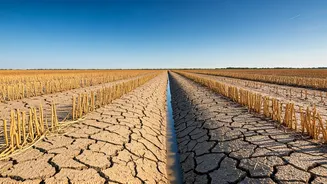
For millions of farmers, this meteorological lull translates into real-world anxiety. The Kharif season, which accounts for a huge portion of India's annual food grain production, is critically dependent on the timely arrival and distribution of monsoon rains. Farmers in regions like Vidarbha and Marathwada in Maharashtra, as well as parts of Madhya Pradesh and Chhattisgarh, had prepared their fields, anticipating the continuation of the early showers. Now, they are in a precarious position. Sowing crops like cotton, soybean, and pulses without sufficient follow-up rain can lead to failed germination, wasted seeds, and immense financial loss. The pause also means a return of intense heatwave-like conditions in areas that had just experienced a brief respite, increasing water and electricity demand.
Is This 'Break' Normal?
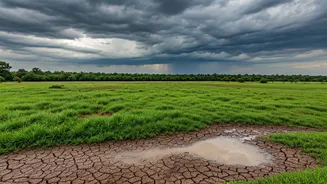
While the term 'shocked' in the headline captures the frustration, experienced meteorologists know that such pauses, or 'breaks', are a feature of the monsoon season. The four-month-long phenomenon is rarely a smooth, linear progression. It is often characterized by active phases of heavy rainfall followed by brief, weak spells. However, the timing and duration of this particular break are what cause concern. A prolonged stall early in the season can disrupt the entire agricultural calendar. A delay of a week is manageable; a delay stretching into two or three weeks could have serious consequences for crop yields and food inflation later in the year. The initial rapid advance set high expectations, making this sudden halt feel more dramatic and disruptive.
When Will the Rains Return?
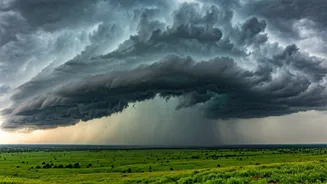
All eyes are on the weather charts, searching for signs of a revival. Forecasters are optimistic that the situation is temporary. The key lies in the Bay of Bengal. Meteorologists are monitoring the potential formation of a cyclonic circulation, which would be the catalyst needed to re-energise the monsoon and pull it further into the heartland of India. Current models suggest favourable conditions for such a system to develop towards the third or fourth week of June. If and when this happens, the monsoon is expected to resume its northward journey with renewed vigour, bringing much-needed rain to the parched fields of central and northern India. Until then, it remains a waiting game—a test of patience for a nation that runs on the rhythm of the monsoon.