




What to Look For This July
July 2026 is an exciting month for astronomy enthusiasts. Several events are lined up, offering a spectacular show for those with clear skies. Keep an eye out for the Moon's close approach to bright planets. Early in the month, on July 7 and 8, you can
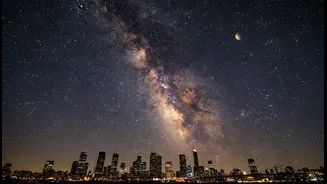
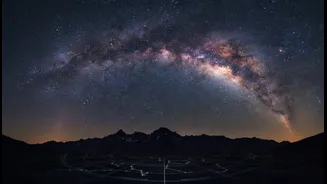
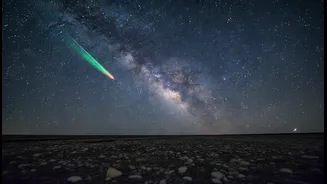
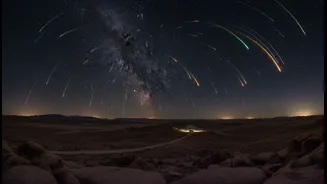
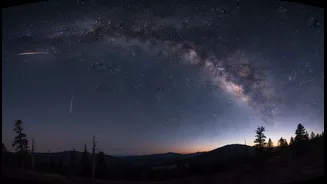
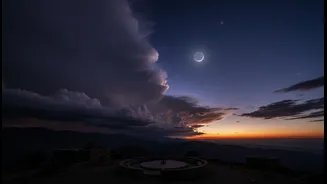
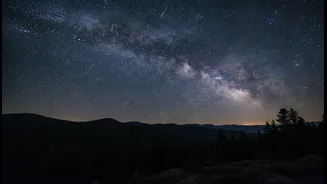
spot the Moon near Saturn in the pre-dawn sky. A few days later, on July 11, a crescent Moon will form a beautiful triangle with Mars and the Pleiades star cluster, also visible before sunrise. The middle of the month offers a great window for deep-sky viewing around the New Moon on July 14, when the lack of moonlight provides darker skies ideal for spotting the Milky Way. The end of the month features the peak of two meteor showers: the Southern Delta Aquariids and the Alpha Capricornids, around July 30-31. While the Alpha Capricornids are known for bright fireballs, the Delta Aquariids can produce a steady stream of meteors.
The Monsoon Hurdle
The biggest obstacle for stargazers in India during July is, without a doubt, the monsoon. While the rain brings much-needed relief from the summer heat, the associated thick cloud cover can completely obscure the night sky for days on end. This makes planning a stargazing session tricky. A forecast that looks promising a week in advance can quickly change, leaving you with a blanket of clouds instead of a star-filled canvas. Atmospheric humidity also increases during this season, which can reduce transparency and make stars appear less sharp, even on a seemingly clear night. These conditions make it essential for skywatchers to be both patient and strategic.
Why Last-Minute Checks Are Crucial
Given the volatile nature of monsoon weather, checking the forecast just a few hours before you plan to head out is your best bet. Long-range forecasts can give you a general idea, but they often fail to predict small, localised breaks in the clouds. A last-minute check can reveal a short window of clear sky that you might otherwise miss. These checks should go beyond a simple “clear” or “cloudy” prediction. Look for forecasts that provide information on cloud cover percentage, atmospheric transparency (how clear the air is), and seeing (how stable the atmosphere is). A night with low transparency or poor seeing can be just as frustrating as a cloudy one, as celestial objects will appear fuzzy and dim.
Modern Tools for Smart Skywatchers
Thankfully, a host of digital tools can help you make an informed decision. Specialised astronomy weather apps like Astrospheric and Clear Outside are designed for this very purpose. They provide hourly forecasts on key metrics such as total cloud cover, seeing, and transparency. Many of these apps use colour-coded charts that allow you to see at a glance when conditions might be favourable. For an even deeper analysis, websites like Meteoblue allow you to compare different weather models, giving you a more comprehensive picture. Some tools, like Scope Nights, even let you set thresholds for wind, humidity, and moon phase to create custom forecasts tailored to your needs. Using a combination of these resources a few hours before your planned session will significantly increase your chances of success.
Planning for Success
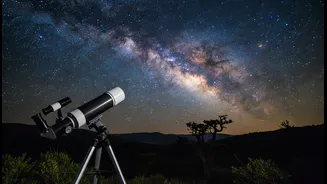
Even with the best forecast, a bit of preparation goes a long way. The late-July meteor showers, for instance, are unfortunately hampered this year by a bright full Moon on July 29. This means you'll need to find a location with minimal light pollution to spot any but the brightest meteors. Always have a viewing spot in mind that is away from city lights. When you head out, allow your eyes at least 20 minutes to adapt to the darkness; this means avoiding looking at your bright phone screen. Using a red-light flashlight can help preserve your night vision. Finally, be flexible. The monsoon might mean your primary viewing window gets clouded over, but another might open up later in the night. Patience and preparedness are a skywatcher's best friends during this season.