



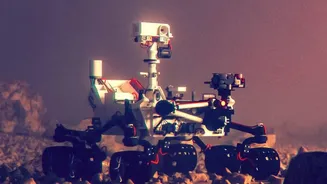


The Robotic Vanguard
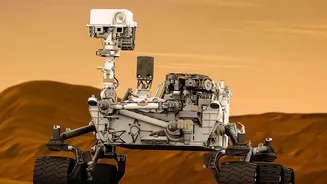
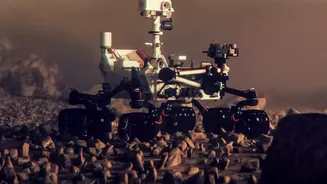
For decades, robots have been our proxies on the red planet. From the pioneering Sojourner to the highly advanced Perseverance and Curiosity rovers, these machines are marvels of engineering. They have sent back stunning images and invaluable data, rewriting
our understanding of Mars. Their biggest advantage? The price tag. A flagship robotic mission like Perseverance costs around $2.7 to $3 billion. While hardly cheap, this is a fraction of the cost of a human mission. Robots don't need food, water, oxygen, or a return ticket. They can endure the harsh Martian environment for years until their power systems fail, methodically carrying out their programmed tasks. They are the logical, economical, and proven way to explore.
The Human Price Tag
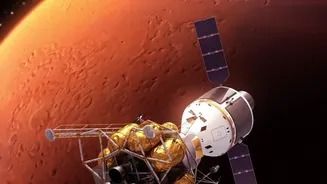
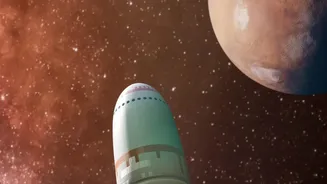
Sending astronauts to Mars is an undertaking of a completely different magnitude. While NASA has been hesitant to provide a single official figure for its Moon-to-Mars program, independent estimates and historical analyses paint a staggering picture. A human mission to Mars is projected to cost anywhere from hundreds of billions to potentially over a trillion dollars over the life of the program. Why the astronomical cost? Because humans are fragile. A crewed mission requires complex and heavy life-support systems to manage air and water, enormous quantities of food for a journey that could last up to three years, and powerful radiation shielding. It also necessitates developing and launching a vehicle large enough not just to get to Mars, but to launch from the Martian surface for the return journey—a feat of engineering we have not yet attempted.
Risking Metal and Silicon
A mission to Mars is never without risk, even for a robot. The six-month journey through space is followed by what engineers call the 'seven minutes of terror'—the perilous entry, descent, and landing through Mars's thin atmosphere. A single computer glitch, a premature thruster shutdown, or an unforeseen patch of rough terrain can doom a billion-dollar mission in an instant. History is littered with failed landers and probes. However, when a robotic mission fails, the loss is financial and scientific. It is a setback, a disappointment, and a learning experience. But no lives are lost.
The Ultimate Human Risk
For human astronauts, the dangers are profound and constant. Outside the protection of Earth's magnetic field, space is saturated with radiation from cosmic rays and the sun, dramatically increasing the risk of cancer and other diseases. The long journey in zero or partial gravity leads to muscle atrophy and bone density loss. Psychologically, the extreme isolation and confinement, coupled with a communication delay of up to 22 minutes each way, can take a heavy toll. And then there's the ever-present danger of equipment failure. A breakdown in a life-support system or a catastrophic issue millions of miles from Earth would be a death sentence. We can't just send a repair person.
A Geologist's Eye vs. a Rover's Drill
So, with the immense cost and risk, why even consider sending humans? The answer lies in the scientific return. Robots are slow and deliberate. The Curiosity rover, for example, has traveled less than 30 km in over a decade. A human explorer is adaptable, intuitive, and efficient. A trained astronaut could cover more ground in a single day than a rover can in months, making decisions in real-time. They can pick up an interesting-looking rock on a whim, climb a treacherous but scientifically valuable ridge, and perform complex repairs. One analysis notes that Apollo 17 astronauts collected over 110kg of samples in three days on the Moon; rovers on Mars have collected a handful of samples over many years. Humans can accomplish in hours what might take a robot years to do, if it can do it at all.