





The Age of ‘Designer’ Water
Walk down any supermarket aisle and you're met with a dizzying array of water choices. There’s alkaline water promising to balance your body’s pH, black water infused with fulvic acid for detoxification, and vibrant vitamin waters that claim to boost
everything from your energy to your immunity. Each comes in a sleek plastic bottle with a premium price tag and a marketing campaign designed to make you feel that regular water is simply not enough anymore. This multi-billion dollar industry is built on a simple premise: modern science can improve on nature. But can it really?
The Timeless Wisdom of Earthenware
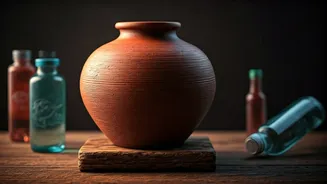
For generations, long before electricity or refrigeration became commonplace, Indian households had a sophisticated solution for cool, refreshing water: the matka. This unglazed terracotta pot, often sitting in a quiet corner of the kitchen or on a verandah, is more than just a vessel. It’s a piece of cultural heritage, a symbol of summer afternoons, and a testament to indigenous ingenuity. While trendy waters fight for our attention with bold claims, the matka has been silently delivering on its promise for centuries, without any marketing budget at all.
Nature's Perfect Refrigerator
The magic of the matka isn’t magic at all; it’s brilliant, simple physics. The pot is made from porous clay, which allows a tiny amount of water to seep through its walls. As this water evaporates from the outer surface, it draws heat from the water inside the pot, causing it to cool down significantly. This process, known as evaporative cooling, is the same principle our bodies use when we sweat. It’s a natural, energy-free refrigeration system that can lower the water temperature by several degrees, making it perfectly chilled and far more pleasant to drink than room-temperature water, especially during India’s scorching summers.
A Natural Health Boost?
Beyond cooling, the matka offers other subtle benefits that modern fads try to replicate artificially. Clay is naturally alkaline. As water is stored in a matka, it is believed to take on some of these properties, helping to balance the body's pH. Unlike some commercially produced alkaline waters, this process is entirely natural. Furthermore, the water from a matka is gentle on the throat. Many people find that drinking ice-cold water from a refrigerator can be a shock to the system, sometimes leading to a sore throat. Matka water is cool, not frigid, providing the perfect temperature for comfortable hydration.
An Unbeatable Flavour Profile
Ask anyone who grew up drinking from a matka, and they will tell you about its unique taste. The clay imparts a subtle, earthy flavour to the water that is both distinctive and incredibly refreshing. It’s a taste that is deeply connected to memories of home, summer holidays, and the reassuring presence of a grandmother. This sensory experience is something that no plastic bottle or fancy filtration system can replicate. It’s the taste of authenticity, a flavour that connects us to the earth and to our own pasts, turning the simple act of drinking water into a moment of quiet pleasure.
Eco-Friendly and Economical
Perhaps the most compelling argument for the matka in the 21st century is its sustainability. A single matka can last for years with proper care. It is made from natural materials and is completely biodegradable. Contrast this with the mountains of plastic waste generated by the bottled water industry, a significant portion of which ends up polluting our oceans and landfills. Financially, the choice is even clearer. A good quality matka is a one-time, affordable investment. A month’s supply of a ‘designer’ water, on the other hand, can cost significantly more, locking you into a cycle of repeat purchases. The matka is not just good for you; it's good for the planet and your wallet.