
Discovering Shekhawati's Charm
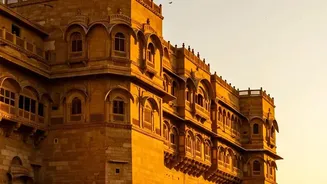
Nestled in the arid northern part of Rajasthan, the Shekhawati region comprises districts like Sikar, Jhunjhunu, and Churu. Its fame rests on the incredible havelis (mansions) built by wealthy Marwari merchants between the 18th and early 20th centuries.
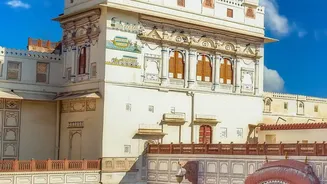
These traders, who prospered along the caravan routes, adorned their homes with elaborate frescoes, turning entire towns into living art galleries. The paintings cover every surface, depicting a fascinating mix of mythological tales, royal portraits, local folklore, and surprisingly, impressions of modern life, including the British presence and new inventions like trains and motorcars. While some havelis are beautifully preserved, others stand as haunting, dilapidated reminders of a prosperous past.
The Essential Route: A Shekhawati Triangle
For a comprehensive yet manageable tour, a circuit connecting Mandawa, Nawalgarh, and Fatehpur is the ideal starting point. Most travellers use either Mandawa or Nawalgarh as a base.
Mandawa is often the most popular choice, known for its fort and a high concentration of decorated mansions like the Goenka Double Haveli and Murmuria Haveli. Its streets have been the backdrop for numerous films.
Nawalgarh, often called the “Golden City of Shekhawati,” is a treasure trove for art lovers. It boasts some of the region's finest frescoes. Don't miss the Dr. Ramnath A. Podar Haveli Museum, which has been meticulously restored, and the Aath Haveli complex.
Fatehpur is known as Shekhawati’s cultural capital. While many havelis here show their age, the artistic detail is stunning. A key highlight is the Nadine Le Prince Haveli, restored by a French artist, which now functions as a cultural centre and gallery.
Deeper Dives: Beyond the Main Towns
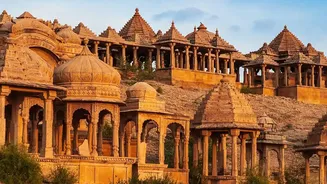
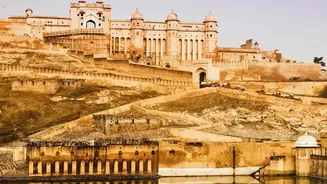
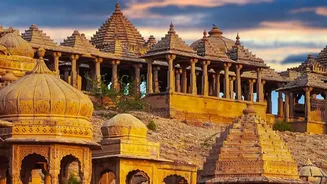
If you have an extra day or two, the region rewards further exploration. The routes are best travelled by a hired car, allowing for spontaneous stops. A popular extension from the main triangle includes Dundlod, known for its fort, which blends Rajput and Mughal architectural styles, and its fine horses. You can also venture to Ramgarh, founded by the Poddar family, which is famous for its grand cenotaphs and temples. Another gem is Mahansar, a small town with a haveli that features a room painted entirely with gold leaf. These smaller towns often provide a more tranquil experience away from the slightly more touristed centres. Many travellers suggest creating day-trip loops from a central base to avoid feeling overwhelmed by a phenomenon locals call being "haveli-d out."
A Practical Guide for Your Trip
Planning is key to enjoying Shekhawati's dispersed treasures. The best time to visit is between October and March when the desert climate is cool and pleasant. Getting around is most efficiently done by hiring a car and driver from a major city like Jaipur or Delhi, as public transport options are limited and roads connecting smaller villages can be unpredictable. Many historic havelis have been converted into heritage hotels, particularly in Mandawa and Nawalgarh, offering an immersive and authentic stay. For access to locked havelis, it's often best to hire a local guide who knows the caretakers; a small tip can often grant you entry into these private architectural wonders.