

Understanding Pranayama
Pranayama is more than just breathing; it's the practice of consciously regulating your breath to influence your state of mind. In yogic philosophy, 'prana' is the vital life force energy that flows through us. By controlling the breath ('yama'), we can
calm our nervous system, reduce stress hormones, and promote a state of relaxation conducive to both emotional balance and restorative sleep. Regular practice helps increase oxygen supply to the brain, enhancing clarity and focus while reducing feelings of anxiety and frustration.
Anulom Vilom (Alternate Nostril Breathing)
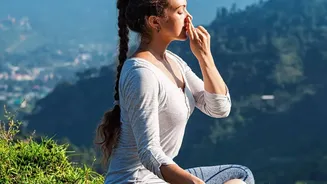
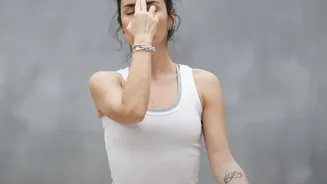
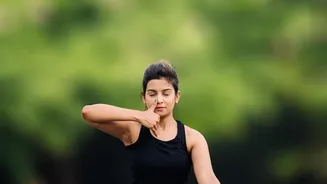
Anulom Vilom is a foundational pranayama known for its ability to balance the mind and body. It helps purify energy channels, reduce stress, and improve respiratory and cardiovascular function. It is particularly effective for calming the mind before sleep or during moments of emotional turmoil. How to do it: 1. Sit comfortably with your spine straight. Rest your left hand on your left knee. Fold the index and middle fingers of your right hand into your palm. 2. Close your right nostril gently with your right thumb. Inhale slowly and deeply through your left nostril. 3. Close your left nostril with your ring finger, release your thumb from the right nostril, and exhale slowly through the right side. 4. Now, inhale through the right nostril. 5. Close the right nostril with your thumb, release your ring finger, and exhale completely through the left nostril. This completes one full round. Start with 5-10 rounds, focusing on a smooth, steady, and silent breath.
Bhramari Pranayama (Humming Bee Breath)
Named for the humming sound of a black Indian bee, Bhramari is incredibly effective for instantly calming the mind. The vibrations created by the humming sound soothe the nerves, release agitation, and are excellent for relieving frustration and anxiety, making it a perfect exercise before bed. How to do it: 1. Sit in a quiet, comfortable position with your eyes closed. 2. Place your index fingers on the cartilage of your ears, located between your cheek and ear. 3. Take a deep breath in through your nose. 4. As you exhale, gently press the cartilage and make a continuous, low-pitched humming sound from the back of your throat, like a bee. Keep your mouth closed. 5. Continue for the entire duration of the exhalation. The sound should be smooth and even. Repeat this process for 5-10 rounds. You can also practice this lying down without using your fingers.
Ujjayi Pranayama (Ocean Breath)
Ujjayi breath, often called 'Ocean Breath' or 'Victorious Breath', involves a gentle constriction at the back of the throat, creating a soft, soothing sound similar to ocean waves. This technique slows the breath down, which helps trigger the body's relaxation response (the parasympathetic nervous system) and has a calming effect on both body and mind, making it ideal for managing anxiety and preparing for sleep. How to do it: 1. Sit or lie down comfortably. Breathe in and out through your nose. 2. Gently constrict the back of your throat, as if you were about to whisper the sound 'ha', but keep your mouth closed. 3. You should hear a soft, audible rushing or hissing sound with both your inhalation and exhalation. 4. Keep the breath long, deep, and smooth. The sound allows you to listen to your breath, which helps maintain focus and mindfulness. Try taking ten slow Ujjayi breaths before sleeping to help yourself drift off.
Creating a Consistent Practice
The key to unlocking the benefits of pranayama is consistency. You don’t need to practice for hours. Starting with just five minutes a day, preferably at the same time, can make a significant difference. Choose a quiet and clean space where you won't be disturbed. Practicing on an empty stomach is generally recommended. You might choose to do Anulom Vilom in the morning for balance and Bhramari or Ujjayi before bed to unwind. Listen to your body and find what works best for you. The goal is not perfection but gentle, mindful attention to your breath.