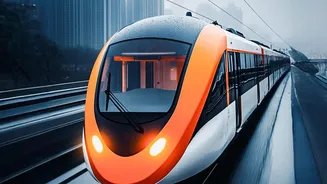






When a high-speed train unexpectedly stops, passenger anxiety is understandable. But a recent incident in Spain became a real-world test of the sophisticated emergency procedures that underpin one of the world's most advanced rail networks.
What Happened on the Madrid-Seville Line
On October
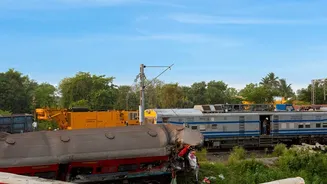
28, 2026, a communications failure occurred on the LZB automatic signaling system on the high-speed line between Madrid and Seville. This system normally monitors train speed and location continuously to ensure safety. The failure automatically brought several trains, operated by Renfe and Iryo, to a halt as a primary safety precaution. However, what followed was a sequence of events where human control was reintroduced. The control center in Madrid authorized a Renfe AVE train to proceed at 'normal speed' despite a stationary Iryo train being in the same track section ahead, leading to a tragic collision. This went against established protocol, which requires trains to proceed at a much-reduced speed of around 40 km/h in such 'degraded' conditions to ensure the driver can stop if an obstacle is sighted.
The Layers of Rail Safety Technology
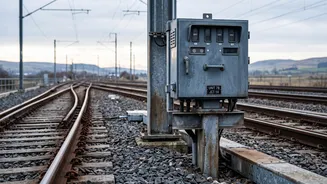
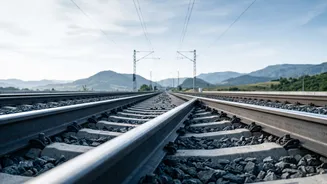
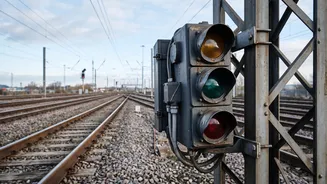
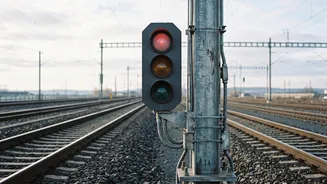
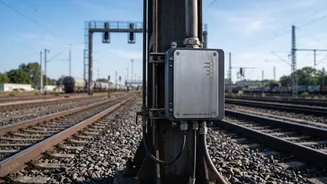
Spain’s rail network, like many in Europe, is protected by multiple layers of technology. The primary system on the Madrid-Seville line is the LZB (an acronym for the German Linienzugbeeinflussung), which provides continuous supervision. When it fails, a backup system called ASFA (Anuncio de Señales y Frenado Automático) takes over. ASFA is an intermittent system that uses trackside beacons to communicate with the train, primarily to ensure drivers acknowledge signals and can trigger automatic braking if a stop signal is passed. A more modern system, the European Rail Traffic Management System (ERTMS), is being rolledout across Europe to create a unified, interoperable standard. ERTMS Level 2, for example, uses continuous radio communication between the train and a Radio Block Centre (RBC) to manage traffic, eliminating the need for most lineside signals and allowing for even greater safety and efficiency.
The Human Element in Emergency Control
Technology is only one part of the equation. When automated systems like LZB fail, control reverts to human operators. The established procedure involves clear communication between the control center and the train driver. In a degraded mode, the driver is typically instructed to proceed 'on-sight' at a sharply reduced speed. The recent incident has brought this human element into sharp focus, with Spain's Transport Minister describing the decision to allow the train to resume normal speed as 'inexplicable'. In response to the crash, new procedures are being implemented. These include requiring a second controller to validate any instructions given during a system failure, effectively creating a human redundancy to prevent a single point of error. Both Renfe and Iryo have also called for a strict 40 km/h speed limit to be enforced whenever primary automatic safety systems are down.
Passenger Management and Aftermath
For passengers, an emergency stop is just the beginning. The crew's first responsibility is to keep travelers informed and calm. Following an incident, railway staff and emergency responders coordinate to ensure passenger safety, which can involve evacuation to a safe location or transfer to replacement transport. In the wake of the October collision, Spain's government announced a series of measures beyond just operational changes. These include an extraordinary safety audit of the network, improvements to staff training and working conditions, and a temporary reduction in the number of services on the Madrid–Seville line to increase separation between trains until the new ERTMS system is fully operational. Prime Minister Pedro Sánchez acknowledged that trust in the high–speed network had been broken and pledged support for victims and their families while committing to a full investigation.