




A Matriarch's Table
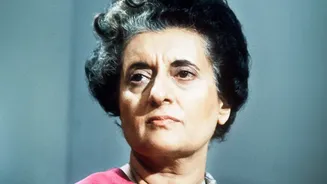
Long before she was the formidable Prime Minister, Indira Gandhi was the master of her home at 1 Safdarjung Road. She was known to be a meticulous and gracious hostess, taking a keen personal interest in every detail of her household, especially the kitchen.
Far from the stern image often portrayed in public, behind closed doors, she was a matriarch who understood the power of a shared meal to bring people together. Friends and family recall that her dining table was a reflection of her personality: elegant, thoughtful, and deeply connected to India's diverse cultural fabric. Her involvement wasn't distant; she would often step into the kitchen herself, planning menus and ensuring everything was just right, a practice that laid the foundation for decades of family traditions.
The Flavours of a Nation
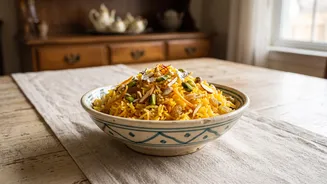
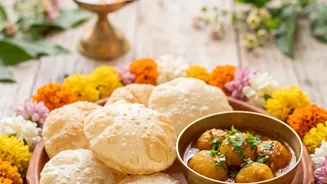
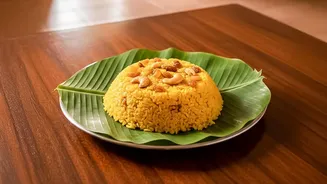
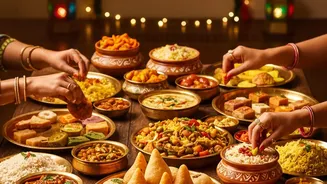
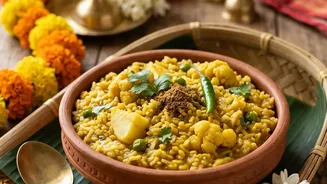
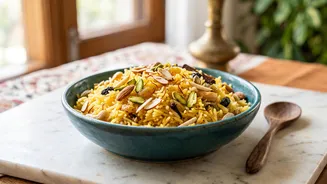
The food served during Diwali at the Gandhi household was a testament to Indira's broad culinary tastes and her vision of a unified India. The menu was never monolithic. It was a carefully curated blend of regional Indian specialities and even some Continental dishes she had grown fond of during her time abroad. A gastronomic biography notes that her kitchen was a place of delicious experimentation, where Kashmiri delicacies could sit alongside simple, comforting dals. She maintained handwritten notebooks filled with recipes, a personal culinary archive that she built over the years. These weren't just instructions for cooks; they were a diary of her life in flavours, from traditional family recipes to dishes learned on her travels, all of which made a special appearance during the festive season.
A Daughter-in-Law's Inheritance
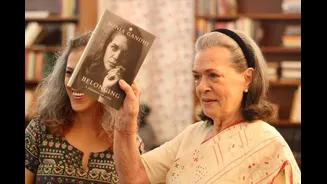
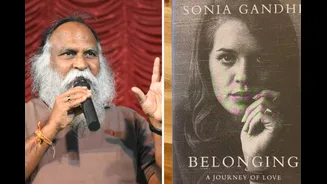
When a young Sonia Maino arrived in India, it was Indira Gandhi who guided her through the intricate tapestry of Indian culture, and food was a primary language of that education. Sonia Gandhi has often recalled how her mother-in-law patiently introduced her to the customs and flavours of her new home. This mentorship was crucial in helping her navigate a world so different from her native Italy. It was in the shared space of the family kitchen and dining room that a bond was forged. By embracing these traditions, Sonia didn't just learn how to manage a household; she inherited a legacy of hospitality and cultural curation that had been so central to Indira's identity as a host and homemaker.
Revisiting the Culinary Archives
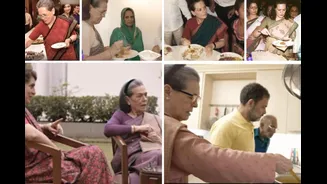
Today, as the family's senior matriarch, Sonia Gandhi is the custodian of this rich culinary heritage. 'Revisiting' these traditions is an active, living process that unfolds each Diwali. It means turning to the memories and, perhaps, the very recipe books that Indira so carefully maintained. It is about recreating the tastes and aromas that filled the home decades ago, ensuring that a new generation, including her grandchildren, experiences the same sense of continuity and belonging. By keeping these food traditions alive, she ensures that Indira's presence is felt not just in photographs on the wall, but in the very food that nourishes the family during India's most important festival.
More Than Just a Meal
For a family living under constant public scrutiny, these rituals offered a space for normalcy and connection. The act of preparing and sharing specific foods during Diwali was a way to anchor themselves in family history, away from the turbulent world of politics. Each dish carried a story, a memory of a time, a place, or a person. It was a sensory link to the past, a way for Indira to share her own upbringing and for Sonia to, in turn, pass it down. This practice mirrors what millions of Indian families do every year: use food as a vehicle for love, memory, and identity. It is a reminder that no matter how public a life becomes, the heart of a home is often found in its kitchen.