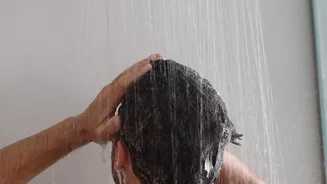








Why Rainwater Wreaks Havoc on Hair
It might seem like just water, but urban rainwater is often far from pure. As it falls, it collects atmospheric pollutants, dust, and acidic compounds. When this mixture lands on your hair, it can disrupt your scalp's natural pH balance, which is typically
around 5.5. This sudden change can cause the hair's protective outer layer, the cuticle, to lift and swell. The result is the dreaded monsoon frizz, where hair becomes rough, puffy, and tangled. Furthermore, the combination of dampness from rain and high humidity creates a perfect breeding ground for bacteria and fungi, potentially leading to scalp irritation, itchiness, and even infections like dandruff.
Immediate Steps: An At-Office Rescue
So you've arrived at your destination, dripping and dishevelled. The first rule is to be gentle. Your hair is significantly weaker and more prone to breakage when wet. Avoid aggressive towel rubbing. Instead, gently blot your hair with a soft microfiber towel or even a cotton t-shirt to absorb excess water without roughing up the cuticles. Next, use a wide-tooth comb to carefully detangle any knots, starting from the ends and working your way up to the roots. Never tie wet hair up tightly in a bun or ponytail, as this puts stress on the fragile strands and can lead to snapping. If you have a travel-sized anti-frizz serum or leave-in conditioner in your bag, now is the time to apply a small amount to your mid-lengths and ends to tame flyaways and add a layer of protection.
The Post-Soak Cleanse at Home
Once you're home, a proper wash is non-negotiable to get rid of the pollutants and grime. Opt for a mild, clarifying shampoo to thoroughly cleanse your scalp and hair without stripping it of its natural oils. Washing two to three times a week is generally a good balance during the monsoon. Follow up with a nourishing conditioner, applying it strategically from the mid-lengths to the ends. Leave it on for a few minutes to help seal the hair cuticle, restore moisture, and combat frizz. This step is crucial because shampooing opens the cuticles, and conditioner closes them, locking in moisture and creating a smoother surface.
Drying Without the Drama
How you dry your hair is just as important as how you wash it. Keeping your scalp dry is vital to prevent fungal growth. If you're using a hairdryer, stick to a low or cool heat setting to minimize damage. High heat on already vulnerable, rain-soaked hair can lead to more breakage. If you have the time, letting your hair air-dry naturally is a great option. Once your hair is completely dry, you can proceed with your usual styling. On humid days, simple, protective hairstyles like loose braids or a neat bun can help keep frizz under control and prevent your hair from absorbing excess moisture from the air.
Long-Term Monsoon Hair Health
Beyond immediate damage control, a few adjustments to your routine can make a big difference all season long. Consider a weekly deep-conditioning treatment or a hydrating hair mask to replenish lost moisture and strengthen your strands. Ingredients like shea butter, argan oil, or even a homemade pack with yoghurt and honey can provide intense nourishment. Be mindful of what you eat; a diet rich in protein, omega-3 fatty acids, and vitamins, found in foods like eggs, walnuts, and leafy greens, supports hair health from the inside out. Finally, always try to protect your hair from the rain with an umbrella or a stylish scarf. Prevention is, after all, the easiest form of care.