

Gear Up: The Pre-Walk Preparation
Before you even step out, a little preparation can make a world of difference. Investing in a comfortable, waterproof dog coat or jacket can keep your dog largely dry and warm, which is especially important for short-haired breeds. [6, 7] Look for gear
with reflective strips, as rainy conditions often mean lower visibility, especially during early morning or evening walks. [6, 12] Waterproof booties can protect paws from mud and dirty puddles, but not all dogs tolerate them. [6, 7] Ensure your dog’s leash and collar are made of a water-resistant material like nylon, which won't get heavy and smelly when soaked. [6] And for yourself? A sturdy umbrella and rain-proof shoes are non-negotiable. The goal is to make the walk as comfortable as possible for both of you.
On the Walk: Navigating Puddles and Risks
The world is a festival of new smells for your dog after a downpour, but it's also fraught with new risks. Steer your pet away from stagnant puddles, which can be contaminated with harmful bacteria like Leptospira, leading to serious, sometimes fatal, diseases. [2, 3, 21] Always carry fresh drinking water to prevent your dog from being tempted to drink from contaminated sources. [5, 7] Be mindful of your surroundings; the rain can obscure dangers on the ground. This is where the 'checks' come in — constantly scanning the path for hazards. It's also a high-risk season for ticks and fleas, which thrive in humid conditions, so avoid walking through dense vegetation or piles of wet leaves where they may be waiting. [3, 10]
The Post-Walk Ritual: Towels and Thorough Cleaning
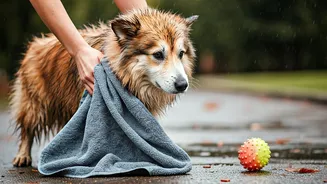
This is where the towels, and your diligence, are most crucial. Designate an area near your door with a mat and absorbent microfiber towels to manage the cleanup as soon as you get home. [10, 23] Start by thoroughly drying your dog's coat, paying special attention to the belly, underarms, and skin folds where moisture gets trapped. [10, 18] Trapped moisture is a primary cause of fungal and bacterial skin infections, often called 'hot spots', which are common during the monsoon. [2, 15] Next, focus on the paws. Wipe them with pet-safe wipes or a soft, damp towel, cleaning between the paw pads to remove mud and debris. [5, 22] A proper dry-down prevents that persistent 'wet dog' smell and, more importantly, protects your dog’s health. [11]
Health Checks Are Non-Negotiable
The humidity and dampness of the monsoon create a perfect breeding ground for a host of health problems. [15] Daily checks are vital. After cleaning, inspect your dog’s paws for any cuts, redness, or signs of infection. [18, 24] Persistent licking of the paws is often an early warning sign of a yeast infection. [15] Ears are another high-risk area. The damp conditions can lead to ear infections, especially in breeds with floppy ears. [15, 21] Gently wipe the outer ear dry after walks and use a vet-recommended cleaner regularly. [18, 21] Also, be vigilant for ticks and fleas, conducting a quick check of their coat after every outing. [5, 24]
A Lesson in Patience (For You and Your Dog)
Some dogs love the rain, while others will stage a protest at the door. Forcing a reluctant dog into a downpour can create anxiety. This is where patience is key. Keep the walks short and positive. If your dog is truly miserable, don't force it. Similarly, the mud and mess can be frustrating. Remember that it's a temporary season, and getting angry at your dog for being a dog won't help. A deep breath and a consistent cleaning routine are your best tools. Embrace the cuddle time that comes after you’re both clean and dry. [3]
When the Rain Won't Stop: Indoor Alternatives
Sometimes, the rain is just too heavy for a walk to be safe or enjoyable. On these days, indoor enrichment is essential to prevent restlessness and boredom. [24] Simple games like hide-and-seek with treats can engage their powerful sense of smell. [16, 17] Puzzle toys, snuffle mats, and stuffable food toys are excellent for providing mental stimulation and can tire a dog out as effectively as a short walk. [4, 8, 17] You can even create a DIY 'busy box' with cardboard and paper for them to shred and forage in. [4, 16] A few minutes of focused training or a game of indoor tug can also help burn off excess energy. [14, 17]