



The Guardian of Grub: FSSAI
The entire framework of food safety in India is anchored by the Food Safety and Standards Authority of India (FSSAI). Established under the Food Safety and Standards Act, 2006, this is the country's primary regulatory body for all things food. Its mandate
is to lay down science-based standards for food and to regulate their manufacture, storage, distribution, and sale. For restaurants, this means adhering to a comprehensive set of guidelines covering everything from the kitchen layout to the health of the food handlers. Every commercial food business, from a five-star hotel to a local eatery, must have an FSSAI license or registration, making it the foundational layer of accountability in the food industry.
Behind the Kitchen Doors: The Inspection Process
Food Safety Officers (FSOs) conduct inspections to ensure restaurants are complying with FSSAI standards. Recent drives, such as the one in Bengaluru in early August 2026, show how these inspections are mobilized in response to public complaints and to reinforce standards. During a visit, inspectors follow a detailed checklist. They examine the cleanliness of the premises, the hygiene practices of the staff, and the management of waste. They also check for proper documentation, including licenses and records for food handlers' training. A critical focus is on preventing cross-contamination, ensuring that raw and cooked foods are handled separately, and verifying that the water used is potable. In some cases, samples are collected and sent to labs for analysis to check for microbial contamination or the use of banned substances.
The Core of Cleanliness: Food Storage Rules
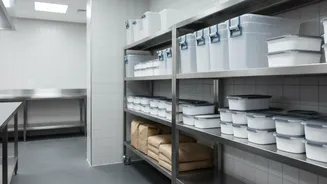
The headline of this article rightly points to clean food storage as a pillar of trust, and it's an area inspectors scrutinize closely. FSSAI guidelines are specific: food must be stored at least 15 cm off the floor, in clean, covered containers. Temperature control is non-negotiable. The 'danger zone' for bacterial growth is between 5°C and 60°C. Therefore, hot food must be kept above 60°C and cold food below 5°C. Raw meat, poultry, and fish must be stored on the lowest shelves of a refrigerator to prevent their juices from dripping onto ready-to-eat foods on upper shelves. Inspectors also check that restaurants follow the 'First-In, First-Out' (FIFO) principle, ensuring older stock is used before newer items to prevent spoilage and the use of expired ingredients. Violations in this area, such as storing expired products or having fungal growth on vegetables, are common reasons for penalties during inspections.
From Inspection to Information: The Hygiene Rating Scheme
To make the results of these rigorous inspections transparent to consumers, FSSAI has initiated the Hygiene Rating Scheme. This voluntary program rates restaurants, cafeterias, and other eateries on a scale of one to five based on their hygiene and safety standards found during an audit. The rating, often displayed as a certificate with smileys, allows customers to make an informed choice about where they eat. It's designed to not only empower diners but also to encourage businesses to continuously improve their practices. A good hygiene rating can become a significant competitive advantage, signalling to customers that an establishment takes their health seriously.
Empowering the Diner: What You Can Do
As a consumer, you play a vital role in upholding food safety standards. The most direct way is to look for the FSSAI Hygiene Rating certificate, which should be prominently displayed. While this scheme is voluntary, its adoption is growing. Beyond official ratings, you can use your judgment. Observe the general cleanliness of the dining area and restrooms. While you can't see the kitchen, the state of the front-of-house often reflects the standards behind the scenes. If you encounter unhygienic conditions or have concerns about the food, you have the right to raise a complaint. FSSAI provides helpline numbers and online portals for consumers to report issues, which can trigger inspections like the recent ones in Karnataka.