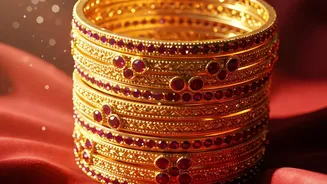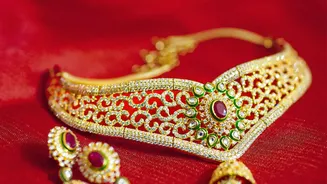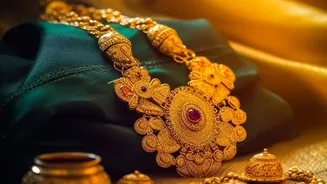




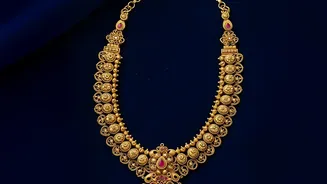

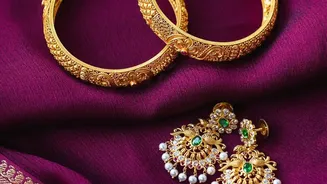
How Gold on EMI Schemes Work
Many jewellers have partnered with banks or non-banking financial companies (NBFCs) to offer EMI options on gold and diamond jewellery. Instead of paying a large lump sum, you can pay for your purchase in smaller, fixed monthly payments over a tenure
that typically ranges from three to 24 months. This method is popular for significant purchases, such as for weddings or festivals, as it allows buyers to acquire the jewellery immediately without draining their savings all at once. The process usually involves using a credit card, a debit card EMI facility, or a direct financing plan offered by the jeweller's partner lender.
The Lure of 'No-Cost' EMI
A major attraction of these schemes is the 'No-Cost EMI' offer, which suggests you can pay for the gold in instalments without any interest charges. However, this can be misleading. Often, the interest component is either bundled into the price of the jewellery itself or recovered through a substantial processing fee. Some jewellers' schemes involve paying instalments for a set period, like 10 or 11 months, after which the jeweller contributes the final instalment as a 'bonus' before you can purchase the jewellery. While this can translate to a discount, it often just offsets the high making charges, which can range from 15% to over 25%.
The Crucial Calculation: Total Cash Outflow
The only way to know the true cost is to calculate the total amount you will pay by the end of the EMI tenure. The formula is simple: Total Cost = (Monthly EMI Amount x Number of Months) + Processing Fees + Any Other Charges. For example, if you buy jewellery worth ₹2,00,000 and your EMI plan includes interest and fees that bring your total repayment to ₹2,10,000, you are paying ₹10,000 extra for the convenience. Always compare this final figure with the upfront cost of the same item. Ask the jeweller for the price if you were to pay in full today versus the total cost on an EMI plan. This simple comparison will reveal the real cost of the loan.
Don't Forget Processing Fees and GST
Interest isn't the only extra cost. Lenders almost always charge a non-refundable processing fee, which can range from 1% to 2% of the loan amount. Furthermore, Goods and Services Tax (GST) is applicable on the entire value of the gold and the making charges, as well as on the processing fee and any interest paid. These small percentages add up, increasing the overall price you pay for the jewellery. Always read the fine print of the loan agreement to identify all applicable charges before signing.
Are There Better Alternatives?
If your goal is to invest in gold rather than purchase jewellery for a specific occasion, there are more efficient options. Sovereign Gold Bonds (SGBs) issued by the RBI, Gold Exchange Traded Funds (ETFs), and Gold Mutual Funds are designed for investment purposes. These instruments are linked to the price of gold but do not involve making charges, storage concerns, or the high markups associated with jewellery. For a planned jewellery purchase, a systematic investment in a bank's recurring deposit (RD) can help you build the required corpus while earning a modest interest, giving you the freedom to buy from any jeweller you choose upon maturity.