


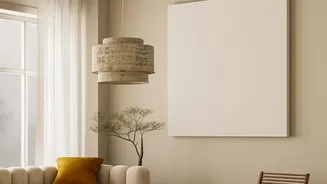
Luxury's New Meaning
For generations, luxury was synonymous with scale. More square footage, more objects, more everything. But as our cities grow denser and our lives become more crowded with digital and physical noise, the concept of what makes a home truly luxurious is undergoing
a profound transformation. The new pinnacle of high-end living isn't about grandeur; it's about tranquility. This emerging trend champions a philosophy where a home's value is measured by its ability to provide a sense of calm, ease, and personal well-being. In smaller homes, where every square inch counts, this shift is particularly powerful. Luxury is no longer an imported marble staircase but a sliver of morning sun hitting a perfectly clear countertop, or the satisfying quiet of a home where everything has its place.
The Power of Intentional Design
At the heart of this movement is the principle of “intentional design.” This isn't just a different name for minimalism; it's a more mindful and personal approach to creating a home. Intentional design asks you to think about the purpose and feeling of each space before adding a single item. It involves making conscious choices that align with your core values and daily routines. Instead of filling a room to make it look “finished,” you curate it slowly with pieces that serve a function, bring you joy, or hold personal meaning. An intentionally designed home supports your life, rather than complicating it. It’s the difference between a living room designed around a television and one designed to foster conversation, or a bedroom optimized purely for rest.
Quality Over Quantity
A key pillar of this new luxury is a firm commitment to quality over quantity. Instead of accumulating many disposable, trend-driven items, the focus is on investing in fewer, better things. This could mean one beautifully crafted armchair instead of a full set of mediocre ones, or a single piece of art that you love instead of a wall of generic prints. This approach has multiple benefits. High-quality items are often more sustainable and built to last, reducing waste. They also bring a tactile and visual richness that mass-produced goods cannot replicate. In a small space, this is crucial. Too many small objects create visual noise and make a room feel cluttered and chaotic. By choosing fewer, more significant pieces, you give them room to breathe, turning them into focal points that elevate the entire space.
Creating Calm and Clarity
Perhaps the most compelling argument for this trend is its profound psychological benefit. Clutter is a known source of stress and anxiety; it distracts us and overwhelms our senses. Research has shown that a decluttered, organized environment promotes mental clarity and a sense of calm. By stripping away the non-essential, you are not just cleaning your home—you are clearing your mind. This peace is the ultimate luxury. Living in a small space almost necessitates a minimalist approach, making it easier to maintain and clean. The result is a sanctuary that restores your energy rather than drains it, giving you more time and mental bandwidth to focus on what truly matters, like experiences and relationships.
How to Embrace the Trend
Adopting this mindset doesn't require a complete overhaul. It can start with small, deliberate actions. Begin with one area, like your bedside table or a single bookshelf. Remove everything and only put back what is beautiful, useful, or deeply meaningful. Question every object's purpose. When considering a new purchase, pause and ask if it truly aligns with the life you want to live in your home. Think in terms of function and feeling: invest in multi-functional furniture, prioritize pieces you physically touch every day like quality handles or soft throws, and use light to create moods. The goal isn't sterile perfection but a thoughtful, curated environment that is uniquely yours.