


Your Stargazing Starter Kit
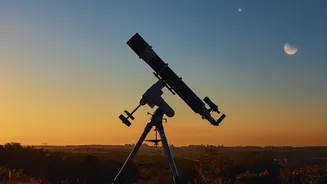
The best part about starting this hobby is that you need very little equipment. Your own eyes are the most important tool. A pair of binoculars can enhance the view of certain objects like star clusters, but they aren't essential for getting started.
More important is comfort. Stargazing involves a lot of looking up, so a reclining deck chair can save your neck. It gets chilly on clear nights, so dress in warm layers, and consider bringing a thermos of a warm drink. Finally, a star map app on your phone can be a huge help, but be sure to switch it to red-light mode to preserve your night vision.
Let Your Eyes Adapt
One of the most crucial steps for any budding astronomer is allowing your eyes to fully adapt to the darkness. This can take up to 30 minutes. Find a spot away from the glare of streetlights and house lights. During this time, avoid looking at your bright phone screen, as it will reset your night vision instantly. If you need to use a light, a red-light torch or a phone app with a red-light filter is best, as it has the least impact on your eyes' dark adaptation. This patience will be rewarded as fainter stars and distant objects begin to emerge from the blackness.
October's Meteor Showers
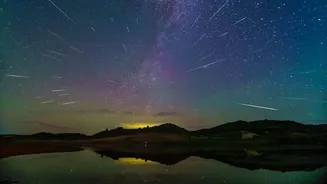
October hosts two notable meteor showers. First are the Draconids, which peak on the evening of October 8-9. This shower is best viewed in the early evening, shortly after nightfall, which is unusual for meteor showers. In 2026, the peak coincides with a nearly new moon, creating ideal dark-sky conditions for spotting these shooting stars. Expect to see around 10 meteors per hour. Later in the month, the Orionids peak on the night of October 21-22. These meteors are debris from the famous Halley's Comet and are known for being bright and fast. While a bright moon will be in the sky for part of the night, it will set a few hours before dawn, opening up a perfect window for viewing during the peak pre-dawn hours.
Planet-Spotting This Month
Several planets are putting on a show this October. Saturn reaches opposition on October 4, meaning it will be at its biggest and brightest for the year, visible all night long. While you'll need binoculars or a small telescope to see its famous rings, the planet itself will be a bright, yellowish point of light. In the pre-dawn sky, early risers can spot Mars and Jupiter. On October 5, the crescent moon will appear near the reddish hue of Mars, with bright Jupiter visible nearby. On October 11, Mars will pass through the Beehive Cluster, creating a beautiful sight for those with binoculars.
Finding Your First Constellations
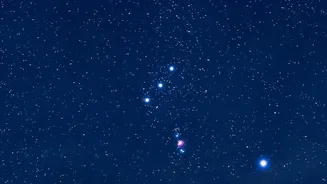
Learning constellations can feel daunting, but starting with a few key patterns makes it much easier. This month, look for the Great Square of Pegasus, a large, easily recognizable box of four stars high in the eastern and southern sky. It serves as a great anchor point. From the Northern Hemisphere, you can also spot the distinct 'W' shape of Cassiopeia high in the north. It's visible year-round and can help you find Polaris, the North Star. Another prominent feature is the Summer Triangle, composed of the three bright stars Vega, Deneb, and Altair, which will still be visible high in the sky in the evenings.
The Moon: When and How to Watch
The Moon's phase dramatically affects stargazing. The full Hunter's Moon on October 26 will illuminate the night sky, making it difficult to see fainter stars and meteors. However, the days around the new moon on October 10 will provide the darkest skies, perfect for viewing deep-sky objects like the Andromeda Galaxy or the faint glow of the Milky Way. Don't discount the Moon itself as an object of observation. With binoculars, you can explore its craters and seas, especially along the terminator—the line between its light and dark sides—where shadows make surface details stand out.