





What is a Caretaker Government?
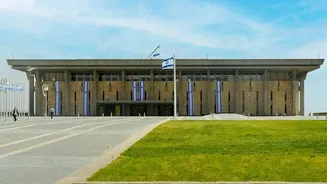
In Israel, a 'caretaker' or 'transitional' government is the default mechanism to prevent a power vacuum. Under Israel's Basic Law, when a new Knesset (parliament) is elected or a government resigns, the outgoing administration continues to function until
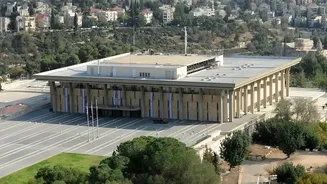
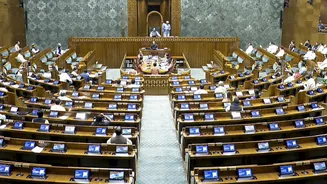
a new one is successfully formed and wins a confidence vote. This ensures the state's continuity in managing daily affairs, from security to foreign relations. The term 'caretaker government' does not actually appear in the law, which simply refers to the 'outgoing government'. This period of transition can be lengthy, sometimes lasting weeks or even months, as political parties engage in complex negotiations to build a coalition with majority support in the 120-seat Knesset.
The Powers of a Caretaker Prime Minister
On paper, a caretaker government has the same legal authority as a regular one. It can manage the state budget, conduct diplomatic relations, and, most significantly, command the military and security services. The Shin Bet, Israel's internal intelligence agency, continues to report directly to the prime minister. The government can respond to urgent security threats and, with a cabinet vote, even decide to go to war; the law does not distinguish between a regular and a transitional government on this point. Furthermore, a caretaker prime minister can dismiss ministers, and a Knesset member can be appointed as a replacement minister without parliamentary approval—a power a regular government does not have.
The Principle of Restraint
Despite these broad legal powers, a caretaker government is expected to operate under a crucial, unwritten principle: 'restraint'. This standard, established by judicial precedent and guidelines from the Attorney General, holds that a government without a fresh democratic mandate should avoid making far-reaching decisions unless there is a 'vital public need'. This convention aims to prevent an outgoing administration from locking a future government into major new policies. Key areas where restraint is expected include making permanent appointments to senior public posts, such as police commissioner or state attorney, and launching significant, non-urgent policy initiatives. While security matters are often seen as an exception to this rule, any major action is expected to face heightened scrutiny.
The Political Negotiation Maze
While Netanyahu remains caretaker, the political focus is on the parliamentary negotiations to form a new government. Following the recent election, President Isaac Herzog tasked opposition leader Gadi Eisenkot with the challenge of building a coalition. This process involves intricate bargaining between parties with diverse ideologies, some of whom made campaign promises not to govern with others. Negotiating teams from Eisenkot's Yashar party and Netanyahu's Likud have met to discuss a potential unity government, but significant hurdles remain. Meanwhile, the opposition bloc, which now holds a parliamentary majority, can begin to exert its influence by replacing the Knesset speaker and advancing its own legislative agenda, effectively checking the caretaker government's power even before a new one is formed.
What Are the Possible Outcomes?
There are several potential paths forward. First, Gadi Eisenkot could succeed in cobbling together a majority coalition, which could include rival parties, ultra-Orthodox factions, or support from Arab parties, leading to a new government. Second, if Eisenkot fails within his allotted time, the president could give another candidate, possibly Netanyahu, a chance to form a government. A third possibility is the formation of a national unity government between the major blocs, though leadership rotation remains a major sticking point. If all attempts to form a government fail, the Knesset could dissolve itself, and Israel would head to yet another election, prolonging the period of political uncertainty with Netanyahu's caretaker government remaining in place.