



The Small Satellite Revolution
When you picture a satellite, you might imagine a machine the size of a bus, costing billions and taking decades to build. For a long time, that was accurate. But today, the most disruptive force in space is a class of satellites that can be as small
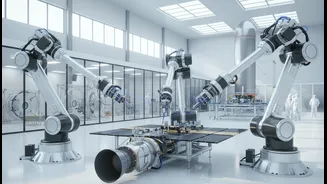
as a loaf of bread. These are known as small satellites, or 'smallsats', a category that includes everything from 100-500 kg 'minisatellites' to tiny 'CubeSats'. The key difference isn't just size, but speed and cost. Thanks to miniaturized electronics and standardized parts, these satellites can be developed and manufactured far more quickly and cheaply than their predecessors. This has drastically lowered the barrier to entry, shifting space from the exclusive domain of government agencies to a bustling arena for universities, startups, and private companies.
Democratizing the Final Frontier
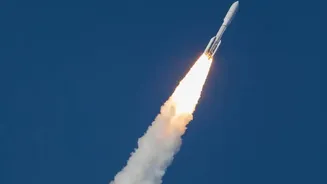
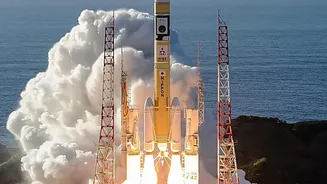
Lowering the cost to build a satellite is one thing; getting it into orbit is another. The smallsat revolution has been enabled by a parallel shift in launch services. Instead of needing a dedicated rocket, small satellites can often 'rideshare' as secondary payloads on larger launches, significantly cutting costs. This has created a vibrant ecosystem where new ideas can be tested in orbit quickly. This rapid, iterative approach means technology evolves faster. Rather than launching one large, expensive satellite designed to last 15 years, organisations can now launch constellations of cheaper, smaller satellites that can be upgraded or replaced more frequently. This model not only reduces financial risk but also allows for the integration of cutting-edge technology into new missions.
India's Private Space Sector Takes Flight
This global trend is fuelling a boom in India's private space industry. With proactive government support from bodies like IN-SPACe and ISRO acting as a partner, nearly 400 space startups have emerged. Companies like Hyderabad-based Skyroot Aerospace, founded by former ISRO engineers, are developing launch vehicles like the Vikram-1, specifically designed to place small satellites into orbit. The recent successful orbital launch of Vikram-1 marked a pivotal moment for India's commercial space ambitions. Other startups are focusing on the satellites themselves. Bengaluru's Pixxel is deploying a constellation of hyperspectral imaging satellites to monitor agriculture, energy, and climate change with unprecedented detail. GalaxEye, another Bengaluru-based firm, recently launched 'Drishti', India's largest privately-built Earth observation satellite and the world's first to combine optical and radar sensors, allowing it to see through clouds and at night. Meanwhile, companies like Agnikul Cosmos are innovating with 3D-printed engines, and Dhruva Space is providing full-stack satellite solutions.
New Capabilities from Low Earth Orbit
These small satellite constellations are unlocking powerful new capabilities. In Earth observation, they provide high-frequency monitoring that is critical for disaster management, tracking climate change, and improving agriculture. Companies can get near-real-time data on everything from deforestation to urban development. In communications, constellations are working to provide global internet connectivity, especially to remote and underserved areas. Furthermore, these platforms are hubs for technological innovation, serving as testbeds for new AI-powered systems, advanced sensors, and even on-orbit data processing, which sends back ready answers instead of just raw data.
The Challenges of a Crowded Sky
However, the proliferation of thousands of new satellites in low-Earth orbit brings its own set of challenges. The risk of collisions and the growing problem of space debris are significant concerns. A single collision can create thousands of fragments, endangering other active satellites. This has been described as a modern 'tragedy of the commons', where the rush to occupy orbital slots could make space unsustainable for everyone. There are also concerns about defunct satellites burning up in the atmosphere and releasing materials that could affect the ozone layer. Regulators and operators are now grappling with how to manage this orbital congestion, coordinate radio frequencies, and ensure the long-term sustainability of space.