




The Power of Breath
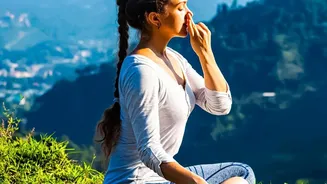
Before diving into the steps, it's crucial to understand the role of breath. In Surya Namaskar, each movement is synchronized with either an inhalation or an exhalation. This rhythmic breathing, or pranayama, is what transforms the sequence from a simple
physical exercise into a moving meditation. Inhaling during poses that open and expand the chest and exhaling during poses that compress or fold the body helps to deepen the stretches, improve circulation, and calm the nervous system. This deliberate connection between breath and movement is key to unlocking the full range of benefits.
Step 1: Pranamasana (Prayer Pose)
Begin by standing at the front of your mat with your feet together, distributing your weight evenly. As you exhale, join your palms together at your chest in a prayer position (Namaste). This initial pose helps to ground your energy and set a calm, focused intention for the practice.
Step 2: Hasta Uttanasana (Raised Arms Pose)
Inhale and lift your arms up and back, keeping them close to your ears. Gently arch your spine to create a slight backbend, stretching the entire front of your body from your abdomen to your chest. This pose helps to lengthen the spine and open the lungs.
Step 3: Padahastasana (Standing Forward Bend)
Exhale as you hinge from your hips and fold forward. Keep your spine straight initially, then allow your head and neck to relax. Try to place your hands on the floor beside your feet, but don't force it. Bending your knees is a great modification to avoid straining your lower back. This pose stretches the hamstrings and spine.
Step 4: Ashwa Sanchalanasana (Equestrian Pose)
Inhaling, step your right leg back as far as you can. Lower your right knee to the floor and look up, keeping your left foot firmly between your hands. Your left knee should be aligned directly over your left ankle. This lunge stretches the hip flexors and strengthens the legs.
Step 5: Dandasana (Plank Pose)
As you exhale, step your left leg back to join the right, bringing your body into a straight line from your head to your heels, like the top of a push-up. Engage your core muscles to prevent your hips from sagging. This pose is excellent for building core and upper body strength.
Step 6: Ashtanga Namaskara (Eight-Limbed Salute)
Gently bring your knees down to the floor and then, as you exhale, lower your chest and chin to the floor. Your hips will remain slightly elevated. Your two hands, two feet, two knees, chest, and chin—eight points in total—are touching the ground. This pose signifies surrender.
Step 7: Bhujangasana (Cobra Pose)
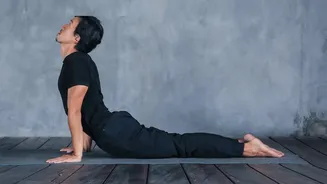
Slide forward and, on an inhale, raise your chest off the floor. Keep your shoulders rolled back and away from your ears, and your hips on the ground. Look slightly upward. This gentle backbend strengthens the spine and opens the chest.
Step 8: Adho Mukha Svanasana (Downward-Facing Dog)
Exhaling, lift your hips and tailbone up and back to form an inverted 'V' shape. Press your heels toward the floor, though they don't need to touch it. Lengthen your spine and relax your head between your upper arms. This pose provides a full-body stretch, particularly for the hamstrings, calves, and spine.
Step 9: Ashwa Sanchalanasana (Equestrian Pose)
As you inhale, step your right foot forward between your hands, returning to the lunge position from Step 4. Your left knee comes down to the floor, and you look up. This is the mirror of the earlier pose.
Step 10: Padahastasana (Standing Forward Bend)
On an exhale, step your left foot forward to meet your right and fold into the standing forward bend, just as in Step 3. Let your head hang heavy.
Step 11: Hasta Uttanasana (Raised Arms Pose)
Inhaling, roll your spine up, reach your arms overhead, and gently arch back into the raised arms pose, mirroring Step 2.
Step 12: Pranamasana (Prayer Pose)
Finally, exhale and bring your palms back together in front of your chest, returning to the starting position. This completes one half-round. To complete a full round, repeat the entire sequence, this time leading with your left leg in Steps 4 and 9.
A Complete Mind-Body Workout
Regular practice of Surya Namaskar offers a wealth of benefits. It functions as a fantastic cardiovascular workout, improves blood circulation, and aids in weight management. The sequence engages every major muscle group, enhancing strength, flexibility, and overall posture. Mentally, the synchronization of breath and movement calms the nervous system, reduces stress and anxiety, and improves focus and clarity. It’s a holistic practice that nurtures both physical and mental well-being in just a few minutes a day.