






The Promise of a Lunar Underground
Billions of years ago, when the Moon was volcanically active, rivers of lava carved out immense underground tunnels. As the lava flowed away, it left behind hollow caves, some potentially large enough to house entire cities. For decades, these 'lava tubes'
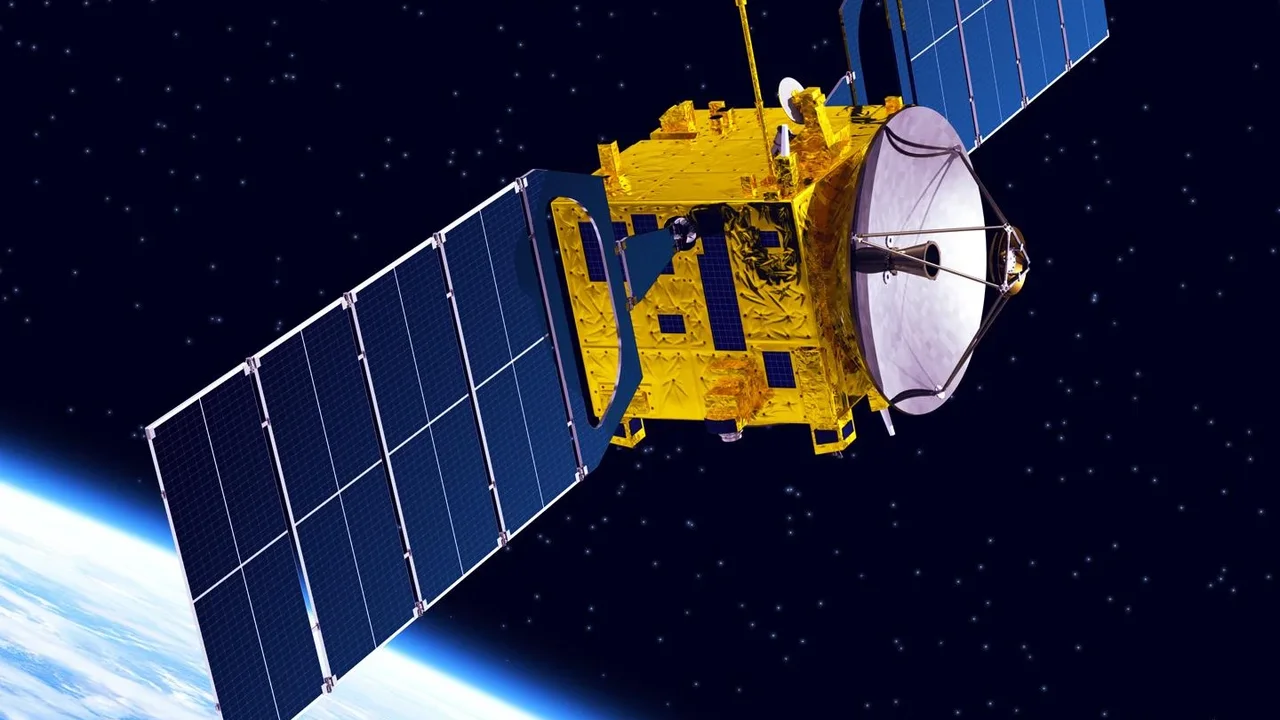
were purely theoretical, but recent data from orbiters like NASA's Lunar Reconnaissance Orbiter has provided compelling evidence of their existence, identifying deep pits that appear to be 'skylights' where a tube's roof has collapsed. These subterranean networks are now considered prime real estate for future lunar bases. Their main appeal lies in the natural shielding they offer. Thick ceilings of solid volcanic rock could protect inhabitants from the harsh realities of life on the lunar surface, a prospect that has space agencies and private companies buzzing with interest.
A Shield Against the Void
The lunar surface is an incredibly hostile environment. With no atmosphere to offer protection, it is constantly bombarded by cosmic radiation and solar particles, which pose a significant health risk to astronauts. Studies suggest the radiation dose on the surface can be up to 50 times greater than what people experience on Earth. Inside a lava tube with a sufficiently thick roof, however, that dose could drop to terrestrial levels, making long-term habitation feasible. Beyond radiation, these tunnels also offer shelter from micrometeorite impacts and the extreme temperature swings between lunar day and night, which can vary by hundreds of degrees. The interiors of these caves are believed to maintain a relatively stable and manageable temperature.
Enter the Robotic Cave Explorers
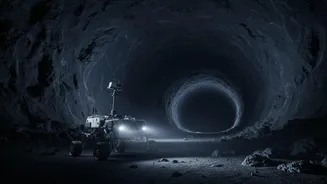
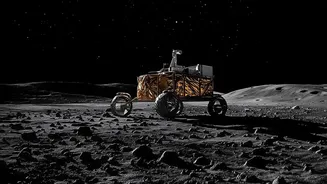
Before humans can move in, these caverns must be thoroughly explored and mapped, a job far too dangerous for astronauts given the many unknowns. This is where robotic explorers come in. Several space agencies and private firms are developing specialized rovers and drones designed to tackle the unique challenges of subterranean exploration. These aren't your typical surface rovers. The European Space Agency (ESA) has been studying a spherical probe concept called Daedalus, designed to be lowered into a pit on a tether to create 3D maps using lidar. In another approach, a European consortium successfully tested a multi-robot system in the lava tubes of Lanzarote, Spain, using one robot to map the entrance while another rappels down to explore the interior.
The Challenges of Deep Darkness
Exploring a lunar cave is a complex technological problem. Complete darkness means solar power is not an option, requiring alternative power sources like batteries or innovative solutions. For instance, NASA is funding research into a drone called the Lunar Underground eXplorer (LUX), which would be powered by a laser beamed through a fiber-optic tether connected to a lander on the surface. Navigation is another major hurdle. With no GPS, rovers must rely on advanced autonomous systems, like Simultaneous Localization and Mapping (SLAM), to build maps of the unknown environment in real-time and navigate without human guidance. The terrain itself is a challenge, requiring robust mobility systems that can handle uneven, rocky floors and potentially rappel down vertical shafts.
The Path to a Subterranean Future
The development of these robotic systems is a critical step toward establishing a permanent human presence on the Moon. Teams in the US, Europe, and China are actively testing rover prototypes in Earth-based analogues, such as the volcanic caves in Spain and China, to refine the technology. The goal is to create autonomous robotic teams that can work cooperatively to scout, map, and analyze these underground environments. They will assess the structural integrity of the tubes, search for valuable resources like water ice, and identify the safest locations for future habitats. While the prospect of building cities inside lunar caves may still sound like science fiction, the robotic groundwork being laid today is turning that ambitious vision into a tangible engineering objective. These pioneering probes are not just exploring caves; they are paving the way for humanity's next giant leap.